Skip to content
Bevel & Bone

HUB 04 · Reviews

Victorinox Fibrox Pro 8" Review

The default answer to 'what's a good first chef knife' — and, for a lot of people, the last knife they need.

By Stephen V.Updated How we choose
#ad

We earn a commission when you buy through our Amazon links, at no extra cost to you. It never changes a ranking, and we say so when the cheaper knife is the better buy. How this works.

If you asked a hundred cooks to name one chef's knife under $50, most would say this one. The Victorinox Fibrox Pro 8-inch is the knife that made "you don't need to spend a fortune" a mainstream opinion, and the spec sheet backs it up.

What the spec sheet tells you

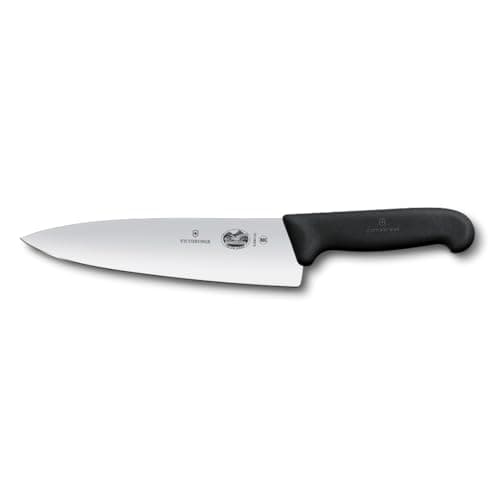
It's a stamped (not forged) blade in soft German X50CrMoV15 stainless at about HRC 55–56, with a textured Fibrox handle. On paper that's unremarkable — and that's the point. The soft steel takes a screaming edge on a stone in minutes and is the easiest blade in our whole lineup to learn to sharpen on. The stamped blade is light and nimble, the handle grips even with wet hands, and it's NSF-certified, which is why it's a fixture in professional kitchens.

Who it's for

Almost everyone, and especially first-time buyers — it tops our best chef knives for beginners list and is the anchor of best chef knives under $100. The logic is simple: it cuts beautifully, it costs little enough that you won't be afraid to practice knife skills and sharpening on it, and if you decide you love cooking you can upgrade later without regret. The only people it isn't for are those who specifically want a knife that keeps its edge for months (harder steel does that) or an heirloom object (this is a tool, and looks it).

Value

On cut-per-dollar it's close to unbeatable, which is exactly why you'll find it ranked alongside knives four times its price on our main roundup. Buy it, spend the savings on a whetstone, and you'll out-cut most people's far pricier, rarely-sharpened knives.

In detail

The knife, in detail

01
Victorinox Victorinox Fibrox Pro 8" Chef's Knife

Your first good chef knife

Victorinox Fibrox Pro 8" Chef's Knife

8 in / 20 cmX50CrMoV15~HRC 55–56StampedFibrox handle
7.8/10

The default answer to "what's a good first chef knife." Cheap, light, holds a usable edge, and a joy to sharpen.

Edge retention
6
Out-of-box edge
8
Handling
8
Build
7
Value
10

Pros

  • Costs a fraction of a forged German knife and out-cuts most of them out of the box
  • Soft-ish steel takes a screaming edge on a stone in minutes — the easiest knife here to learn to sharpen on
  • Light and nimble; the textured Fibrox handle grips even with wet hands
  • NSF-certified and dishwasher-tolerant (though you still shouldn't)

Cons

  • Softer steel means you hone often and sharpen more frequently than a hard Japanese blade
  • Stamped blade lacks the heft and bolster some cooks want for control
  • It is a tool, not an heirloom — nothing about it is beautiful

Don't buy this if…

you want a knife that keeps its edge for months between sharpenings. This trades edge retention for being cheap and easy to re-sharpen — a great trade for a beginner, a poor one if you refuse to touch a stone.

$46.93View on Amazon

Price as of Jul 18, 2026. Prices change — Amazon's is the one that counts.

#ad · we may earn a commission from this link to Victorinox Fibrox Pro 8" Chef's Knife

Questions

Frequently asked

Is the Victorinox Fibrox a good chef's knife?

Yes — it's arguably the best value chef's knife made. It cuts well, is light and grippy, takes a keen edge, and is the easiest knife to learn to sharpen on. Its only weakness is that soft steel dulls faster than harder Japanese steel.

Stamped vs forged — does it matter here?

The Fibrox is stamped, which keeps it light and cheap. Forged knives have more heft and a bolster, which some cooks prefer, but stamping doesn't make a knife cut worse — the Fibrox out-cuts many forged knives out of the box.

How often will I need to sharpen it?

More often than a hard Japanese knife, because the steel is soft — but it's also the fastest and most forgiving knife to sharpen. Hone it regularly and sharpen on a stone every month or two of steady use.

Keep reading

Receipts

Sources

We do not run a test kitchen, and we do not pretend to. Specs are the manufacturer's published figures, attributed as such; where we could not verify something, we say so on the page rather than quietly leaving it out. Read our full method.