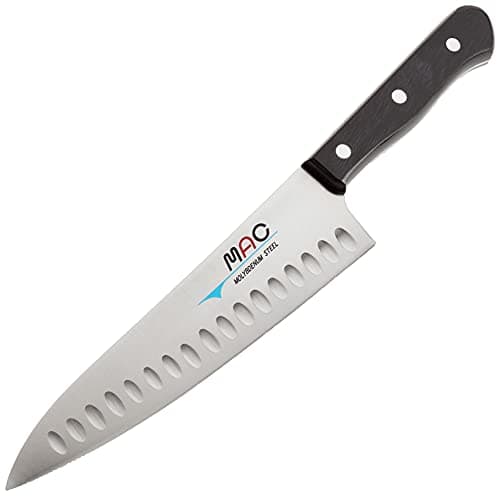
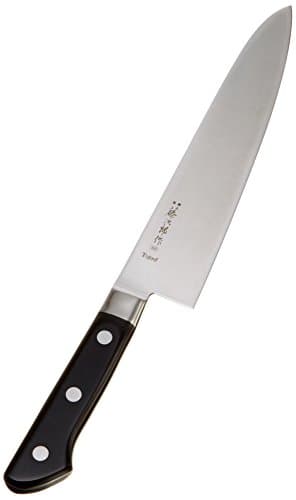
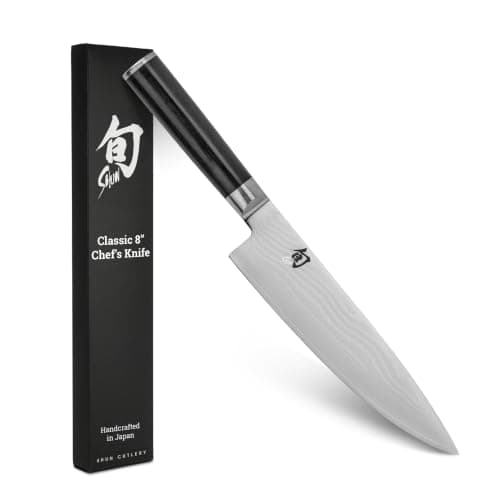
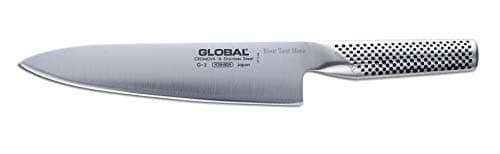
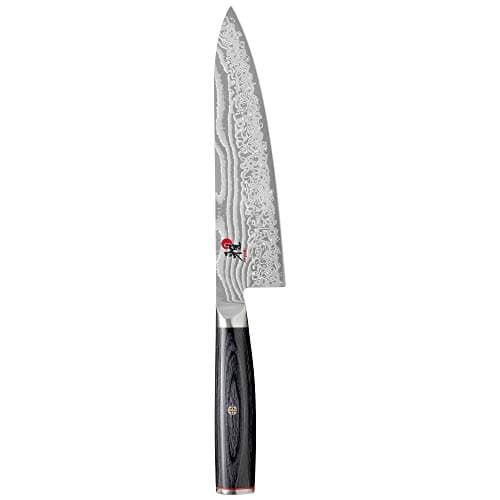
Japanese chef knives (gyuto) use harder steel ground to a more acute edge than German knives — so they're sharper, hold that edge longer, and feel nimbler in the hand. The trade-off is fragility: a hard, thin edge chips if you abuse it. These five are ranked by our score, with live prices.
Our top pick, the Miyabi Kaizen II, edges out the MAC on the strength of its hand-honed Honbazuke edge — one of the most acute factory edges you can buy — in a tie the two share on overall score. If you want the best all-round value rather than the keenest edge, the MAC (and the $75 Tojiro just below it) are the smarter buys, which is why the MAC leads our overall ranking.
Choosing a Japanese knife without overpaying
The steel matters more than the price. All five here are hard (~HRC 60), which is the point — see the steel guide. What you pay extra for above the Tojiro is finish: Damascus cladding (Shun), a hand-honed edge (Miyabi), a seamless one-piece body (Global). Those are real, desirable things — but they're about the object, not a dramatically better cut.
The caveat that matters: a hard Japanese edge is less forgiving. Keep it off bone, never twist or pry, use a wood or plastic board, and hone it with a ceramic rod rather than a steel one (see best honing steels). If that sounds like more care than you want to give a knife, a tough German blade from our comparison guide is the honest choice.
Sharpening hard Japanese steel
Every knife on this page is harder than a German blade and ground to a narrower bevel, which changes what you want from a stone — harder binders, higher finishing grits, and something coarse on hand for the chips that hard thin edges get instead of rolls. Our best sharpening stones for Japanese knives ranks for that specifically. Head-to-heads between the blades above: Miyabi vs Shun, Tojiro vs MAC, Global vs Shun, Zwilling vs Shun, Dalstrong vs Shun, Victorinox vs Tojiro, Tojiro vs Global and Tojiro vs Wüsthof.
Where to go next
Not sure the category is for you at all? Are Japanese knives worth it makes the case and the counter-case — what the harder, thinner steel buys, who it punishes, and the ownership cost most recommendations skip.