The Sharpal 162N dual-grit diamond plate is the right stone for a German knife. Its 325-grit side cuts soft X50CrMoV15 fast enough that reprofiling a neglected Wüsthof is a ten-minute job rather than a half-hour one, the 1200 side finishes the edge further than this steel can hold anyway, and because it is a diamond plate it never dishes and never needs flattening. If that is more than you want to spend, the King KDS 1000/6000 is the classic cheap answer and the stone most people should actually learn on.
How this list is ranked:for soft Western steel — cutting speed on X50CrMoV15 and similar at ~HRC 55–58, and how much of the stone's grit range you will genuinely use — not by overall score alone. This is the inverse of our stones for Japanese knives ranking, where a hard Shapton ceramic wins because hard steel at HRC 60+ needs a hard binder and genuinely rewards high grit. The same four stones can appear on both lists in a different order, because the steel asks different questions.
What "German knife" means for a stone
Almost every German kitchen knife — Wüsthof Classic, Zwilling Pro, Henckels, Mercer Genesis, and the Swiss Victorinox Fibrox alongside them — is X50CrMoV15 or a close relative, heat-treated to roughly HRC 55–58. Three consequences follow, and all three point at the same kind of stone:
- Soft steel abrades quickly. A medium stone removes metal from a German blade noticeably faster than from a hard Japanese one. That is good news — a full sharpening is quick — and it means you do not need an aggressive, expensive cutting stone to get anywhere.
- It will not hold a highly refined edge.This is the part most buying advice gets wrong. A 6000-grit polish puts a keener apex on the blade, but soft steel cannot support that apex: it rolls back within a few boards. The practical ceiling for X50CrMoV15 is around 1000–1200 grit plus a honing rod. Everything above that is effort you lose by Tuesday.
- It throws a big, soft burr. Soft steel folds rather than fractures, so the wire edge you raise is larger and more stubborn. Removing it properly is most of the difference between a knife that feels sharp for a day and one that feels sharp for a month — how to remove a burr is the technique.
There is also the angle question. German makers grind wider than Japanese ones — Victorinox around 20° per side, Wüsthof's Precision Edge Technology at 14°, Mercer Genesis at 20°. Sharpening a 20° edge at 15° is a reprofile, not a sharpen: you are removing a lot of steel to change the geometry, and that is a coarse-stone job you only do once. Knife sharpening angle covers how to decide, and the knife steel guide explains what X50CrMoV15 can and cannot do.
What to look for
- A genuinely coarse side: 325–400 grit. This is the stone German steel actually needs and the one most kitchen whetstone kits skip. It is what fixes a rolled edge, a reprofile, or a knife that has been run through a pull-through sharpener.
- A medium side around 1000–1200. This is where the working edge comes from and where you will spend most of your time.
- Do not pay for 6000 and up. If it comes bundled, use it occasionally and enjoy it; do not choose a stone for it. The same money spent on a coarse side or a bigger face does more for a German knife.
- Low maintenance, if you can afford it. Soft steel cuts fast and dishes a soft water stone fast. A diamond plate never dishes; a hard ceramic dishes slowly; a cheap soft stone needs flattening regularly — how to flatten a whetstone.
- A big enough face.Eight inches by two is the practical minimum for an 8-inch chef's knife. Three inches wide is easier to learn on because the blade stays on the stone through the stroke.
- A honing rod, bought at the same time. On soft steel the rod is not optional maintenance, it is the main maintenance — which is why German sets have always shipped with one. See best honing steels.
The short answer
Quick picks
#ad · Live prices from the Amazon Product API, as of October 11, 2026. Where we have no verified live price we show none — we'd rather leave a gap than print a number that has rotted.
By the numbers
The specs, side by side
Every figure below is the manufacturer's published specification. Where a maker doesn't publish a value, the cell reads "—" rather than a number we made up.
In detail
The picks, in full
Low-maintenance and fast
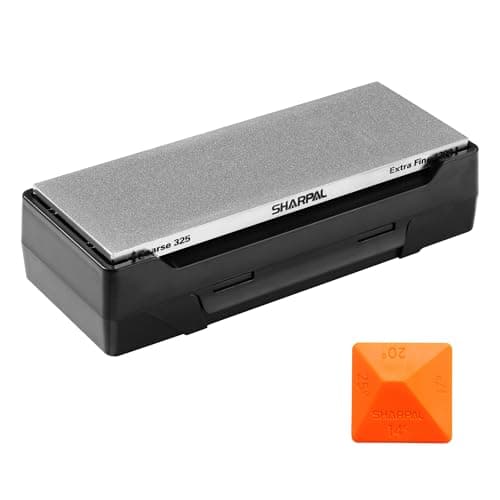
Sharpal 162N Dual-Grit Diamond Sharpening Stone
Diamond plate325 / 1200Dual gritNo soakNever dishes
A diamond plate that never dishes, never needs flattening, and doubles as the tool that flattens your water stones.
- Cutting speed
- 9
- Feedback
- 6
- Durability
- 10
- Beginner-friendly
- 8
- Value
- 9
Pros
- +Diamond stays dead flat forever — no dishing, no flattening, no soaking
- +Fast on hard modern steels that wear a water stone down quickly
- +Also flattens your water stones, so it earns its place even if you sharpen on softer stones
Cons
- −Diamond gives a toothier, less polished edge than a fine water stone
- −Coarse/fine only — no true polishing grit for a refined finish
- −Diamond plates lose a little aggression as they break in
Don't buy this if…
…you want a mirror-polished, hair-splitting finish. Diamond tops out toothy; pair it with a 6000-grit water stone or a strop if you want a truly refined edge.
The best first whetstone
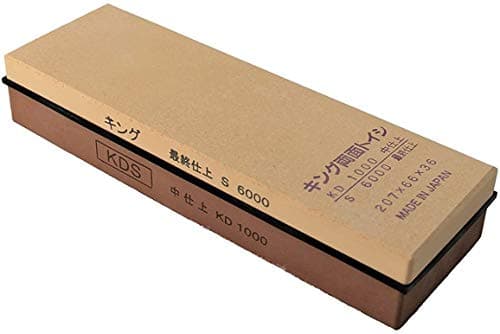
King KDS 1000/6000 Combination Whetstone
Water stone1000 / 6000ComboSoakStone only
The whetstone that has taught more people to sharpen than any other. Cheap, forgiving, and it just works.
- Cutting speed
- 7
- Feedback
- 9
- Durability
- 6
- Beginner-friendly
- 10
- Value
- 10
Pros
- +The classic learn-to-sharpen stone: soft, fast-cutting, and endlessly forgiving of a wobbly angle
- +1000 and 6000 grit covers the whole home-cook job — set an edge, then polish it
- +A thick 1½-inch block — years of stone to wear down and re-flatten
Cons
- −Soft binder dishes (hollows out) quickly — you'll need to flatten it regularly
- −Requires a proper soak before use, so it's not grab-and-go
- −Sold as the bare stone — no base or holder, so you'll need a damp towel or a stand
- −Wears faster than a hard ceramic or diamond stone
Don't buy this if…
…you want a splash-and-go stone you never have to soak or flatten. The Shapton or a diamond plate is the lower-maintenance answer — neither asks you to soak it or level it.
Trying stone sharpening for pennies
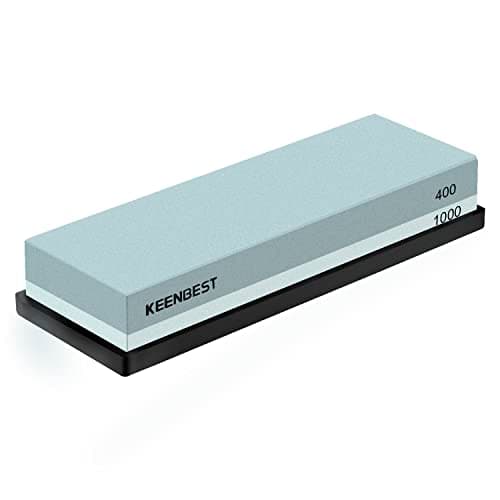
Two-Sided 400/1000 Grit Sharpening Stone
Water stone400 / 1000ComboRubber baseSoak
The cheapest way to find out whether you enjoy stone sharpening before you spend real money.
- Cutting speed
- 6
- Feedback
- 7
- Durability
- 5
- Beginner-friendly
- 8
- Value
- 9
Pros
- +Costs about the same as a takeout lunch — a genuinely risk-free way to try sharpening
- +400/1000 is the right pair to repair a dull edge and set a working one
- +Usually ships with an angle guide, which helps a first-timer
Cons
- −Quality varies unit to unit; these are generic stones
- −No fine polishing grit — a working edge, not a refined one
- −Wears quickly and needs flattening like any soft stone
Don't buy this if…
…you already know you're committed to sharpening. Spend the extra on a King or Shapton — this is a toe-in-the-water stone, not a keeper.
The traditional oilstone route
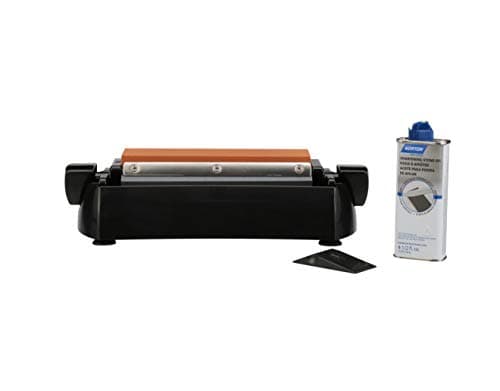
Norton IM200 Three-Stone Oilstone System
OilstoneCoarse/med/fine3 stonesReservoirOil
The traditional oilstone kit. Slower and messier than water stones, but tough, cheap per year, and beginner-proof.
- Cutting speed
- 6
- Feedback
- 7
- Durability
- 9
- Beginner-friendly
- 7
- Value
- 8
Pros
- +Three grits and a bench holder in one box — a complete kit
- +Oilstones are extremely durable and shrug off heavy use
- +The reservoir base catches oil and holds the stones firmly
Cons
- −Oil is messy and permanent — an oilstone can't later be used with water
- −Slower and coarser-finishing than modern water or ceramic stones
- −Heavier and less refined for kitchen knives specifically
Don't buy this if…
…you want a clean, quick kitchen setup. Oil is a commitment; for kitchen knives a water stone or diamond plate is tidier and faster. This suits the traditionalist and the tool-shed.
The picks, and who each suits
- Sharpal 162N dual-grit diamond plate (325/1200) — the best match for German steel on this site. The grit pair is almost exactly what X50CrMoV15 wants, the 8 × 3 in face is forgiving to learn on, it works with water or dry, and it never needs flattening. Skip it if you want a mirror polish: diamond tops out toothy, which on this steel is a feature rather than a limitation.
- King KDS 1000/6000 combination water stone — the stone to learn on, and the best value here. Soft, full of feedback, and it has taught more people to sharpen than anything else. Two caveats for German knives specifically: the 6000 side is largely decorative on this steel, and the soft binder dishes quickly when you are grinding soft steel, so plan on flattening it.
- Two-sided 400/1000 grit water stone — the cheapest correct grit pair on the site, and the sensible first purchase if you are not yet sure you will stick with stones. 400 and 1000 is precisely the German-knife range, and it ships with a non-slip base and an angle guide. It is a small, soft stone that will not last like the others — buy it as a trial, not a keeper.
- Norton IM200 three-stone oilstone system — the traditional Western answer, and a genuinely good fit historically: India and Crystolon oilstones were developed for exactly this grade of steel, and a coarse/medium/fine progression in a reservoir bench holder is a complete setup that will outlast you. It is also oily, slow and the most expensive option here. Buy it for the workshop and the traditionalist, not for a tidy kitchen.
The routine for a German knife, start to finish
Sharpen at the angle the maker ground, unless you have a reason to change it. Raise a burr along the whole edge on the coarse or medium side, flip and match it on the other side, then remove the burr with progressively lighter strokes on the finer side. Four or five light alternating passes at the end do more than fifty heavy ones. How to sharpen a chef knife is the step-by-step, and how to use a whetstone covers stone technique in general.
Then stop sharpening and start honing. A German edge that is honed before each cooking session will go months between stone sessions; one that is never honed will be back on the stone in weeks. Sharpening vs honing explains why they are different jobs, and how often should you sharpen a knife gives the cadence. If your edge never seems to arrive at all, the culprit is almost always an unremoved burr or an inconsistent angle — why your knife won't get sharp works through the list.
Two stones we would not buy for German knives
A 3000/8000 finishing combination.Excellent on a Japanese blade at HRC 60–61, close to pointless on a German one. The apex you create at 8000 grit is finer than the steel can hold. If you own both kinds of knife, buy the finishing stone for the Japanese one and be honest that it is not for the Wüsthof.
A pull-through sharpener. It is the one tool we actively warn against: fixed carbide wheels scrape metal off at a pre-set angle regardless of how your knife is ground, and on soft steel they remove a surprising amount of it. Pull-through vs whetstone and are electric knife sharpeners bad both cover the damage. If freehand is not for you, a guided system from our sharpening systems ranking is the right answer instead.
Where this fits
If your knives are German and you want the fuller picture, start at best sharpening stones for the all-steel ranking, stones for beginners if this is your first stone, and how long does a whetstone last before you worry about wearing one out. On the knife side, best German chef knives and Japanese vs German knives explain what you own and why it behaves this way.
How we picked
We do not run a test kitchen
We compiled each product's published specifications — steel, hardness, edge geometry, weight — normalized them into the matrix above, and scored each one against a published rubric. The scores are judgments from those specs and the value math — they are not measurements we took, because we do not have a test kitchen and we're not going to pretend we do. Units we claim to have tested: 0.
Questions
Frequently asked
What grit whetstone is best for German knives?+
A coarse side of 325–400 and a medium side of 1000–1200. That pair covers everything X50CrMoV15 at HRC 55–58 can hold. Grits above about 1200 create an apex softer steel cannot support for long.
Do I need a 6000-grit stone for a Wüsthof?+
No. It will make a keener edge that rolls back within a few boards. Use the 6000 side if your stone has one, but do not choose a stone for it — spend the money on a coarse side or a larger face instead.
What angle should I sharpen a German knife at?+
The angle it was ground at, unless you have a reason to change. Victorinox and Mercer Genesis are around 20° per side; Wüsthof's Precision Edge Technology is 14°. Going from 20° to 15° is a reprofile and a coarse-stone job.
Diamond plate or water stone for German steel?+
Either works. A diamond plate cuts faster, never dishes and never needs flattening, which suits soft steel that abrades quickly. A soft water stone gives better feedback and is cheaper to start with, but you will be flattening it.
Why does my German knife go dull so fast?+
Usually because it is not being honed. Soft steel rolls rather than wearing away, and a honing rod straightens it in seconds. Dishwashers, glass or stone boards, and scraping food with the edge are the other three common causes.
Receipts
Sources
We do not run a test kitchen, and we do not pretend to. Specs are the manufacturer's published figures, attributed as such; where we could not verify something, we say so on the page rather than quietly leaving it out. Read our full method.