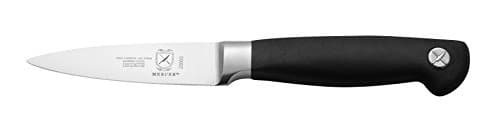
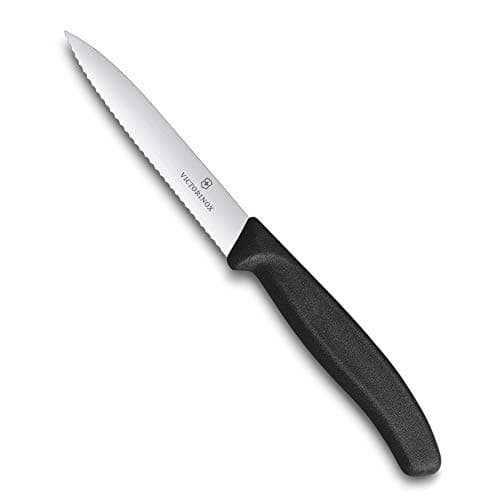
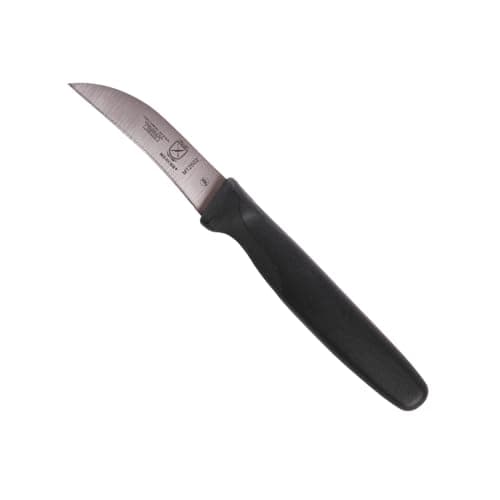
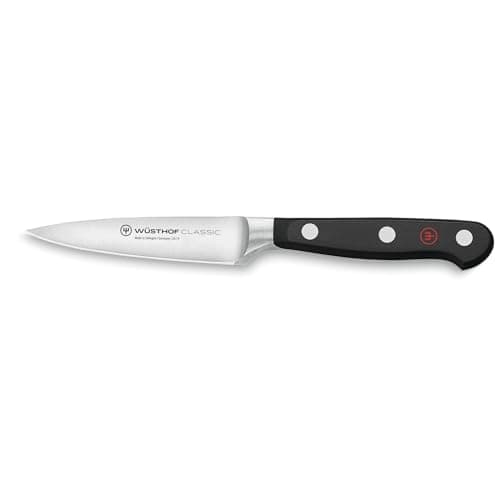
A paring knife is the little blade that does everything your chef's knifeis too big for — peeling, hulling, deveining, trimming, coring, and any close in-hand work. It's one of the three knivesalmost every kitchen actually needs, and it's the one where spending big makes the least sense: a $12 paring knife genuinely competes with a $115 one. A paring knife does light, low-stress work, so exotic steel and heavy forging buy feel and looks more than performance. This list is ranked with that in mind — the cheap ones win.
These six are ranked by our overall score, which weights value heavily for exactly that reason. The premium forged and Damascus knives here are lovely and score high on cutting and build — but their poor value for such a light-duty tool drops them down the list, because we're answering "what should most people buy," not "what's the fanciest." The beautiful options are here too, clearly labeled, for anyone who wants one.
What actually matters in a paring knife
- Blade length and shape. A 3 to 4-inch straight spear-point or sheepsfoot blade is the do-everything default. A curved bird's beak is a specialist for peeling and shaping round produce. Longer than about 4 inches and it stops being a paring knife.
- Edge type. A straight edgeis the versatile all-rounder — clean cuts, precise peeling. A serrated paring knife bites through tomato skin and soft fruit a straight edge slides off, but is worse at everything else. Many cooks keep one of each.
- Sharpness and steel.A paring knife needs to take a fine point, but because it does light work, softer easy-to-sharpen steel is perfectly fine — the edge-retention obsession of chef's knives barely applies.
- Comfort and weight. You hold a paring knife in your hand as often as on a board, so light and nimble usually beats heavy. A grippy handle matters more than heft.
- Value.The one that decides the ranking. A paring knife is cheap to do brilliantly and easy to sharpen, so every dollar past "sharp and comfortable" buys finish and feel, not better peeling.
What matters less than the price implies: forging (a stamped paring knife peels just as well) and brand prestige. Keep that in mind as you read the picks.
The honest truth: a $12 paring knife is all most people need
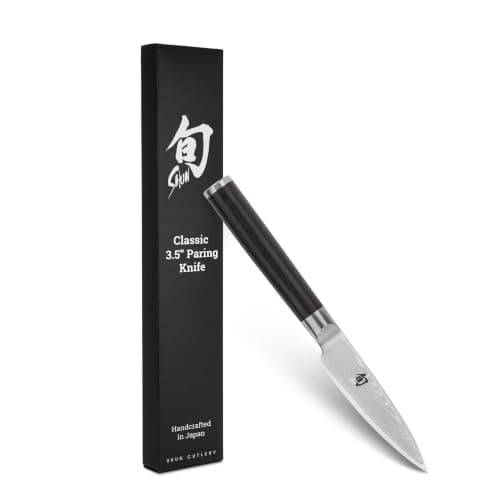
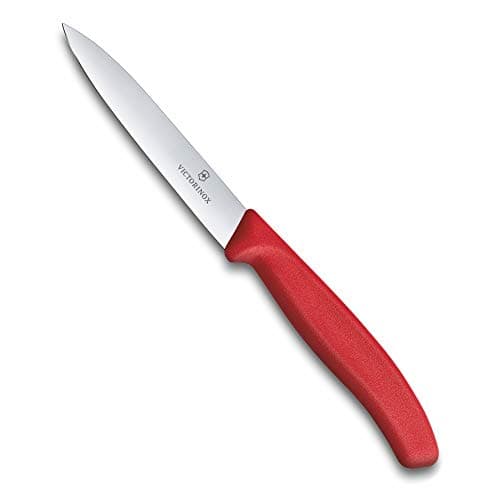
Here's the case, plainly. A paring knife handles small, light jobs — peeling an apple, hulling strawberries, deveining a shrimp, trimming fat. None of that stresses an edge the way breaking down a squash does, so the hard steel and thin geometry you pay a premium for on a chef's knifebarely help here. Add that a straight paring edge is quick and easy to bring back on a stone, and the conclusion is clear: buy a sharp, comfortable, cheap paring knife and spend the difference where it counts. That's why the $12 Victorinox tops this list and the $115 Shun sits at the bottom — not because the Shun is bad (it's beautiful), but because it's a lot of money to peel fruit.
Straight or serrated?
A straight edge is the default: it makes clean, precise cuts and peels smoothly, and you can sharpen it easily. A serratedparing knife earns its place for one thing — slicing through tomato skin, citrus and soft-skinned fruit that a straight edge slips off. Serrations also stay grippy for years without sharpening (which is good, because you can't easily sharpen them — see how to sharpen a serrated knife). If you only buy one, buy straight; if you eat a lot of tomatoes, add a cheap serrated one as a second.
What's a bird's beak knife for?
A bird's beak(or tourné) knife has a small, inward-curving blade that hugs round produce. It's the specialist for peeling apples and potatoes in the hand and for "tournéing" vegetables into the classic seven-sided football shape. It's a genuinely useful one-job tool if you do a lot of peeling — but it's useless for board work, so it's a second or third knife, never your only paring knife.
Do you even need a paring knife?
Yes — it's one of the three knives that cover almost all of home cooking, alongside a chef's knife and a serrated bread knife (the full argument is in how many kitchen knives you need, and the serrated one is covered in best bread knives). A chef's knife is clumsy for peeling an apple or hulling a strawberry in your hand; a paring knife is made for exactly that. More on the jobs it does in what a paring knife is used for and how it differs from the next size up in paring knife vs utility knife.
Sharpening and care
A straight paring knife sharpens exactly like a chef's knife, just scaled down — the method is in how to sharpen a paring knife. Soft-steel budget knives come back in seconds. Hand wash and dry it (the dishwasher dulls and corrodes every knife), and store it so the edge can't knock against other blades — a block, strip or in-drawer guard. Do that and even the cheapest pick lasts for years.