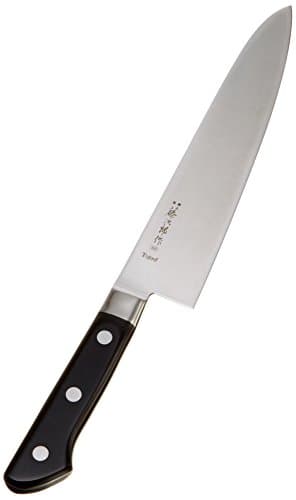
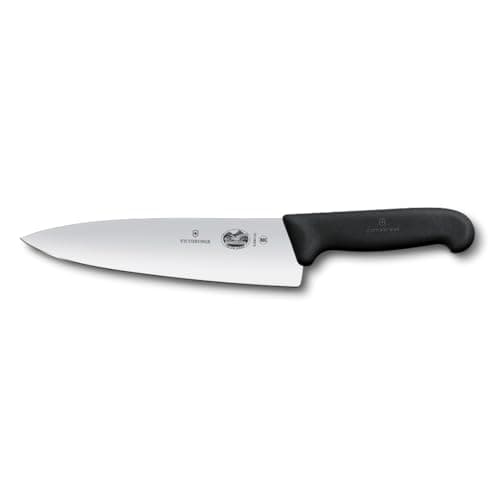
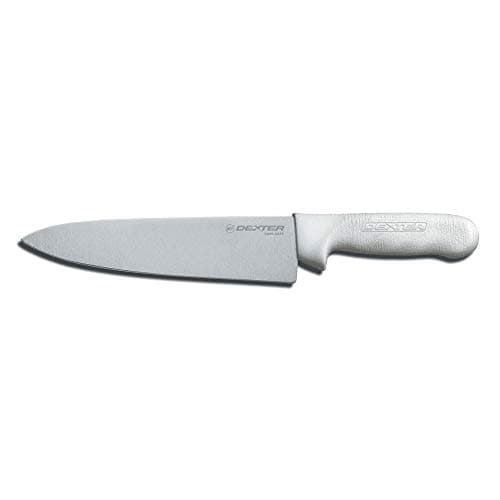
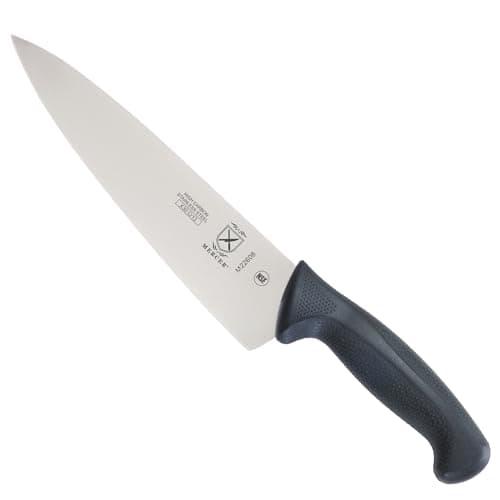
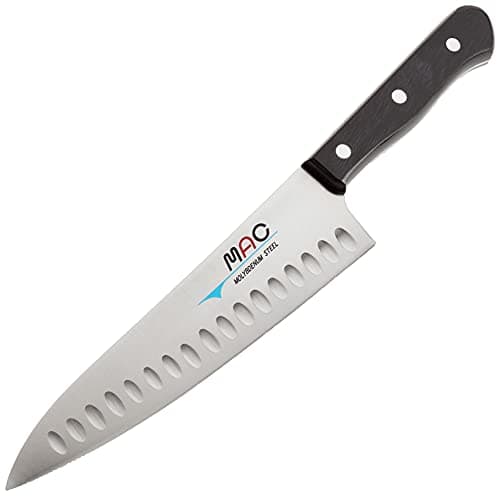
"Stamped" is often used as a synonym for "cheap," and it is one of the most misleading ideas in cutlery. A stamped blade is cut from a sheet of steel rather than forged from a bar — which makes it thinner and lighter, and a thin blade cuts better, not worse. These five stamped chef knives are ranked by our overall score, with live prices — and several out-cut forged knives costing far more.
The top pick, the MAC MTH-80, is a thin stamped blade that leads our entire best chef knives ranking. Below it, the stamped Tojiro DP delivers real Japanese steel for about $75, and the stamped Victorinox is the near-universal first knife. The lesson runs right through the list: the thing that decides how a knife cuts is steel and geometry, and stamping helps the geometry.
What "stamped" actually means
A stamped blade is punched from a rolled sheet of steel, then ground, heat-treated and finished. A forged blade is hammered or pressed from a thick bar, which leaves it heavier with a thick spine and usually a bolster. That is the whole difference — a manufacturing method, not a quality grade. Stamping produces a lighter, thinner blade; forging produces a heavier, more substantial one. Neither is inherently sharper or longer-lasting, because those come from the steel and the grind, not from how the blank was made.
Why thin (stamped) blades often cut better
A knife cuts by wedging material apart as the edge passes through. The thinner the blade behind the edge, the less it has to shove aside — so a thin stamped blade falls through an onion while a thick forged one can split it. That is why the thin stamped MAC out-cuts heavy forged German knives in our ranking, and why so many premium Japanese knives are stamped too. Forging buys heft and a bolster and an heirloom feel; it does not buy a better cut. If cutting performance per dollar is your goal, stamped blades are where it lives — the same conclusion we reach in best chef knives for the money.
The real trade-offs of a stamped blade
Stamped is not free of downsides — they are just not about cutting. Feel: a stamped blade is lighter and less planted, which cooks raised on heavy German knives sometimes find insubstantial. Bolster: most stamped knives have no full bolster, so there is no built-in finger guard (a plus for sharpening the whole edge, a minus if you like the guard). Steel: stamped says nothing about the steel — the soft-stainless Victorinox and the hard VG-10 Tojiro are both stamped, and their edge retentiondiffers completely. Judge the steel and geometry, not the word "stamped."
The picks, and who each suits
- MAC MTH-80 — the thin stamped blade that tops our whole ranking; hard steel, keen edge, the best cutter here.
- Tojiro DP — a stamped, clad VG-10 Japanese blade for about $75, the value way into hard steel.
- Victorinox Fibrox — the light, grippy, foolproof value pick and the default first knife.
- Dexter Sani-Safe — the NSF foodservice stamped workhorse, sealed handle, sanitation-first.
- Mercer Millennia — the cheapest stamped knife a professional will endorse, a culinary-school staple.
Stamped or forged — how to decide
Pick up both if you can. If you want a light, nimble, precise blade and the best cut per dollar, buy stamped. If you want a heavy, planted, substantial knife with a full bolster and do not mind paying for the feel, buy forged. Just do not buy forged expecting it to cut better — it will not. And whichever you choose, the highest-value upgrade is a stone, because a sharp stamped knife beats a dull forged one every day of the week.