Nobody buys knife storage for its own sake. You buy it because a good knife went into a drawer with a vegetable peeler and came out three months later cutting like a butter knife — and because reaching blind into that drawer is how people cut themselves. Storage is the cheapest thing you can buy that makes a knife last longer, and it is the one purchase in this category where a twenty-dollar answer genuinely beats a hundred-dollar one.
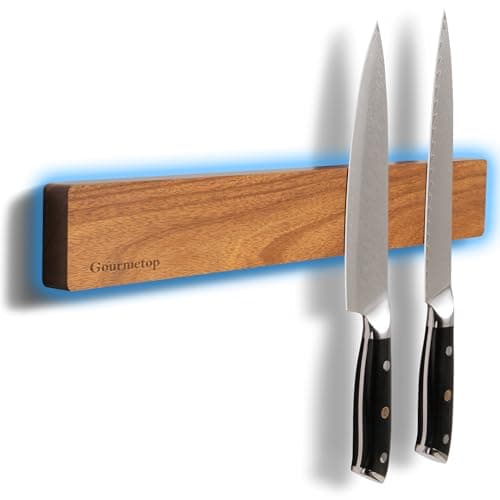
These six are ranked on one question above all others: what does the edge touch?A blade resting on wood or hanging in air keeps its apex. A blade knocking against a peeler, a fork and another knife loses it. Everything else — capacity, looks, whether it needs a wall — is a distant second. Our top pick, the Gourmetop 16" acacia magnetic bar, wins because it puts a wood face between your knives and the hardware, holds a working set, and costs the least of anything on this page.
If you have not decided which kind of storage you want yet, start with how to store kitchen knives — it lays out the four methods without a shopping list attached, and this page is where you come back once you have picked one. The head-to-head on the two most common answers is in magnetic knife strip vs block.
What actually dulls a knife in storage
A sharpened edge is a wedge that narrows to something on the order of a few microns across. It does not need abuse to lose that apex; it needs contact with anything as hard as itself. Three things in a kitchen qualify, and all three live in a knife drawer.
- Other steel.Blade against blade, blade against a fork, blade against the metal runner of the drawer. Each contact rolls or chips a fraction of the apex. None of it is dramatic, and the sum of it over a year is a knife you swear "never holds an edge."
- Lateral load. Sliding a knife into a tight slot edge-first drags the apex along wood or plastic for the whole length of the blade. Slot-style blocks are perfectly fine storage; going in edge-first is what makes them a problem, and it is entirely a habit rather than a design flaw.
- Trapped moisture. The slowest and most expensive of the three. A blade put away damp in a closed slot or a sheath corrodes at the edge first, because that is where the least metal is. Even stainless is stain-less, not stain-proof — see carbon vs stainless steel knives for what the two do differently when they are stored wet, and how to prevent knife rust for the routine.
This is why the honest version of the question "which storage is best?" is really "which storage lets the edge touch the least, and dry the fastest?" It is also why storage belongs in the same conversation as sharpening: most people who ask why does my knife get dull so fast are describing a storage problem, not a steel problem.
The five things we ranked on
- Blade contact. Wood and plastic are kind to an apex; bare stainless is neutral but marks the flats; another knife is the worst case. This carries the most weight in the scores.
- Access. Can you take one knife off, one-handed, with wet hands, without disturbing the others? Storage you have to fight is storage you stop using.
- Capacity and length.A 16-inch bar holds a working set. A 12-inch one holds three knives and then you are back in the drawer. Long blades — a 10-inch chef's knife, a bread knife— are what break capacity claims.
- Mounting reality. Screws into a stud beat adhesive on tile, and neither is available to everyone. A renter with a tiled backsplash has a genuinely different set of options than a homeowner with drywall.
- Drying. Open air beats an enclosed slot, and an enclosed slot beats a sealed sheath. Nothing beats drying the knife before you put it away.
The four ways to store a knife, and who each is for
- Magnetic wall bar.Best all-round. The edge touches nothing but the bar face, air circulates around the whole blade, and you can see the knife you want. Needs wall or a flat metal flank, and a bar long enough to matter. Buy a wood-faced one if you can — steel against steel is what puts fine scratches on a polished blade flat.
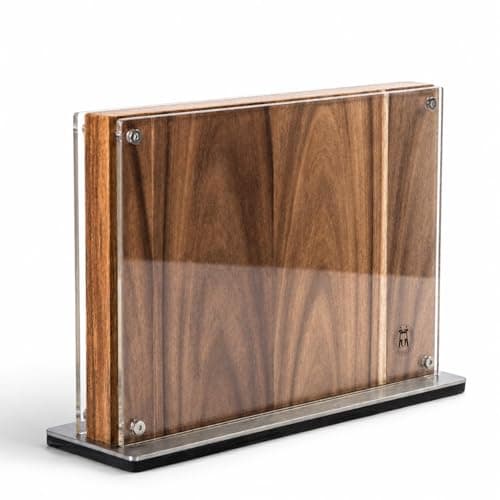
- Countertop block.Best when the wall is not an option. A slot-free magnetic block like the Schmidt Brothers gives you the bar's open-air advantage on a counter; a traditional slotted block does the job too, with the caveats below. Both eat counter space, which in a small kitchen is the most expensive real estate you own.
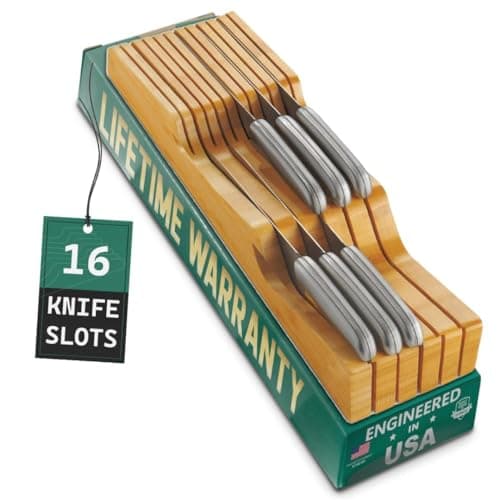
- In-drawer tray. Best when you want the counter and the wall left alone, or you have small children in the house and would rather the knives were behind a drawer front. It costs you a drawer and it is the slowest to reach into. Our guide to doing the drawer properly covers the version of this that does not need a tray at all.
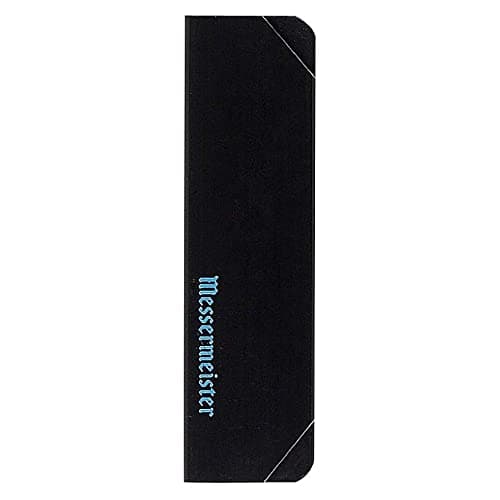
- Edge guards. Best as a first fix and as a traveling companion. A few dollars stops one knife from being ruined tonight, and they are the only item here that also works inside a drawer, inside a bag, or in a rented kitchen. They are protection rather than organization.
Why we do not lead with a slotted block
Slotted wooden blocks are the default in most kitchens and there is nothing wrong with them in principle: the blade sits in wood, which is softer than steel, and it is a world better than loose in a drawer. Three practical things push them below a bar or an open block on this list.
First, you cannot see or clean inside a slot — the one part of a block that collects crumbs and moisture is the part your cloth cannot reach. Second, the slots are fixed sizes chosen by whoever made the block, which is why a block sold with a set so rarely accommodates the knife you actually bought afterwards; a wide cleaver or a tall santoku simply does not go in. Third, most people load a slotted block edge-first out of habit, which drags the apex the length of the slot every single time.
If you already own one, keep it, keep it dry, and slide knives in spine-first with the edge facing up. That one change removes most of the objection. If you are buying storage new, the magnetic options here solve all three problems at once, which is why they lead the list.
Magnet strength: the spec nobody publishes
We would like to rank magnetic bars on holding force. We cannot, because not one maker on this page publishes a figure — not in gauss, not in pounds of pull, not for a stated blade thickness. WÜSTHOF says "hidden super magnet." Gourmetop says "strong dual-row magnet." Both are marketing copy, and we are not going to convert marketing copy into a number and put it in a spec table.
What you can rely on is geometry, which is published. A bar with two rows of magnets grips a wide blade at two points instead of one, which matters most for the heaviest thing you will hang — a cleaver or a chef's knife with a thick spine. Length is published, and length decides capacity. Face material is published, and face material decides what happens to the flats of your blades over a decade. Rank on those three and you are ranking on facts.
Mounting a magnetic bar so it stays up
The single most common complaint about magnetic strips is a strip that came off the wall with six knives on it. It is nearly always a mounting problem rather than a magnet problem, and it is avoidable.
- Use the screws if you can. Adhesive is a genuine convenience on tile, glass or a refrigerator flank, but a fully loaded 16-inch bar is carrying a few pounds in permanent shear. Into a stud, or into proper drywall anchors, is the version that is still on the wall in five years.
- Mount it where a knife can come off vertically.Under a cabinet with four inches of clearance means lifting a 10-inch blade sideways off the magnet, which is exactly the motion that scrapes an edge along the bar. Schmidt Brothers publishes the same requirement for its block — about six inches of clearance above it.
- Not above the stove, not above the sink. Grease and steam both find magnetic bars, and a knife stored in a plume of cooking moisture is a knife stored damp.
- Not at toddler height. Obvious, and worth writing down. If a low wall is the only wall, the in-drawer tray is the better answer; knife safety basics has the rest of the household version of this.
The habit that matters more than the hardware
Whatever you buy, put the knife away spine-first, dry. On a magnetic bar that means laying the spine against the face and rolling the blade flat onto it, then rolling it off spine-first to remove — never dragging the edge across the bar. In a slot it means edge-up. In a guard it means the blade goes in straight rather than levered against the lip.
And dry means dry. Two seconds with a towel after washing does more for a knife than any object on this page; the full routine is in how to clean a kitchen knife and knife care and storage. Carbon steel is stricter still — see how to season a carbon steel knife.
How this list is ranked
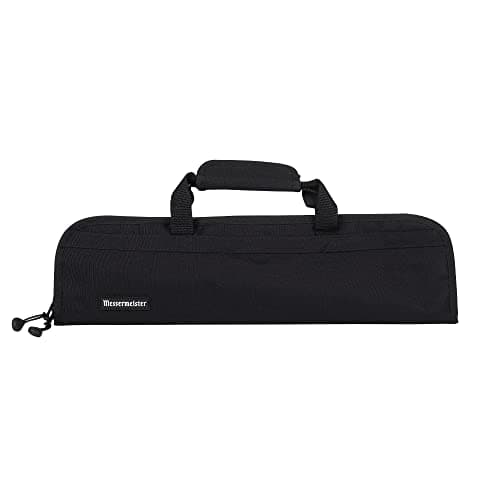
Scores are judgments from published specifications and the value math on how we choose. We do not run a test kitchen and we have not hung knives on these for a year. The Schmidt Brothers block and the Bellemain tray tie on overall score, and the tie is broken by which one solves the more common problem: a counter is available to more kitchens than a spare 17-inch drawer is. The two Messermeister items sit last not because they are bad — both are the best of their kind here — but because a single guard stores one knife and a bag stores none of them at home, and capacity is a scored metric.
One deliberate omission: we have not ranked a traditional slotted knife block. The good ones are almost all sold as part of a knife set rather than empty, which makes them a knife set purchase rather than a storage purchase, and the empty ones on the market are mostly unbranded listings with no published specification to compare. We would rather say that plainly than pad the list.
What we would actually buy
For most kitchens: the Gourmetop 16-inch acacia bar, screwed into a stud at a height where a 10-inch blade lifts off cleanly. It is the cheapest thing here and it does the job the best hardware does. If you want the same idea in hardware that will still be perfect in twenty years, or you need the extra two inches, the WÜSTHOF 18" Magnabar.
If there is no usable wall — and in a lot of rentals and tiled kitchens there genuinely is not — the Schmidt Brothers Downtown block gives you open-air storage on a counter with no slots to trap anything. If the counter is spoken for too, the Bellemain bamboo tray turns a drawer into proper storage for a fraction of what the block costs.
And if you are reading this with good knives loose in a drawer right now, buy a handful of Messermeister edge guards today and decide about the rest later. It is the smallest amount of money on this page and it stops the damage tonight. Then spend what you saved on a honing steel, because storage and honing are the two habits that decide how often you need to sharpen a knife at all.