Years, and usually decades, for a home cook sharpening a handful of knives a few times a year. A whetstone is a block of abrasive an inch or more thick and you consume it a few microns at a time. The thing that retires one is almost never running out of stone — it is the face going hollowin the middle from use, which makes it impossible to hold a consistent angle. And that is a maintenance job, not the end of the stone's life: flattening takes ten minutes and gives you a new surface.
Dishing, not wearing out
Every pass you make takes a little abrasive off the stone as well as a little steel off the knife. That is how a water stone works: fresh, sharp abrasive is continually exposed as the binder releases spent grains. The problem is that you do not wear the stone evenly. Most people sharpen in the middle, so after enough sessions the center of the face sits lower than the ends.
A hollow stone is genuinely unusable for good work, because the angle between blade and stone changes as the knife travels. You feel it as "I cannot get this knife sharp any more" long before you can see it. The test takes five seconds: lay a straight edge — a steel ruler, the spine of another knife — across the face and look for light under the middle. Or scribble a pencil grid across the stone and rub it on a flattening plate; the ink survives in the low spots.
Then you flatten it back, and you are done. How to flatten a whetstone is the step-by-step. Over a decade of home use you might flatten a soft water stone a dozen times, and still have most of the stone left.
What actually varies between stones
How fast a stone dishes depends on three things, and the differences are large:
- Binder hardness. A soft binder releases abrasive readily, which is why soft stones cut fast and feel good, and why they go hollow quickly. A hard magnesia-bonded ceramic like the Shapton Kuromaku holds its grains far longer and stays flat much longer. This is the single biggest factor.
- Grit. Coarse stones do more work per pass and dish faster. A 6000-grit finishing stone, used lightly as it should be, can go a very long time between flattenings.
- Construction. A diamond plate does not dish at all, because the abrasive is a single plated or bonded layer on a rigid substrate. It has a different wear story instead: the initial aggressive bite settles down over the first few uses and then the plate cuts steadily for years, until eventually the exposed diamond wears and the plate slows.
What you sharpen matters too. Soft German steel at HRC 55–58 abrades quickly and dishes a soft stone faster than hard Japanese steel does — see stones for German knives. Pressing hard makes everything worse: it dishes the stone, rounds the apex and does not sharpen faster.
Two things that really do kill a stone
- Freezing it wet. Water in the pores expands and cracks the stone. Do not store a soaked water stone in a garage or an unheated shed over winter. This is the most common way a water stone dies young.
- Dropping it. They are brittle. A cracked stone can sometimes still be used but will not stay flat.
Glazing and clogging look like death and are not. A stone whose surface has gone shiny and stopped cutting has its abrasive loaded with metal swarf and spent grit; a quick rub on a flattening plate or a coarse stone opens it up again. How to clean a whetstone covers it. Similarly, a stone that will not raise a burr is usually a technique problem rather than a worn-out stone — why your knife won't get sharp.
What to look for if you want to stop thinking about it
- A hard binder, if you want flatness. Ceramic splash-and-go stones stay flat far longer than soft soakers. You trade a little feedback for a lot less maintenance.
- Or no binder at all. A diamond plate never dishes and never needs flattening. For most kitchen use that single fact outweighs its coarser maximum finish.
- Thickness, if you want longevity on paper. A thicker stone has more material to give. In practice this matters much less than people expect, because you will not consume it.
- A flattening plate, at some point. If you own soft water stones, this is the accessory that makes them last indefinitely. It is also the reason not to replace a dished stone.
- Face size. A bigger face spreads wear over more area, dishes more slowly, and is easier to sharpen a long blade on.
The picks, and who each suits
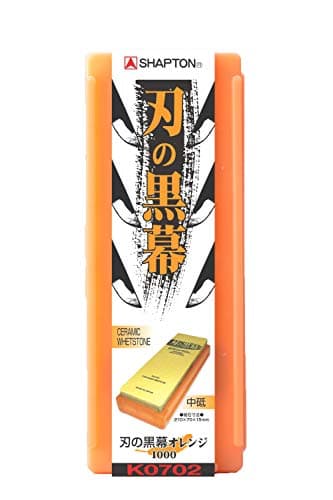
- Shapton Kuromaku 1000 — the stone to buy if staying flat is what you care about. Hard magnesia-bonded ceramic, splash-and-go with no soaking, fast cutting and hard wearing, in a storage case that doubles as a stand. It will go far longer between flattenings than a soft soaker at the same grit. Not the stone to learn on: the King combination teaches the skill better and throws in a finishing side.
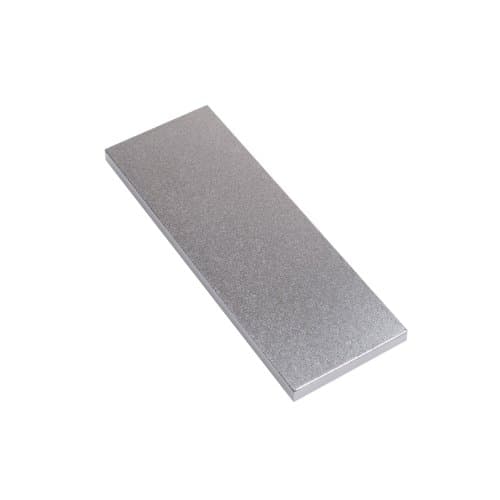
- Atoma #400 diamond plate — the plate that makes every other stone last indefinitely. Monocrystalline diamond in a dotted array on ~10 mm machined aluminum, 210 × 75 mm, and the reference flattener in the knife world. It is also a capable coarse stone in its own right. Expensive, and the wrong first purchase — buy it once you own water stones worth keeping flat.
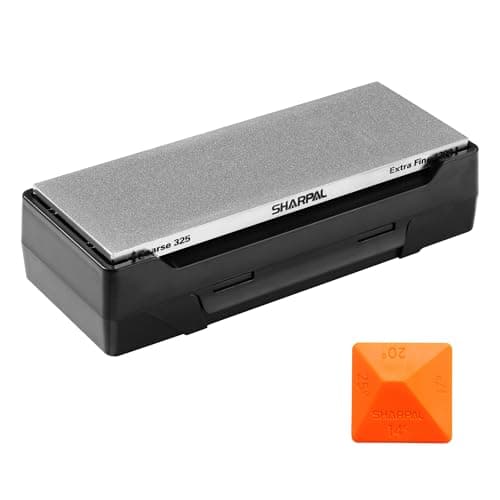
- Sharpal 162N dual-grit diamond plate — the way to sidestep the whole problem on a budget. 325/1200 on an 8 × 3 in double-sided plate with a non-slip frame: it never dishes, never needs flattening, works wet or dry, and it will also flatten your water stones. The ceiling on finish is toothier than a high-grit water stone — pair it with a 6000 stone or a strop if that matters to you.
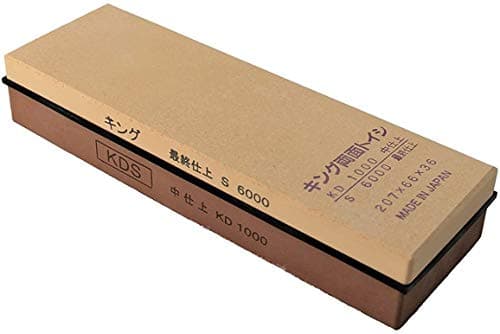
- King KDS 1000/6000 — included deliberately as the counter-example, and still the stone most people should start with. Soft binder, wonderful feedback, very cheap, and it dishes fastest of the four. That is a perfectly good trade: it has taught more people to sharpen than anything else, and a flattening plate resets it. Just expect to flatten it, and do not store it soaked somewhere cold.
Rough expectations, stated as expectations
We are not going to invent a number of sharpenings per stone, because the honest answer depends on your steel, your pressure and your grit. What we can say plainly is the shape of it: for a home cook sharpening a few knives a few times a year, a water stone is a multi-year to multi-decade purchase whose face will need flattening periodically, and a diamond plate is a multi-year purchase that will not. Neither is a consumable in the sense that a pull-through's carbide wheels are. If a stone has let you down inside a year, the cause is almost certainly dishing, glazing or a crack — all three diagnosed above.
And a last frame worth keeping: are expensive whetstones worth it runs the price ladder, and the answer bears directly on this page — a stone's cost per year is low enough that longevity should not be the thing you optimize for. Buy the stone that suits your steel and your patience, and keep it flat.
Where to go next
Best sharpening stones is the full ranking; stones for beginners if this is your first; whetstones under $50 for the budget tier; and diamond stones if the never-flatten argument above has landed. For technique, how to use a whetstone and soaking vs splash-and-go are the two to read.