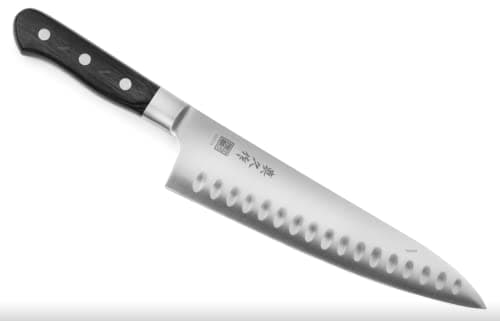
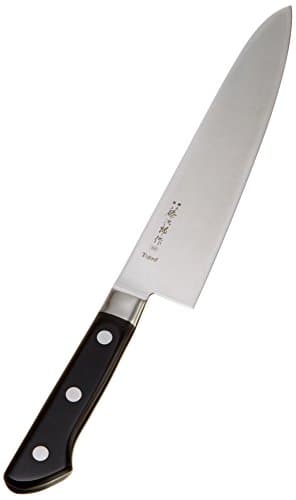
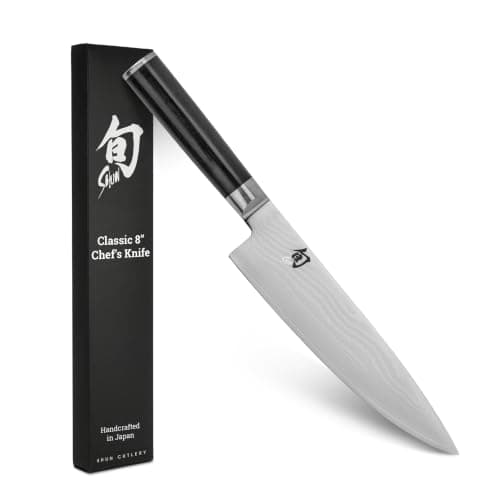
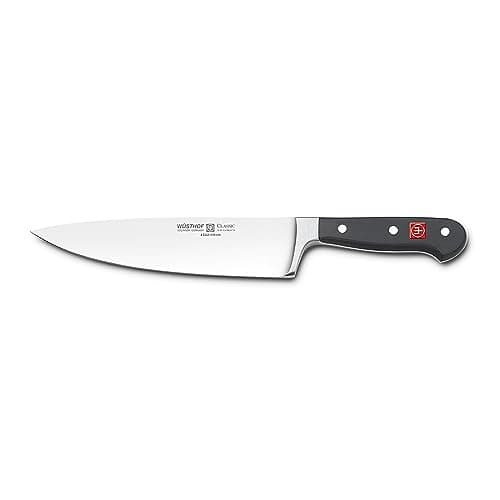
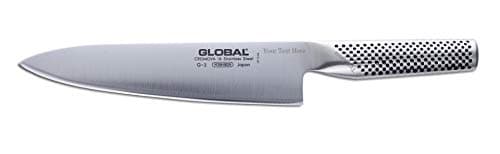
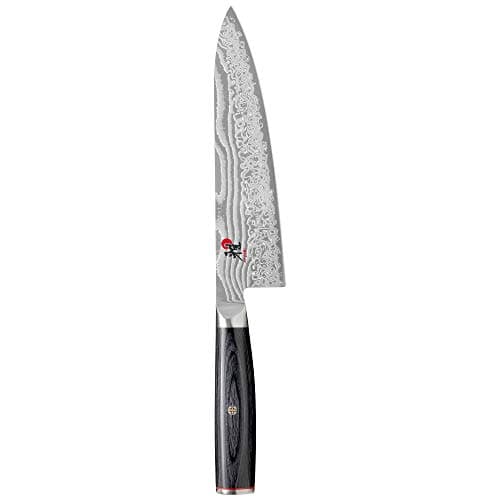
"Best in the world" is a phrase that invites nonsense, so let's be precise about it. We ranked the finest chef's knives you can actually buy by the three things that decide how a knife cuts — steel and hardness, geometry, and value against a published rubric — with live prices. What you get is a list of genuinely world-class blades, led by a hand-honed Japanese edge, with one deliberately uncomfortable entry near the top.
That entry is the Tojiro DP, a knife that costs about a third of the showpieces around it and cuts nearly as well — because world-class cutting is not the same thing as a world-class price. The keenest factory edge here belongs to the Miyabi Kaizen II; the most-loved all-rounder among serious cooks is the MAC MTH-80 at a fraction of premium money; the most beautiful is the real-Damascus Shun Classic. If you want the finest object, buy the Miyabi or the Shun. If you want the finest cut per dollar, the Tojiro and the MAC will humble knives twice their price.
How this list is ranked
Ranked by overall score — steel and hardness, out-of-box edge, handling, build and value — highest first, tie-broken toward the finest edge and finish for a list about the best blades made. That's why the hand-honed Miyabi leads a MAC it ties on score, and why a $75 Tojiro sits near the top: our value mathrewards cutting-per-dollar, and the Tojiro maxes it. The scores are built from published specs and value math, never lab tests we didn't run — we do not run a test kitchen and say so.
What makes a chef's knife world-class
- Hard, fine-grained steel.The best blades use harder steel (~HRC 60–63) that takes and holds a keener edge far longer than soft German stainless. The Miyabi's FC61 and the Shun's VG-MAX are the story; the trade is that a hard, thin edge chips if abused.
- Acute, well-finished geometry.A world-class knife is ground thin behind the edge and finished at a low angle — the Miyabi's hand-honed three-step Honbazuke edge is about as acute as a factory edge gets. Thinness, not weight, is what makes a knife fall through food.
- Fit, finish and the object itself.Past raw cutting, the premium buys Damascus cladding, hand-finishing and a blade you look forward to using — real value if it makes you cook more, but be honest that it's finish, not cut.
- And the honest limit:above about $150 you're mostly paying for that finish. A MAC or Tojiro proves you can get 90% of the cut for a fraction of the money — the whole reason this "best in the world" list refuses to be a pure price ladder.
Which of the best is right for you
If you can already sharpen a hard edge and want the keenest, most beautiful object, the Miyabi or the right-handed Shun are the knives to lust after. If you want the blade serious cooks actually reach for, it's the MAC. If you want to feel the "world-class cut" without spending world-class money, the Tojiro is the smartest buy on the page. Still torn between a hard keen blade and a tough forgiving one? Read Japanese vs German knives — and whatever you choose, a great edge you can't maintain is wasted, so budget a good stone alongside it.
What the internet thinks, and what we published this year
Two companion pieces to this one. What Reddit actually recommends tracks the knives the enthusiast forums converge on, which overlaps this list less than you would expect; and our 2026 ranking note explains what changed in the field this year and what did not.
Looking at makers rather than models?
A list of the finest individual knives is not the same as a list of the makers worth trusting. The best chef knife brands ranks ten of them on published specs, heat-treat consistency, range and after-sale service — and explains why the cheapest brand here takes the top spot.