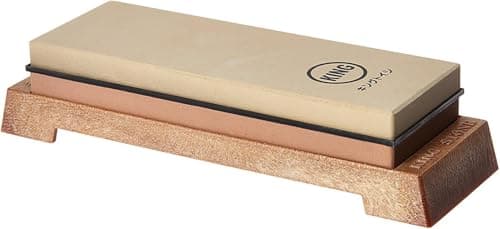
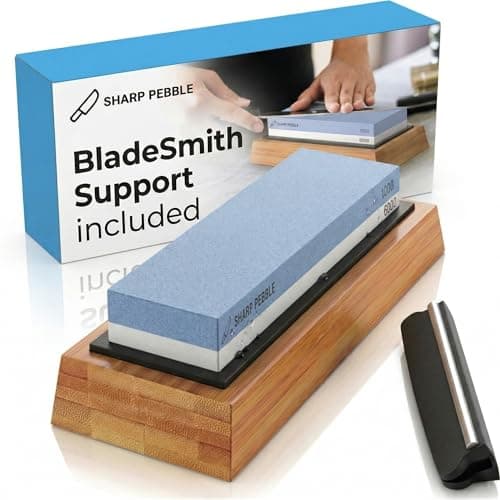
A combination whetstone puts two grits on one stone — a coarser side to sharpen, a finer side to refine — so a single, inexpensive tool does the whole home-cook job. For most people it is the entire sharpening kit they will ever need, and it's the cheapest honest way into freehand sharpening. These five are ranked with live prices.
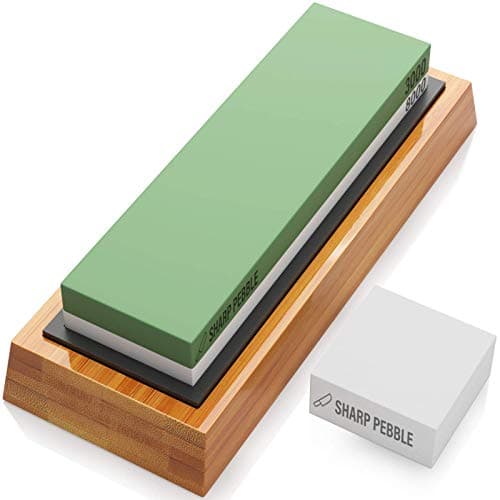
Our top pick, the Sharp Pebble 1000/6000, is the combination almost everyone should buy: the 1000 side sets a working edge, the 6000 side polishes it, and it ships with an angle guide and a weighted base so a first-timer can start the day it arrives. The rest of the list is here for the buyers it doesn't fit — a cheaper classic, a never-dishing diamond, a budget repair combo, and a finishing stone for when 6000 grit isn't fine enough. If you want the whole field of stones ranked on outright performance instead of the combination format specifically, see our best sharpening stones roundup.
What a combination whetstone actually is
A combination (or "dual-grit") whetstone is one block with a different abrasive bonded to each face. You sharpen on the coarser side, then flip it and refine on the finer side — two stones' worth of work from a single stone that costs a fraction of buying the grits separately. It is the format most people mean when they say "whetstone," and for a home cook it is very often the right and only stone to own. Learning to use one is the highest-leverage skill in the kitchen; the mechanics are in our how to use a whetstone guide.
Which grit pairing to buy
Grit is how coarse the abrasive is — low numbers cut fast and rough, high numbers polish. The pairing on the stone decides what jobs it can do:
- 1000 / 6000 — the default.1000 sets a genuinely sharp working edge; 6000 refines it to a clean, keen finish. This is the pairing almost every home cook should buy, and it's why it leads this list.
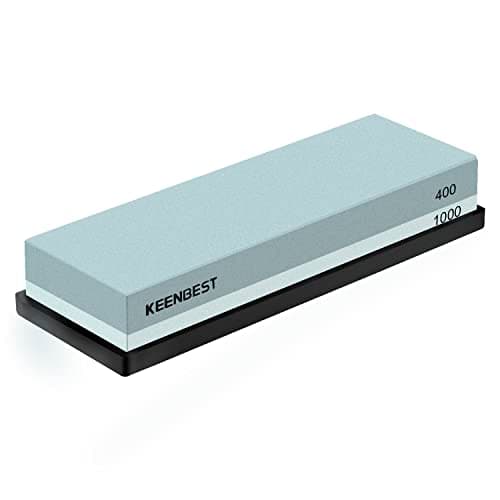
- 400 / 1000 — the repair combo. 400 resets a dull or lightly chipped edge fast, 1000 brings it back to sharp. Cheap and useful, but there is no polishing grit, so the finish is a working edge rather than a refined one.
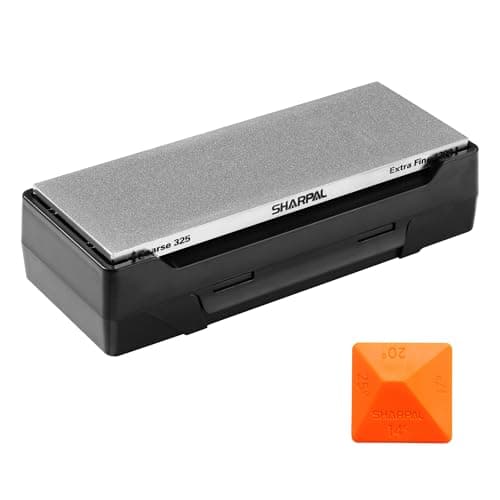
- 325 / 1200 (diamond) — coarse and fast. A dual-grit diamond plate repairs and sharpens quickly and never needs flattening, but tops out toothier than a fine water stone.
- 3000 / 8000 — finishing only. Polishing grits that remove almost no metal. This is a secondstone for enthusiasts, not a first one — it can't sharpen a dull knife on its own.
The full breakdown of grit and the angle to hold is in our sharpening angle guide.
When a combination beats two separate stones — and when it doesn't
For most home cooks, a 1000/6000 combination is smarter than two single-grit stones: it's cheaper, it stores as one thing, and it covers the whole job. Buy the combo, and put the money you save toward a honing steeland a cheap knife to practice on. The case for two separate stones is narrower than the internet suggests. It only really applies if you sharpen hard, high-carbide steels heavily (a soft combination side dishes quickly under that load), if you want a specific premium grit a combo doesn't offer, or if you sharpen often enough that a combination stone's uneven wear — the coarse side gets used more — becomes a genuine annoyance. If none of that is you, a combination stone is the honest recommendation.
Water or diamond?
- Water stones (Sharp Pebble, King): the classic. Great feedback and a fine, clean finish. The trade is maintenance — they need a soak before use and they dish (hollow out), so you flatten them periodically.
- Diamond plates (Sharpal): never dish, never need flattening, no soaking, and fast on hard modern steels. The finish is toothier and the feedback firmer — and a diamond plate also doubles as the tool that flattens your water stones.
How this list is ranked
This list is ranked as combination whetstones— how well the all-in-one format serves a home cook — not purely on raw performance score. That's why the Sharp Pebble and King 1000/6000 stones lead a higher-scoring diamond plate: the diamond is a superb stone, but its coarser 325/1200 pairing and toothy finish make it the specialist choice here, not the default combination. For the same field ordered on outright cutting performance, see the main best sharpening stones roundup, and if you're buying your very first stone, the best beginner stones list ranks the same idea for how forgiving each is to learn on.
Maintenance: soaking and flattening
Soft water combinations need two habits. First, a soak — five to ten minutes in water until the bubbles stop, so the stone cuts instead of drying out. Second, flattening: every soft stone dishes with use, and a dished stone can't produce a straight edge, so you level it periodically with a flattening stone or a diamond plate. A combination stone dishes unevenly because the coarse side does more work, which makes flattening a little more important, not less. The diamond plate on this list sidesteps both chores entirely — nothing to soak, nothing to flatten.
Where to start
Buy the Sharp Pebble 1000/6000, read our how to use a whetstone and how to sharpen a chef's knife guides, and practice on a cheap, soft-steel beginner knife before you touch one you care about. Between sharpenings, a honing steel keeps the edge aligned so you sharpen far less often.