Skip to content
Bevel & Bone

HUB 01 · Chef Knives

Best Chef Knives for Home Cooks

The knife you settle on for years of real cooking — forgiving, comfortable, and easy to keep sharp without ever touching a stone.

By Stephen V.Updated How we choose
#ad

We earn a commission when you buy through our Amazon links, at no extra cost to you. It never changes a ranking, and we say so when the cheaper knife is the better buy. How this works.

A home cook is not a line cook and not a beginner. You cook a few times a week, your knife skills are real but imperfect, you are probably not going to learn to sharpen on a stone this year, and you want to buy onegood chef's knife and keep it for a decade. That brief points at a different winner than our overall ranking — because the best-cutting knife and the best knife for a home kitchen are not always the same blade.

How this list is ranked: for home-kitchen fitness, not raw cutting score. We weight forgiveness (does it survive a hit on a chicken bone or an accidental twist?), low-maintenance edge-keeping (can you keep it usably sharp with a cheap honing rod, no whetstone required?), everyday comfort, and buy-once durability above the last few percent of sharpness. That is why the archetypal German workhorse leads here while the keener, more demanding knives sit lower — roughly the reverse of where they land on the flagship list. The scores in the table still come from the same published rubric, so a higher number means "better knife for the money," not "better fit for a home kitchen." Start at the top.

The short answer

Quick picks

#ad · Live prices from the Amazon Product API, as of Jul 28, 2026. Where we have no verified live price we show none — we'd rather leave a gap than print a number that has rotted.

By the numbers

The specs, side by side

Every figure below is the manufacturer's published specification. Where a maker doesn't publish a value, the cell reads "—" rather than a number we made up.

Knife / ToolBladeSteelHardnessEdgeConstructionWeight
Wüsthof Classic 8" Chef's Knife8 in (20 cm)X50CrMoV15 stainless~HRC 5814° per side (Precision Edge Technology)Forged, full tang, full bolster~9.0 oz (255 g)
Victorinox Fibrox Pro 8" Chef's Knife8 in (20 cm)X50CrMoV15 stainless~HRC 55–56~20° per sideStamped, full-length tang~6.6 oz (187 g)
Mac Mth-80 Professional Hollow Edge 8" Chef's Knife8 in (20 cm)Molybdenum-vanadium high-carbon~HRC 59–61~15° per sideThin stamped blade, Pakkawood handle~6.5 oz (184 g)
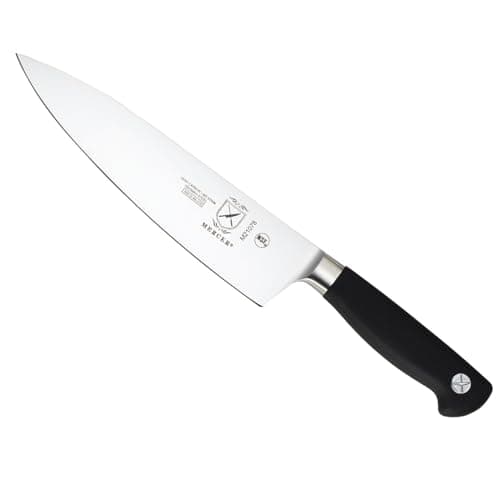
Mercer Culinary Genesis 8" Chef's Knife8 in (20 cm)X50CrMoV15 German stainless~HRC 56~20° per sideForged, full tang, short bolster~8.5 oz (241 g)
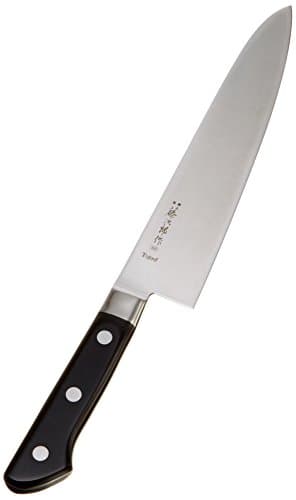
Tojiro DP Gyuto 210 mm Chef's Knife8.3 in (210 mm)VG-10 core, stainless clad (3-layer)~HRC 60~15° per sideStamped, bolsterless, riveted handle~7.4 oz (210 g)
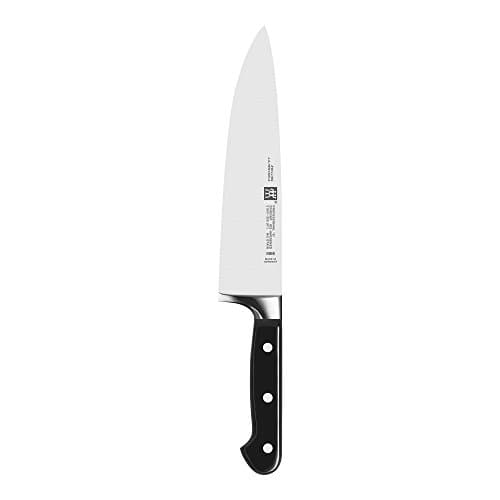
Zwilling Professional S 8" Chef's Knife8 in (20 cm)Zwilling special-formula stainless~HRC 57~15° per sideSigmaforge (single billet), curved bolster~8.8 oz (249 g)
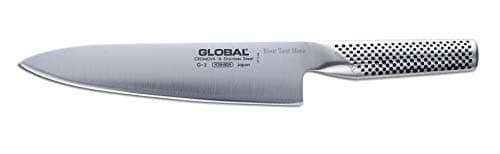
Global G-2 8" Chef's Knife8 in (20 cm)CROMOVA 18 stainless~HRC 56–58~15° per sideOne-piece steel, sand-filled hollow handle~5.8 oz (164 g)

In detail

The picks, in full

01
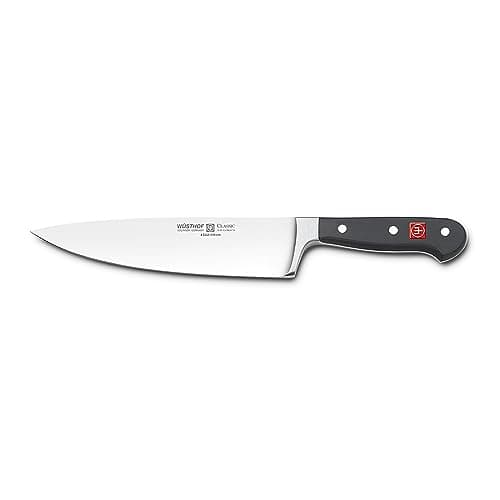
Wüsthof Wüsthof Classic 8" Chef's Knife

A do-everything German workhorse

Wüsthof Classic 8" Chef's Knife

8 in / 20 cmX50CrMoV15~HRC 5814° per sideForged
7.4/10

The archetypal German chef knife. Heavy, tough, forgiving, and it will outlive you if you hone it.

Edge retention
7
Out-of-box edge
7
Handling
7
Build
9
Value
7

Pros

  • Forged from a single billet with a full bolster and full tang — the reference for a durable German blade
  • Wüsthof's newer 14°-per-side edge is noticeably keener than the old 20° grind
  • Tough enough to shrug off the abuse a home cook actually inflicts
  • Triple-riveted POM handle is essentially indestructible

Cons

  • Heavy — a real workout over a long prep session
  • The full bolster eventually blocks the heel and complicates sharpening the whole edge
  • Full retail price is high; it's frequently the knife people overpay for

Don't buy this if…

you want a light, nimble knife or you have smaller hands. This is a heavy German blade by design — the MAC or Tojiro will feel far more agile.

$170.00View on Amazon

Price as of Jul 28, 2026. Prices change — Amazon's is the one that counts.

#ad · we may earn a commission from this link to Wüsthof Classic 8" Chef's Knife

02
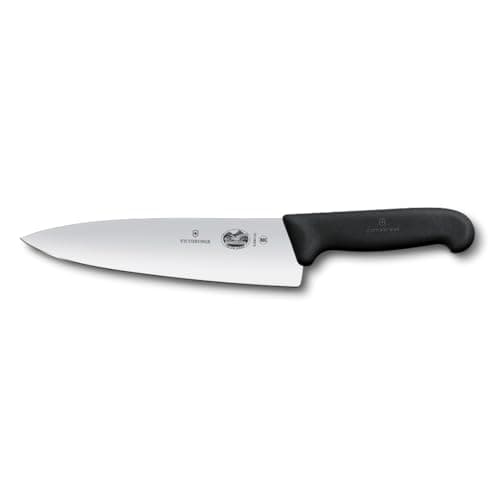
Victorinox Victorinox Fibrox Pro 8" Chef's Knife

Your first good chef knife

Victorinox Fibrox Pro 8" Chef's Knife

8 in / 20 cmX50CrMoV15~HRC 55–56StampedFibrox handle
7.8/10

The default answer to "what's a good first chef knife." Cheap, light, holds a usable edge, and a joy to sharpen.

Edge retention
6
Out-of-box edge
8
Handling
8
Build
7
Value
10

Pros

  • Costs a fraction of a forged German knife and out-cuts most of them out of the box
  • Soft-ish steel takes a screaming edge on a stone in minutes — the easiest knife here to learn to sharpen on
  • Light and nimble; the textured Fibrox handle grips even with wet hands
  • NSF-certified and dishwasher-tolerant (though you still shouldn't)

Cons

  • Softer steel means you hone often and sharpen more frequently than a hard Japanese blade
  • Stamped blade lacks the heft and bolster some cooks want for control
  • It is a tool, not an heirloom — nothing about it is beautiful

Don't buy this if…

you want a knife that keeps its edge for months between sharpenings. This trades edge retention for being cheap and easy to re-sharpen — a great trade for a beginner, a poor one if you refuse to touch a stone.

$47.98View on Amazon

Price as of Jul 28, 2026. Prices change — Amazon's is the one that counts.

#ad · we may earn a commission from this link to Victorinox Fibrox Pro 8" Chef's Knife

03
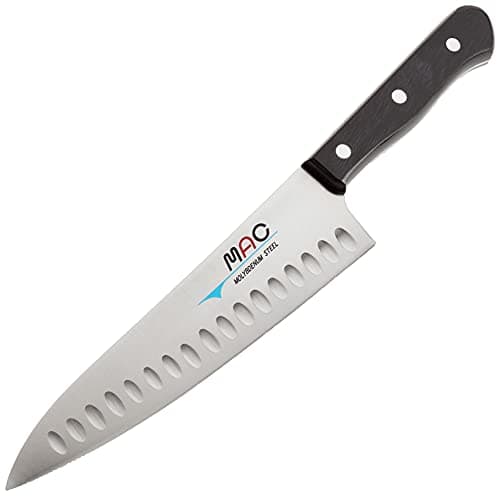
Mac Mac Mth-80 Professional Hollow Edge 8" Chef's Knife

The best overall, if budget allows

Mac Mth-80 Professional Hollow Edge 8" Chef's Knife

8 in / 20 cmMolybdenum-vanadium~HRC 59–61~15° edgeDimpled
8.4/10

The knife a lot of cooks quietly consider the best all-rounder made. Thin, sharp, and it stays that way.

Edge retention
9
Out-of-box edge
9
Handling
9
Build
8
Value
7

Pros

  • The blade is unusually thin, so it falls through produce with almost no wedging
  • Harder Japanese-style steel than the German knives — holds its edge markedly longer
  • The dimples (granton edge) genuinely reduce sticking on starchy vegetables
  • Takes and holds a very acute edge

Cons

  • No full bolster; the pinch grip sits right at the blade — some find it exposed
  • Harder steel is a little less forgiving of lateral abuse than soft German steel
  • Costs several times a Victorinox and looks almost as plain

Don't buy this if…

you're rough with your knives — you pry, twist, or hit bone. Harder, thinner steel chips where soft German steel just rolls. Buy the Wüsthof or the Victorinox and treat it like a hatchet if you must.

$114.95View on Amazon

Price as of Jul 28, 2026. Prices change — Amazon's is the one that counts.

#ad · we may earn a commission from this link to Mac Mth-80 Professional Hollow Edge 8" Chef's Knife

04
Mercer Culinary Mercer Culinary Genesis 8" Chef's Knife

A forged knife on a budget

Mercer Culinary Genesis 8" Chef's Knife

8 in / 20 cmX50CrMoV15~HRC 56ForgedSantoprene handle
7.6/10

A forged, full-bolster German knife at a stamped-knife price. The value pick if you want heft.

Edge retention
6
Out-of-box edge
7
Handling
8
Build
8
Value
9

Pros

  • Genuinely forged with a full tang — heft and balance closer to a Wüsthof than to its price tag
  • Short bolster leaves the whole edge usable and makes it easier to sharpen heel-to-tip
  • Grippy, ergonomic Santoprene handle that survives a commercial kitchen

Cons

  • Same soft German steel as the Victorinox, so edge retention is only average
  • Heavier than a stamped blade — a plus for some hands, a minus for others

Don't buy this if…

you want the lightest possible knife. This is a deliberately hefty German-style blade; if you like a nimble Japanese feel, the Tojiro is the better call at a similar price.

$47.53View on Amazon

Price as of Jul 28, 2026. Prices change — Amazon's is the one that counts.

#ad · we may earn a commission from this link to Mercer Culinary Genesis 8" Chef's Knife

05
Tojiro Tojiro DP Gyuto 210 mm Chef's Knife

The best value in a Japanese knife

Tojiro DP Gyuto 210 mm Chef's Knife

8.3 in / 210 mmVG-10 core~HRC 60~15° edge3-layer clad
8.2/10

The cheapest honest way into a real VG-10 Japanese knife. It punches absurdly far above its price.

Edge retention
8
Out-of-box edge
8
Handling
8
Build
7
Value
10

Pros

  • A genuine VG-10 cutting core at a price the German knives can't touch — this is the value story of the category
  • Harder than any German blade here, so it holds a keen edge far longer
  • Thin, flat-ish profile suits push-cutting and precise work

Cons

  • The Western handle is basic and a little blocky — you're paying for the steel, not the fit and finish
  • Harder steel chips if you twist it through bone or freeze; treat it with respect
  • Reactive-ish edge on the very hard core wants drying after acidic food

Don't buy this if…

this is the only knife in a household that abuses knives. VG-10 rewards good habits and punishes bad ones — a Victorinox is the more forgiving choice for a shared kitchen.

$74.82View on Amazon

Price as of Jul 28, 2026. Prices change — Amazon's is the one that counts.

#ad · we may earn a commission from this link to Tojiro DP Gyuto 210 mm Chef's Knife

06
Zwilling Zwilling Professional S 8" Chef's Knife

A German knife you can sharpen heel-to-tip

Zwilling Professional S 8" Chef's Knife

8 in / 20 cmSpecial formula steel~HRC 57~15° edgeForged
7.4/10

A forged German alternative to the Wüsthof, with a curved bolster that keeps the whole edge usable.

Edge retention
7
Out-of-box edge
7
Handling
7
Build
9
Value
7

Pros

  • The sloped bolster stops short of the heel, so unlike a full-bolster Wüsthof you can sharpen the entire edge
  • Ice-hardened (Friodur) blade holds an edge slightly better than a standard German knife
  • Excellent fit and finish; a genuine lifetime tool

Cons

  • Every bit as heavy as the Wüsthof, with the same soft-ish steel ceiling on edge retention
  • Premium price when it isn't on sale

Don't buy this if…

you already prefer the Wüsthof's grip. These two are more alike than different; buy whichever handle your hand likes, and don't pay full price for either.

$129.95View on Amazon

$169.9924% off

Price as of Jul 28, 2026. Prices change — Amazon's is the one that counts.

#ad · we may earn a commission from this link to Zwilling Professional S 8" Chef's Knife

07
Global Global G-2 8" Chef's Knife

Cooks who want a light, seamless blade

Global G-2 8" Chef's Knife

8 in / 20 cmCROMOVA 18~HRC 56–58~15° edgeOne-piece
7.0/10

The one-piece stainless knife you either love or hate on feel alone. Light, distinctive, divisive.

Edge retention
7
Out-of-box edge
7
Handling
7
Build
8
Value
6

Pros

  • Seamless one-piece body has no rivets or bolster crevices to trap food — genuinely hygienic
  • Very light and nimble; the dimpled handle is grippier than it looks
  • Made in Japan with a harder-than-German edge

Cons

  • The dimpled all-metal handle is polarizing — some hands find it slippery when greasy
  • Light, blade-forward balance feels wrong to cooks raised on heavy German knives

Don't buy this if…

you've never held one. The handle is the most love-it-or-hate-it thing in this list — try before you buy, or buy somewhere with easy returns.

$149.95View on Amazon

Price as of Jul 28, 2026. Prices change — Amazon's is the one that counts.

#ad · we may earn a commission from this link to Global G-2 8" Chef's Knife

What a home cook should actually optimize for

Most knife advice is written for professionals and enthusiasts, and it quietly assumes things a home cook usually should not: that you will sharpen on a stone, that you will keep the edge off bone and glass, that you will dry the blade the second you are done. Real home kitchens are shared, rushed and occasionally careless. Five things matter more here than the last sliver of edge performance.

  • Forgiveness over ultimate sharpness. Soft German-style steel around HRC 56–58rolls when it's abused and comes straight back on a rod; hard Japanese steel around HRC 60 chips instead, and a chip is a whetstone job. If a knife has to survive being handed to a house guest who cuts on the counter, forgiveness wins the trade.
  • Low-fuss maintenance.The single best predictor of whether a home cook's knife stays sharp is whether keeping it sharp is easy. A blade you can true in ten seconds on a honing steel gets maintained; one that needs a stone and a free afternoon quietly goes dull in a drawer. Softer steel that responds to a rod is a feature, not a compromise, for the person who owns it.
  • Everyday comfort. A home cook does short, frequent prep, not four-hour brigade shifts, so hand fatigue matters less than confidence — a secure grip and a blade that feels planted on the board. Weight is preference, not performance: some cooks want the reassuring heft of a forged German knife, others want something nimble. Both are represented below.
  • Versatility.One knife does about 90% of home cutting, so the home cook's chef's knife has to onion, herb, squash, chicken and everything between. An 8-inch blade with enough belly to rock and enough flat to push-cut is the do-everything shape — see how to choose a chef's knife for why 8 inches suits almost everyone.
  • Buy-once value.Home cooks are price-sensitive but rarely want to shop twice. The best home-kitchen buy is either cheap enough to be nearly free per year of use, or good enough to be the last chef's knife you buy. The awkward middle — expensive and fussy — is exactly what a home cook should skip.

Why the German workhorse wins here (and the sharpest knife doesn't)

The Wüsthof Classic tops this list despite scoring lower than the MAC on our flagship ranking, and the reason is the whole point of the page. A home cook rarely maintains a stone habit, so the knife that stays usable for years on a rod alone beats the knife that cuts a fraction better for the first month and then slowly dulls. The Wüsthof is forged, full-tang and effectively indestructible in a home kitchen; its softer steel rolls rather than chips, so a German blade shrugs off the exact abuse a home cook actually inflicts — a stray bone, a twist to pop a squash, an ill-advised trip through the dishwasher. It is the knife you buy once and hand to your kids.

The MAC MTH-80 is genuinely the better cutter — thinner, harder, keener, and the winner of our overall ranking — which is why it sits third here rather than absent. If you cook constantly, keep your knives off bone, and will learn a stone, buy the MAC and treat this page as the wrong list for you. But the honest median home cook is better served by a blade that forgives the things they will actually do. That is the same logic behind our professional roundup, which re-ranks the same field again — there for sanitation, wet grip and replacement cost — and lands on cheap stamped blades for related reasons.

The one upgrade that matters more than the knife

Whatever you buy, the highest-leverage purchase in this whole category is not a better knife — it is the thing that keeps a decent knife sharp. For a home cook that means a honing rod used often (weekly, even) to keep the edge trued between real sharpenings, and eventually a way to put a fresh edge back on. A rod does not sharpen; it realigns, and people forget that constantly. When the edge finally stops trueing up, you either learn a whetstone — the twenty-minute version is how to sharpen a chef's knife — or you send it out once a year. Either beats the usual home-kitchen fate of a good knife slowly going blunt because nobody ever touched it. A sharp cheap knife beats a dull expensive one every single time.

One care note that matters more for a home cook than the steel choice: use a wood or soft-plastic board, never glass, stone or ceramic, and store the blade so the edge does not knock around loose in a drawer. Our knife care and storage guide is the short version, and it does more for edge life than trading up a knife tier ever will.

Do you actually need more than one knife?

Usually not many. Most home cooks are served by a chef's knife, a paring knife and a serrated bread knife, and rarely reach for anything else — which is why a fifteen-slot block is usually the wrong purchase. We make that case in full on best chef knife sets, and the tour of what each blade is actually for lives in types of kitchen knives. Buy the one great chef's knife on this page first; add the other two à la carte only when you find yourself wanting them.

How to read the picks below

The list runs top to bottom by home-kitchen fitness. The two German workhorses lead because they forgive the most; the budget Victorinox is second because it is the value answer nearly every cook can live with; the harder, keener knives follow, each earning its place for a specific kind of home cook. Every pick carries its honest cons and a plain "don't buy this if" line, because the fastest way to a knife you regret is a roundup that only tells you what's good about it. Live prices sit in the cards and update from Amazon — we don't print a number we haven't verified.
How we picked

We do not run a test kitchen

We compiled each product's published specifications — steel, hardness, edge geometry, weight — normalized them into the matrix above, and scored each one against a published rubric. The scores are judgments from those specs and the value math — they are notmeasurements we took, because we do not have a test kitchen and we're not going to pretend we do. Units we claim to have tested: 0.

Questions

Frequently asked

What is the best chef's knife for a home cook?

For most home cooks, the Wüsthof Classic 8-inch — forged, forgiving, comfortable, and easy to keep sharp on a honing rod without ever needing a whetstone. If value matters more than owning one knife forever, the Victorinox Fibrox Pro does about 90% of the job for a fraction of the price. Buy the MAC MTH-80 instead only if you cook constantly and will maintain a keener, harder blade.

Do home cooks need an expensive chef's knife?

No. An excellent, forgiving chef's knife starts around $50 with the Victorinox Fibrox Pro. Spending more buys forging, better steel and fit and finish up to roughly $150; past that you are mostly paying for looks. See are expensive chef knives worth it.

German or Japanese for a home kitchen?

German is the safer default for most home cooks: softer steel that rolls instead of chips, tougher, and forgiving of imperfect technique. Choose a harder Japanese blade only if you will keep it off bone and maintain the edge. Our Japanese vs German knives guide matches each tradition to a type of cook.

What size chef's knife is best for home cooking?

8 inches (20 cm) suits almost every home cook and board — long enough for big produce, short enough to control. Go to 10 inches only for large hands and big boards; drop to 6 inches for a very small kitchen. The full reasoning is in how to choose a chef's knife.

How do I keep a chef's knife sharp without a whetstone?

A honing steel, used often, keeps a soft-steel edge trued for months of everyday cooking — which is a large part of why we rank forgiving German blades first for home cooks. A rod realigns rather than sharpens, so eventually the knife still needs a real sharpening on a stone or from a service. Pick a rod to match your blade in our honing steels roundup.

Is one chef's knife enough for a home kitchen?

For most people, one great chef's knife plus a paring knife and a serrated bread knife covers nearly everything — which is why a big block set is usually the wrong buy. See best chef knife sets for the honest case, and types of kitchen knives for what each blade actually does.

Keep reading

Receipts

Sources

We do not run a test kitchen, and we do not pretend to. Specs are the manufacturer's published figures, attributed as such; where we could not verify something, we say so on the page rather than quietly leaving it out. Read our full method.