Skip to content
Bevel & Bone

HUB 02 · Sharpening

Are Expensive Whetstones Worth It?

More money buys less maintenance, not a keener edge. Here is exactly what each step up the price ladder changes — and where it stops being worth paying for.

By Stephen V.Updated How we choose
#ad

We earn a commission when you buy through our Amazon links, at no extra cost to you. It never changes a ranking, and we say so when the cheaper knife is the better buy. How this works.

No — not if you are buying sharpness. A cheap 1000-grit stone and a careful hand produce the same edge as a stone costing five times as much. What the money buys is maintenance: a stone that stays flat, does not need soaking, and lasts longer under hard steel. Those are real benefits, and they are worth paying for in three specific situations. They just are not sharpness.

Why price and sharpness come apart

A whetstone removes metal with abrasive particles held in a binder. Sharpness happens when you abrade both bevels down to meet at a clean apex and then remove the burr. The grit size decides how fine that apex can be, and 1000 grit is 1000 grit at any price. What varies with price is the binder — how hard the stuff holding the grit is — and the manufacturing tolerance of the block. A hard binder releases grit slowly, so the stone stays flat and lasts; a soft one sheds grit fast, which cuts quickly and feels wonderfully grippy but hollows out in the middle. Neither is sharper. One is tidier.

What each step up the ladder actually changes

  • Entry generic stones — real grit, usable results, inconsistent quality from unit to unit, thin blocks that wear through in a couple of years of regular use, and sometimes a face that is not flat out of the box. The thing to check first on a cheap stone is flatness; flatten it before the first use if it needs it.
  • Mid-tier soft water stones — consistent, fast-cutting, thick enough to last years, excellent feedback. They dish and need soaking. This is where the price-to-performance curve flattens for kitchen knives, and it is where we think most people should stop.
  • Hard ceramic and diamond — no soaking, far less dishing, and they cut hard steel without shedding themselves. You are buying convenience and longevity. Worth it if sharpening often is the goal, because the ten-minute soak is the single most common reason a stone stays in the drawer.
  • Boutique natural stones — genuine differences in feel and finish that enthusiasts care about and that do not show up in a kitchen. If you have read this far wondering whether to buy one, the honest answer is that you will enjoy it and your onions will not notice.

The three reasons to spend more

You will sharpen more often if it is easier. A splash-and-go stone removes the soak, and that genuinely changes behaviour — a stone you use monthly beats a better stone you use annually. Soaking vs splash-and-go is the trade in full. Your knives are hard Japanese steel. HRC 60+ blades chew through a soft binder, so a harder stone pays for itself in flattening you do not have to do — see stones for Japanese knives. You are tired of flattening. A diamond plate never dishes at all; diamond vs whetstone weighs that against the toothier finish it leaves.

The short answer

Quick picks

#ad · Live prices from the Amazon Product API, as of October 9, 2026. Where we have no verified live price we show none — we'd rather leave a gap than print a number that has rotted.

By the numbers

The specs, side by side

Every figure below is the manufacturer's published specification. Where a maker doesn't publish a value, the cell reads "—" rather than a number we made up.

Knife / ToolTypeGritsSizeBaseLubricant
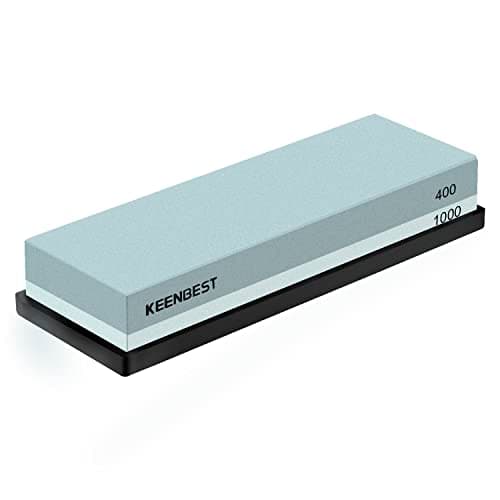
Two-Sided 400/1000 Grit Sharpening StoneWater stone (combination)400 (repair) / 1000 (edge)~180 × 60 mmNon-slip base + angle guideWater
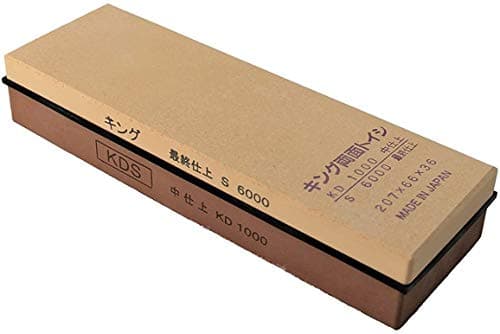
King KDS 1000/6000 Combination WhetstoneWater stone (combination)1000 (repair) / 6000 (finish)8 × 2½ × 1½ in (~203 × 64 mm face)None (stone only)Water (soak ~5–10 min)
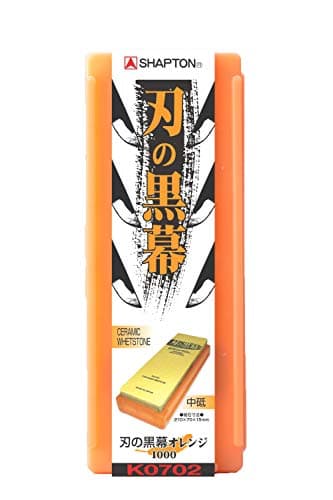
Shapton Kuromaku 1000-Grit Ceramic WhetstoneCeramic (magnesia-bonded)1000~210 × 70 mmStorage case doubles as a standWater (splash, no soak)

In detail

The picks, in full

01
KEENBEST Two-Sided 400/1000 Grit Sharpening Stone

Trying stone sharpening for pennies

Two-Sided 400/1000 Grit Sharpening Stone

Water stone400 / 1000ComboRubber baseSoak
7.0/10

The cheapest way to find out whether you enjoy stone sharpening before you spend real money.

Cutting speed
6
Feedback
7
Durability
5
Beginner-friendly
8
Value
9

Pros

  • Costs about the same as a takeout lunch — a genuinely risk-free way to try sharpening
  • 400/1000 is the right pair to repair a dull edge and set a working one
  • Usually ships with an angle guide, which helps a first-timer

Cons

  • Quality varies unit to unit; these are generic stones
  • No fine polishing grit — a working edge, not a refined one
  • Wears quickly and needs flattening like any soft stone

Don't buy this if…

…you already know you're committed to sharpening. Spend the extra on a King or Shapton — this is a toe-in-the-water stone, not a keeper.

$9.99View on Amazon

Price as of October 9, 2026. Prices change — Amazon's is the one that counts.

#ad · we may earn a commission from this link to Two-Sided 400/1000 Grit Sharpening Stone

02
King King KDS 1000/6000 Combination Whetstone

The best first whetstone

King KDS 1000/6000 Combination Whetstone

Water stone1000 / 6000ComboSoakStone only
8.4/10

The whetstone that has taught more people to sharpen than any other. Cheap, forgiving, and it just works.

Cutting speed
7
Feedback
9
Durability
6
Beginner-friendly
10
Value
10

Pros

  • The classic learn-to-sharpen stone: soft, fast-cutting, and endlessly forgiving of a wobbly angle
  • 1000 and 6000 grit covers the whole home-cook job — set an edge, then polish it
  • A thick 1½-inch block — years of stone to wear down and re-flatten

Cons

  • Soft binder dishes (hollows out) quickly — you'll need to flatten it regularly
  • Requires a proper soak before use, so it's not grab-and-go
  • Sold as the bare stone — no base or holder, so you'll need a damp towel or a stand
  • Wears faster than a hard ceramic or diamond stone

Don't buy this if…

…you want a splash-and-go stone you never have to soak or flatten. The Shapton or a diamond plate is the lower-maintenance answer — neither asks you to soak it or level it.

$35.00View on Amazon

$40.0013% off

Price as of October 9, 2026. Prices change — Amazon's is the one that counts.

#ad · we may earn a commission from this link to King KDS 1000/6000 Combination Whetstone

03
Shapton Shapton Kuromaku 1000-Grit Ceramic Whetstone

Splash-and-go with no soaking

Shapton Kuromaku 1000-Grit Ceramic Whetstone

Ceramic1000Splash-and-goHard-wearingCase included
8.0/10

A hard ceramic splash-and-go stone. Faster, harder-wearing and cleaner to use than a soft soaker.

Cutting speed
9
Feedback
8
Durability
9
Beginner-friendly
7
Value
7

Pros

  • No soaking — a splash of water and it's ready, which removes the biggest barrier to sharpening often
  • Hard binder stays flatter far longer than a soft King, so less flattening
  • Cuts quickly and cleanly on both German and Japanese steels

Cons

  • Single grit — you'll want a finishing stone or a strop to go with it
  • One grit for a similar outlay to a King combination's two, so grits-per-dollar is poor
  • Harder stones give less of the tactile 'feedback' beginners learn from

Don't buy this if…

…you're on your very first stone. The King combination teaches the skill better and throws in a 6000 finishing side; graduate to a Shapton once you know you'll keep sharpening and the soaking is what's stopping you.

$38.18View on Amazon

Price as of October 9, 2026. Prices change — Amazon's is the one that counts.

#ad · we may earn a commission from this link to Shapton Kuromaku 1000-Grit Ceramic Whetstone

The price ladder, as three real stones

  • Two-sided 400/1000 (KEENBEST) — the bottom rung, and a legitimate place to start. 400 grit resets a dull edge and 1000 sets a working one, which is exactly what a neglected kitchen drawer needs. Expect unit-to-unit variation, no polishing grit, and quick wear. Buy it to find out whether you enjoy sharpening.
  • King KDS 1000/6000 — the rung we would stop on for most kitchens. Two useful grits, a thick block, a soft surface that teaches you to feel the burr, and decades of reputation behind it. You soak it and you flatten it; in exchange it cuts fast and costs very little.
  • Shapton Kuromaku 1000— the rung where the money goes into the binder. Hard magnesia-bonded ceramic, splash-and-go, stays flat under hard steel, and cuts cleanly on German and Japanese blades alike. It is a single grit for roughly what the King's two cost, so grits-per-dollar is poor — you are paying for convenience and flatness, which is the whole thesis of this page.

Where the money is better spent

Three purchases improve your edges more than upgrading a stone. A honing steel, because most knives that feel dull just need straightening. Something to flatten the stone with, because a dished stone physically cannot grind a straight edge however much it cost. And a decent light over the counter, because seeing the bevel is most of holding the angle. After that, the returns come from practice: how to use a whetstone, how to remove a burr and how to strop a knife will each do more for your results than another stone will.

The maintenance nobody mentions at purchase

Every soft stone needs two things done to it, and both are free. It needs flattening when the middle hollows — a dished stone rounds your bevel no matter how carefully you work. And it needs cleaning, because metal swarf and spent grit glaze the surface and stop it cutting; how to clean a whetstone covers it in a couple of minutes. A cheap stone that is flat and clean out-performs an expensive one that is neither, which is the most useful single fact on this page.

So what should you actually buy?

One 1000/6000 combination water stone, a honing steel, and something flat to level the stone with. That is the whole kit for a kitchen, and the ranked options are in best whetstones under $50 and best combination whetstones. Upgrade later for a specific reason you can name — soaking, hard steel, flattening — and not because a more expensive stone is supposed to be sharper. If you would rather buy a jig than a stone, best sharpening systems ranks those, and whetstone vs electric sharpener is the honest comparison against the powered option.

How we picked

We do not run a test kitchen

We compiled each product's published specifications — steel, hardness, edge geometry, weight — normalized them into the matrix above, and scored each one against a published rubric. The scores are judgments from those specs and the value math — they are not measurements we took, because we do not have a test kitchen and we're not going to pretend we do. Units we claim to have tested: 0.

Questions

Frequently asked

Do expensive whetstones sharpen better?

Not meaningfully. Grit size decides how fine an edge is possible, and 1000 grit is 1000 grit at any price. Expensive stones stay flatter, skip the soak and last longer under hard steel — convenience and durability, not sharpness.

How much should I spend on a whetstone?

Enough for a decent 1000/6000 combination stone, which is comfortably under $50. Spend more only for a named reason: you want splash-and-go, your knives are hard Japanese steel, or you are tired of flattening.

Is a cheap whetstone a waste of money?

No — a cheap stone that is flat and clean will sharpen your knives properly. The risks are unit-to-unit inconsistency and quicker wear. Check it is flat before the first use and flatten it if it is not.

What is the difference between a hard and a soft whetstone?

The binder holding the abrasive. Soft binders release grit quickly, so the stone cuts fast and gives lots of feedback but dishes and needs flattening. Hard binders hold on, so the stone stays flat and lasts, but gives less feel. Both produce the same sharpness.

Keep reading

Receipts

Sources

We do not run a test kitchen, and we do not pretend to. Specs are the manufacturer's published figures, attributed as such; where we could not verify something, we say so on the page rather than quietly leaving it out. Read our full method.