Pay a professional once, to fix something you cannot: a chipped or badly misground edge, a serrated bread knife, or a bag of inherited knives you want reset to a known-good starting point. Then learn to do the maintenance yourself. Professional sharpening is good value as a repair and poor value as a routine, because the thing it sells — a sharp edge — is something a modest stone and fifteen minutes delivers indefinitely.
What a professional service genuinely does well
Four things, and they are real. First, repair: regrinding a chipped edge, straightening a tip, or fixing a bevel that a pull-through sharpener has wrecked is slow, dusty work that a belt or wheel setup does in minutes. Second, serrated knives: each scallop has to be sharpened individually with a tapered rod, and almost nobody does that at home — which is why we usually tell people a serrated knife is a consumable. Third, consistency: a good sharpener with a jig will put a more uniform bevel on a knife than a beginner freehand. Fourth, volume: if you are resetting eight knives at once, handing them over is a genuinely sensible afternoon.
What it does not do
It does not keep your knives sharp. An edge degrades from use, not from time, so the knife you collect on Saturday is noticeably less sharp by the following month and genuinely dull within a season of real cooking. That is the trap in the model: you are buying a perishable result on a repeating schedule. It also cannot make a soft knife hold an edge, cannot undo the metal a previous aggressive sharpening removed, and — at the cheaper end of the market — sometimes grinds at whatever angle the machine is set to rather than the one your knife was made with, which quietly reshapes a 15° Japanese bevel into a 20° Western one. Ask what angle a service grinds at before you hand over a Japanese knife; if they cannot tell you, that is your answer.
The arithmetic
Services price per knife or per inch of blade, and rates vary enormously by region and by whether it is a mail-in specialist, a farmers'-market grinder or a hardware counter — we are not going to invent a number, so check what is actually charged near you. Then do the sum that matters: multiply that figure by the number of knives you would send, and by how many times a year you would send them. Compare it against a one-time stone purchase below. For most kitchens with three or four knives in regular use, the stone pays for itself inside the first year, and every year after that is free. The crossover favours the service only if you own one knife, cook rarely, or genuinely will not practise.
What to look for if you do use a service
- Ask what angle they grind.The right answer is "whatever your knife came with, tell us" or a specific figure. A service that does not know is grinding to a default.
- Ask whether they use a belt, a wheel or stones. All three can work. Belts are fast and remove the most metal; stones remove the least.
- Avoid anything that heats the blade. A dry high-speed wheel can blue the steel at the edge, which destroys the heat treatment locally and leaves a thin band that will never hold an edge again. That damage is permanent.
- Send the knives that justify it.Serrated blades, chipped edges and knives you have no intention of maintaining. Not the chef's knife you use daily — that one you want to be able to touch up yourself.
The do-it-yourself alternative, and what each stone is for
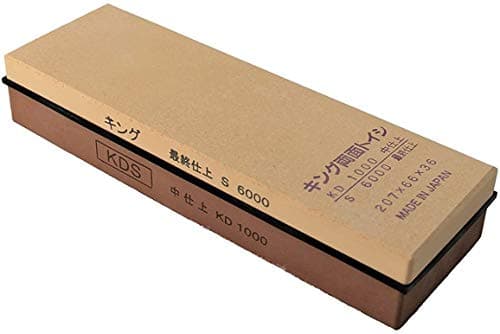
- King KDS 1000/6000 — for the cook replacing a sharpening service with a routine. One stone, two grits, and the most forgiving surface to learn a consistent angle on. Needs a soak and occasional flattening. This is the purchase that makes the arithmetic above work.
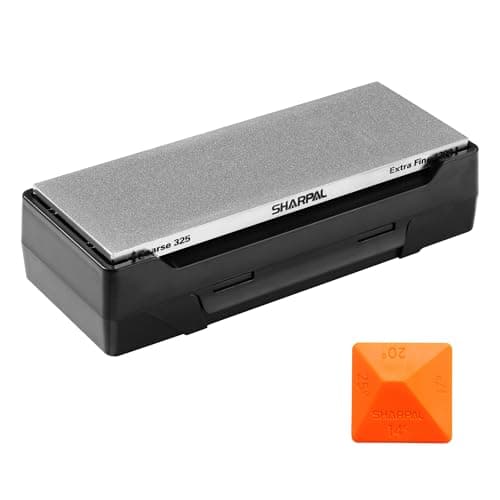
- Sharpal 162N diamond plate — for the repair jobs you would otherwise pay for. 325 grit grinds out a chip or resets a mangled bevel far faster than a water stone, it never dishes, and it doubles as the tool that flattens your other stones. The finish is toothy, so follow it with a finer grit.
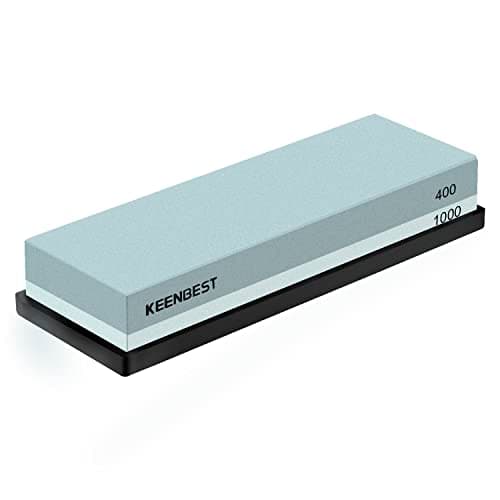
- Two-sided 400/1000 (KEENBEST) — for finding out whether you will actually do this before committing. It costs about the same as having one knife professionally sharpened, and 400/1000 is the right pair for rescuing genuinely dull knives. Generic quality, no polishing grit, wears quickly.
The thirty-second habit that replaces most sharpening
Most knives that feel dull are not dull — they have a rolled edge, and a honing steel straightens it in about thirty seconds. Sharpening vs honing is the distinction the whole subject turns on, and how often should you sharpen a knife sets realistic intervals. Hone weekly, sharpen two or three times a year, and you will never need a service for a knife you use. If you are not sure whether yours needs either, how to tell if a knife is sharp has the two tests worth doing.
Learning it is genuinely a short job
The skill is smaller than its reputation. Fifteen minutes with how to use a whetstone and how to sharpen a chef's knife gets you a working edge on the first attempt; the things that go wrong are a short list, covered in why your knife will not get sharp and how to remove a burr. If freehand sounds daunting, guided vs freehand sharpening and the roster in best sharpening systems cover the jigs that hold the angle for you. In an emergency, there are even ways to get an edge with no sharpener at all.
When we would still send a knife away
A serrated bread knife that has genuinely gone (see how to sharpen a serrated knife for why this is the hard case). A single-bevel Japanese knife, which needs a specialist. A knife with a broken tip or a deep chip, where the amount of metal to remove makes a home stone a two-hour job. An heirloom you are not willing to practise on. And the whole drawer, once, as a reset — then maintain it yourself from there.