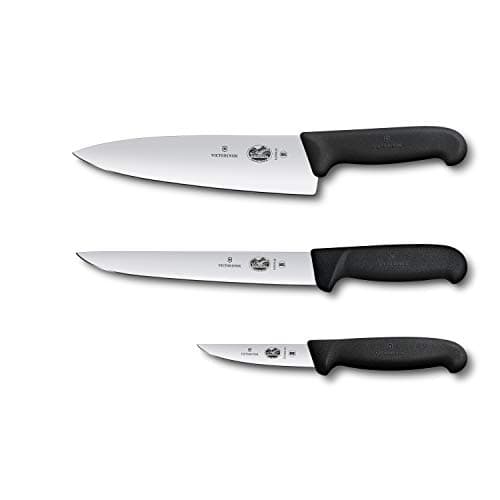
The biggest mistake a first-time buyer makes is paying for pieces, not knives — a fifteen-slot block looks generous but is usually padded with steak knives and specialty blades you'll rarely touch. (If steak knives are what you actually want, buy them on their own — best steak knives ranks six dedicated sets, and every one of them beats the six that come free in a block.) These five sets are ranked for a beginner'sactual needs: the knives you'll really use, how forgiving the steel is to learn on, and honest value. If you only want one knife, our best chef knives for beginners covers that instead.
How this list is ranked:for beginner value, not raw piece count. That's why a three-knife starter kit leads a fifteen-piece block — the three knives a home cook reaches for 95% of the time, at the price of one German knife, is the smarter first purchase than a block full of filler. Every score in the matrix is still the same site-wide number; only the order is beginner-weighted, and we say so as we go.
The three knives a beginner actually uses
Watch yourself cook for a week and you'll reach for three blades: a chef's knife for almost everything, a paring knife for small in-hand work, and a serrated bread knife for crusty loaves and tomatoes. That's the whole core. Everything else in a big block — the utility knife, the santoku, six steak knives, the shears you already own a version of — is occasional at best. This is why the Victorinox Fibrox Pro 3-piece leads: it's a starter kit of exactly the knives that matter, in the excellent, easy-to-sharpen Fibrox blades, for the price of a single German knife. Its one catch is no storage, so add an in-drawer guard or a magnetic strip.
If you want a block: buy forged, buy fewer
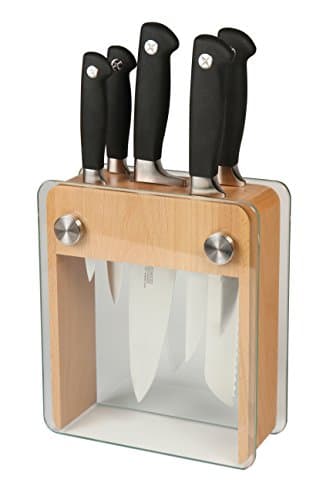
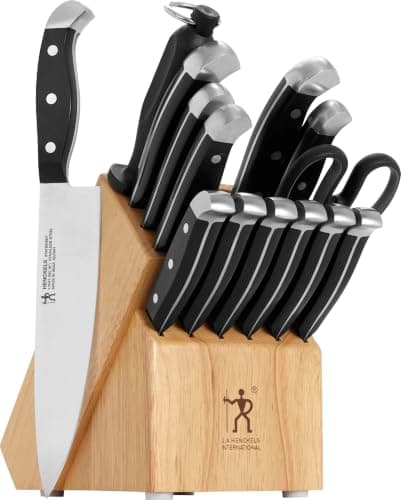
Some people simply want a block on the counter, and that's fine. The best beginner block is a lean, forged one, and the Mercer Genesis 6-piece is our pick: genuinely forgedGerman-steel knives, short bolsters that keep the whole edge sharpenable, and a wood-and-glass block, for a fraction of a premium set's price. Six good pieces beat fifteen mediocre ones. The Henckels Statement 15-pieceis the step-up if you specifically want a complete block with steak knives and a honing steel included — it's stamped rather than forged, but a real notch above the bargain blocks in fit and feel.
The honest truth about 15-piece budget blocks
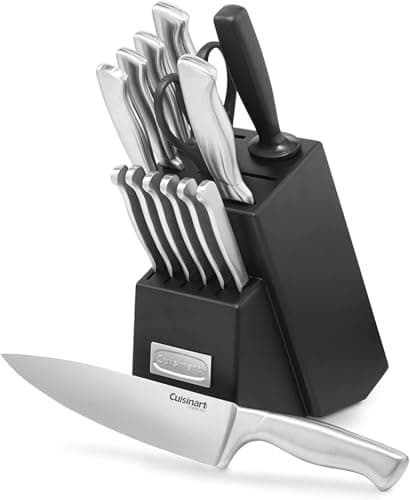
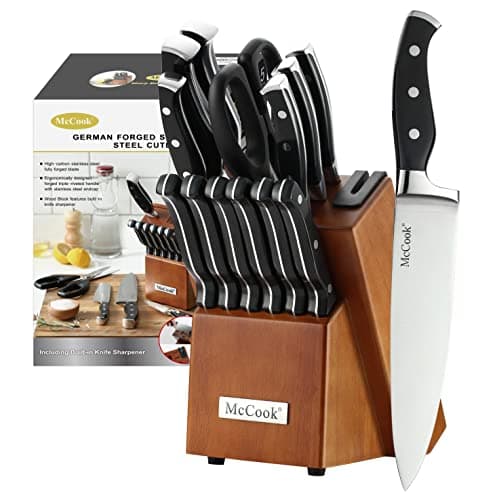
The Cuisinart C77 and McCook MC29are here because they're what a lot of beginners actually buy, and they're not a scam — they fill a block, arrive sharp, and cut vegetables perfectly well for very little money. Understand what they are: thin stamped blades with soft steel and hollow handles, a stopgap to outfit a first kitchen, not lifetime tools. The McCook's block includes a built-in pull-through sharpener that we'd leave alone — it's aggressive and grinds away your edge. If you buy one of these, plan to learn to hone and, eventually, to sharpen properly.
What decides a good beginner set
Three things. The knives you'll use— pay for a good chef, paring and bread knife, not for slot-fillers. Forgiving steel— softer stainless (Victorinox, Mercer) is easier to learn to sharpenand rolls rather than chips while you're still building knife skills. And honest value— a lean set of good knives almost always beats a big set of mediocre ones. If in doubt, buy three great knives à la carte and add to them over time; the block can come later.
Keep it sharp from day one
Whatever you buy, the set is only as good as its edge. Pair it with a honing steel to true the edge between sharpenings, learn the difference in sharpening vs honing, and pick up a beginner-friendly stoneonce you're comfortable. A cheap set kept sharp outcuts an expensive one left dull — the maintenance habit matters more than the badge on the block.