Skip to content
Bevel & Bone

HUB 01 · Chef Knives

Best Chef Knives for Culinary School

A school knife has a different job to a home knife: NSF-certified, grippy when wet, easy to sharpen, cheap enough to replace. Four knives ranked for that job.

By Stephen V.Updated How we choose
#ad

We earn a commission when you buy through our Amazon links, at no extra cost to you. It never changes a ranking, and we say so when the cheaper knife is the better buy. How this works.

Buy the Mercer Culinary Millennia 8" if you are buying your own kit for culinary school — it is NSF-certified, it has the textured handle and finger guard that school knife-skills labs want, and it costs little enough that losing one to a shared locker is an annoyance rather than a disaster. If you can stretch a little, the Victorinox Fibrox Pro is the same idea with a better factory edge and finish. All four knives here are ranked for school fitness, with live prices.

How this list is ranked: for culinary-school fitness, not raw cutting score. School changes the brief. You are not buying one knife to admire for twenty years — you are buying a knife that will be sanitized constantly, handled with wet and greasy hands, sharpened by a beginner, carried in a roll between stations, and quite possibly misplaced. That rewards cheap NSF-certified stamped blades with soft steel, and it penalizes the hard, thin, expensive Japanese knives that top our main ranking. The scores in the matrix are the same site-wide numbers; only the order is school-weighted, and we say which is which as we go.

The short answer

Quick picks

#ad · Live prices from the Amazon Product API, as of October 9, 2026. Where we have no verified live price we show none — we'd rather leave a gap than print a number that has rotted.

By the numbers

The specs, side by side

Every figure below is the manufacturer's published specification. Where a maker doesn't publish a value, the cell reads "—" rather than a number we made up.

Knife / ToolBladeSteelHardnessEdgeConstructionWeight
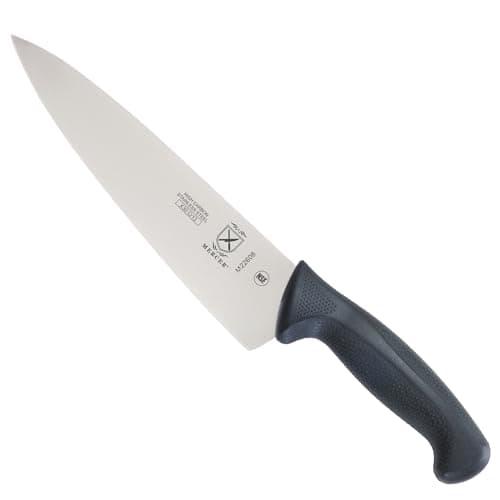
Mercer Culinary Millennia 8" Chef's Knife8 in (20 cm)Japanese stainless (X50CrMoV15 class)~HRC 56~20° per sideStamped, textured Santoprene handle~5.6 oz (159 g)
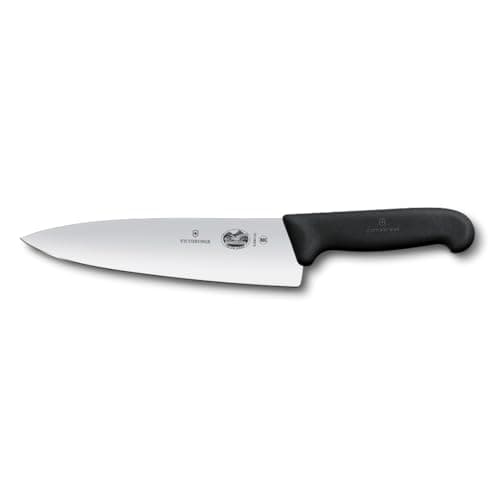
Victorinox Fibrox Pro 8" Chef's Knife8 in (20 cm)X50CrMoV15 stainless~HRC 55–56~20° per sideStamped, full-length tang~6.6 oz (187 g)
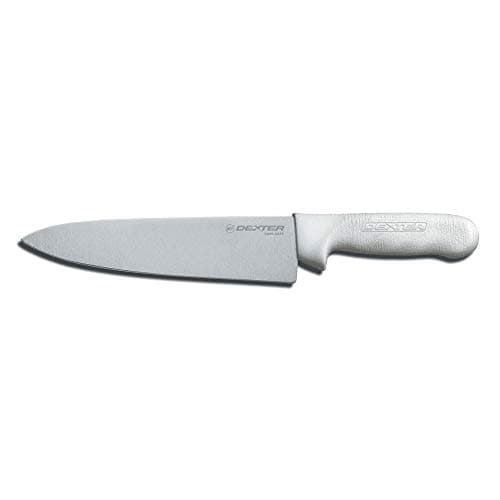
Dexter-Russell Sani-Safe 8" Chef's Knife8 in (20 cm)DEXSTEEL high-carbon stainless—— (individually ground and honed)Stamped; sealed blade-to-handle joint, textured polypropylene—
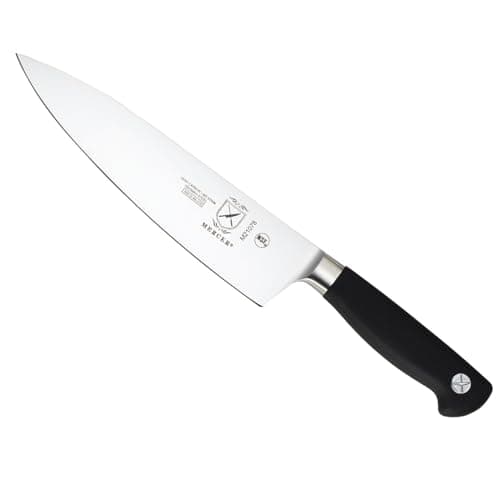
Mercer Culinary Genesis 8" Chef's Knife8 in (20 cm)X50CrMoV15 German stainless~HRC 56~20° per sideForged, full tang, short bolster~8.5 oz (241 g)

In detail

The picks, in full

01
Mercer Culinary Mercer Culinary Millennia 8" Chef's Knife

The cheapest knife worth owning

Mercer Culinary Millennia 8" Chef's Knife

8 in / 20 cmJapanese steel~HRC 56StampedSantoprene
7.0/10

The culinary-school standby: a cheap, light, NSF stamped knife that culinary students are told to buy.

Edge retention
5
Out-of-box edge
6
Handling
8
Build
6
Value
10

Pros

  • About the cheapest chef knife any professional will actually endorse
  • Light and grippy; the textured handle has a finger guard beginners appreciate
  • NSF-certified — the reason it's on culinary-school supply lists

Cons

  • Soft steel and a rougher factory edge than the Victorinox
  • Fit and finish are exactly what the price suggests

Don't buy this if…

…you can stretch to the Victorinox Fibrox. It's a small step up in money for a real step up in edge and finish — the Millennia is the pick only when every dollar counts.

$29.00View on Amazon

Price as of October 9, 2026. Prices change — Amazon's is the one that counts.

#ad · we may earn a commission from this link to Mercer Culinary Millennia 8" Chef's Knife

02
Victorinox Victorinox Fibrox Pro 8" Chef's Knife

Your first good chef knife

Victorinox Fibrox Pro 8" Chef's Knife

8 in / 20 cmX50CrMoV15~HRC 55–56StampedFibrox handle
7.8/10

The default answer to "what's a good first chef knife." Cheap, light, holds a usable edge, and a joy to sharpen.

Edge retention
6
Out-of-box edge
8
Handling
8
Build
7
Value
10

Pros

  • Costs a fraction of a forged German knife and out-cuts most of them out of the box
  • Soft-ish steel takes a screaming edge on a stone in minutes — the easiest knife here to learn to sharpen on
  • Light and nimble; the textured Fibrox handle grips even with wet hands
  • NSF-certified and dishwasher-tolerant (though you still shouldn't)

Cons

  • Softer steel means you hone often and sharpen more frequently than a hard Japanese blade
  • Stamped blade lacks the heft and bolster some cooks want for control
  • It is a tool, not an heirloom — nothing about it is beautiful

Don't buy this if…

…you want a knife that keeps its edge for months between sharpenings. This trades edge retention for being cheap and easy to re-sharpen — a great trade for a beginner, a poor one if you refuse to touch a stone.

$53.00View on Amazon

Price as of October 9, 2026. Prices change — Amazon's is the one that counts.

#ad · we may earn a commission from this link to Victorinox Fibrox Pro 8" Chef's Knife

03
Dexter-Russell Dexter-Russell Sani-Safe 8" Chef's Knife

Commercial kitchens and sanitation-first cooks

Dexter-Russell Sani-Safe 8" Chef's Knife

8 in / 20 cmDEXSTEEL stainlessStampedSealed polypropylene handleNSF certified
7.2/10

Foodservice equipment, not cutlery. NSF-certified, sealed at the handle, made in Massachusetts, and priced to be replaced without a second thought.

Edge retention
5
Out-of-box edge
7
Handling
8
Build
7
Value
9

Pros

  • NSF-certified with a sealed blade-to-handle joint — no rivet gaps or bolster crevice for food to hide in
  • The textured polypropylene handle keeps its grip wet or greasy, which is the entire point in a working kitchen
  • Soft-ish stainless comes straight back on a honing rod, so a cook can fix the edge mid-shift instead of finding a stone
  • Made in Southbridge, Massachusetts and priced like a consumable

Cons

  • Dexter publishes no HRC, no bevel angle and no weight for this knife, so three of our spec columns sit empty
  • Edge retention is ordinary — this is a hone-every-shift knife, not a hold-it-for-months one
  • Utilitarian to a fault: a white plastic handle and a stamped blade will never be the knife you show anyone

Don't buy this if…

…you want one knife you'll still admire in twenty years. This is designed to be sanitized, resharpened and eventually thrown away. The Wüsthof or the MAC is the knife you keep.

$45.57View on Amazon

Price as of October 9, 2026. Prices change — Amazon's is the one that counts.

#ad · we may earn a commission from this link to Dexter-Russell Sani-Safe 8" Chef's Knife

04
Mercer Culinary Mercer Culinary Genesis 8" Chef's Knife

A forged knife on a budget

Mercer Culinary Genesis 8" Chef's Knife

8 in / 20 cmX50CrMoV15~HRC 56ForgedSantoprene handle
7.6/10

A forged, full-bolster German knife at a stamped-knife price. The value pick if you want heft.

Edge retention
6
Out-of-box edge
7
Handling
8
Build
8
Value
9

Pros

  • Genuinely forged with a full tang — heft and balance closer to a Wüsthof than to its price tag
  • Short bolster leaves the whole edge usable and makes it easier to sharpen heel-to-tip
  • Grippy, ergonomic Santoprene handle that survives a commercial kitchen

Cons

  • Same soft German steel as the Victorinox, so edge retention is only average
  • Heavier than a stamped blade — a plus for some hands, a minus for others

Don't buy this if…

…you want the lightest possible knife. This is a deliberately hefty German-style blade; if you like a nimble Japanese feel, the Tojiro is the better call at a similar price.

$40.02View on Amazon

$42.165% off

Price as of October 9, 2026. Prices change — Amazon's is the one that counts.

#ad · we may earn a commission from this link to Mercer Culinary Genesis 8" Chef's Knife

What a culinary-school knife actually needs

Four requirements, in the order instructors care about them.

  • NSF certification. NSF/ANSI 2 is the foodservice sanitation standard for handles and blade-to-handle joints: no rivet gaps, no bolster crevice, nothing that traps food. Every knife on this page is NSF-certified, and that is the single hardest filter — it eliminates most beautiful knives immediately.
  • A handle that grips wet. Textured Santoprene, Fibrox and sealed polypropylene all stay grippy with oil and water on your hands. Polished wood and smooth steel do not. This is a safety requirement in a lab where you will be timed.
  • Soft steel you can resharpen.You are learning to sharpen on this knife. Soft German-class stainless (around HRC 55–56) comes back to a screaming edge in a few minutes on a 1000-grit stone and forgives a wobbly angle; a hard HRC 61 Japanese blade punishes every mistake and chips when you lean on it. Pair whichever you buy with the basic stone routine and honing between sharpenings.
  • A replaceable price. Knives go missing in shared kitchens. Buy at a price where that is a bad week, not a bad month.

The picks, and who each suits

  • Mercer Culinary Millennia 8"— for the student buying their own kit on the tightest budget. It is the knife that appears on school supply lists: NSF, about 5.6 oz, a textured Santoprene handle with a finger guard, and the cheapest chef's knife any working cook will actually endorse. The factory edge is rougher than the Victorinox and the finish is exactly what the price suggests.
  • Victorinox Fibrox Pro 8" — for the student who can spend a little more and wants one knife they keep after graduation. Same soft X50CrMoV15 steel and the same easy sharpening, but a better out-of-box edge and the most-recommended handle in professional kitchens. See Victorinox vs Mercer for the head-to-head.
  • Dexter-Russell Sani-Safe 8" — for the sanitation-first program and for anyone heading straight into a commercial kitchen. The blade-to-handle joint is sealed rather than riveted, so there is no crevice at all. Note that Dexter publishes no Rockwell figure, no bevel angle and no weight for this knife, so three spec cells sit empty rather than guessed. Dexter vs Mercer and Dexter vs Victorinox compare them directly.
  • Mercer Culinary Genesis 8" — for the student who wants heft. It is genuinely forged with a full tang and a short bolster, which is unusual at this price, and the short bolster leaves the whole edge sharpenable heel to tip. At about 8.5 oz it is the heaviest knife here; that is a plus in some hands and a liability over a four-hour prep block.

Why the school list and our main ranking disagree

Our overall ranking is led by thin, hard Japanese blades, and none of them are here. That is not an inconsistency — it is the brief changing. Hard steel holds an edge longer, which matters in a home kitchen where you sharpen a few times a year. In school you sharpen constantly, by hand, as the whole point of the exercise, and hard steel makes that harder and chips when a beginner twists it. Thin Japanese geometry is also the worst possible match for breaking down a case of squash on a Tuesday morning. The same logic is why restaurant cooks use cheap knives.

What else goes in the roll

Most programs publish a required tool list, and the chef's knife is only the headline. Expect a paring knife, a serrated bread knife, a boning or filleting knife, a honing steel and a peeler. Buying those individually from our paring, bread and boning rankings usually beats a pre-packed kit, and the culinary-student gift guide is the same shortlist framed for someone buying it for a student. Add a honing steel before you add a fifth knife — a honed cheap knife out-cuts a neglected expensive one every time.

Before your first lab

Two things make the first week easier. Learn the pinch grip and the claw — how to hold a chef's knife and knife skills for beginners cover both in a few minutes of reading. And learn the parts of the knife by name, because instructors use them constantly: anatomy of a chef's knife maps heel, belly, spine, tang and bolster. Every knife here is a stamped or lightly forged blade for a reason: those are the knives that survive a teaching kitchen.

How we picked

We do not run a test kitchen

We compiled each product's published specifications — steel, hardness, edge geometry, weight — normalized them into the matrix above, and scored each one against a published rubric. The scores are judgments from those specs and the value math — they are not measurements we took, because we do not have a test kitchen and we're not going to pretend we do. Units we claim to have tested: 0.

Questions

Frequently asked

What knife do most culinary schools require?

An 8-inch chef's knife, NSF-certified, with a textured non-slip handle. The Mercer Culinary Millennia and the Victorinox Fibrox Pro are the two that appear on school supply lists most often because they meet that spec at the lowest price. Always check your own program's published tool list before buying.

Should a culinary student buy an expensive Japanese knife?

Not as a first school knife. Hard Japanese steel (HRC 60+) chips when a beginner twists or pries, it is harder to learn to sharpen on, and school is exactly where knives get lost and abused. Buy a cheap NSF knife for school and a Japanese knife afterwards, when your technique and your sharpening are reliable.

What does NSF certification mean on a knife?

It means the handle and the blade-to-handle joint meet the NSF/ANSI foodservice sanitation standard — no gaps or crevices where food can collect, and materials that survive commercial sanitizing. It is a hygiene standard, not a cutting-performance standard, and it is why so many professional knives have plain plastic handles.

Is a knife roll worth buying?

Yes, if your program expects you to carry tools between stations — a roll keeps edges apart and your hands safe. If you only need to protect a few blades in a drawer or a bag, edge guards do the same job for far less; see knife storage.

Keep reading

Receipts

Sources

We do not run a test kitchen, and we do not pretend to. Specs are the manufacturer's published figures, attributed as such; where we could not verify something, we say so on the page rather than quietly leaving it out. Read our full method.