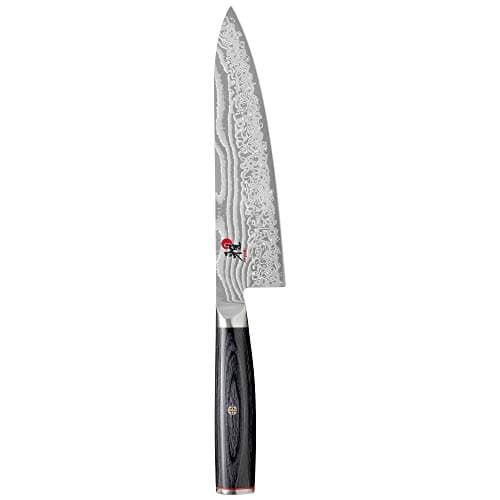
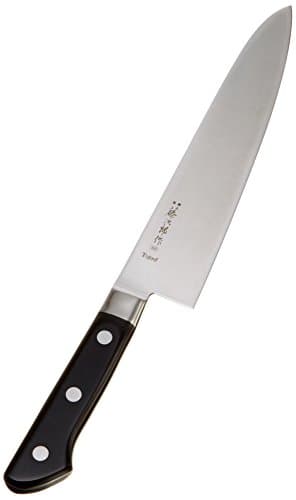
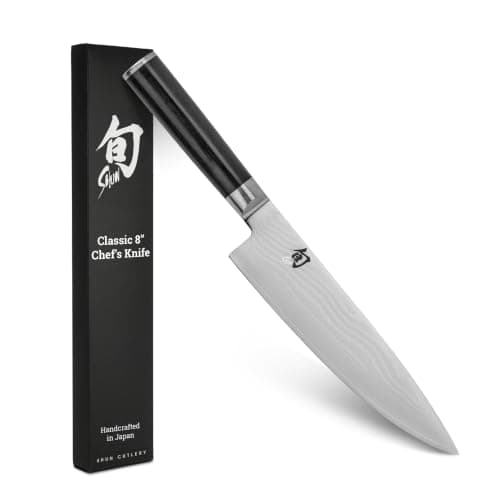
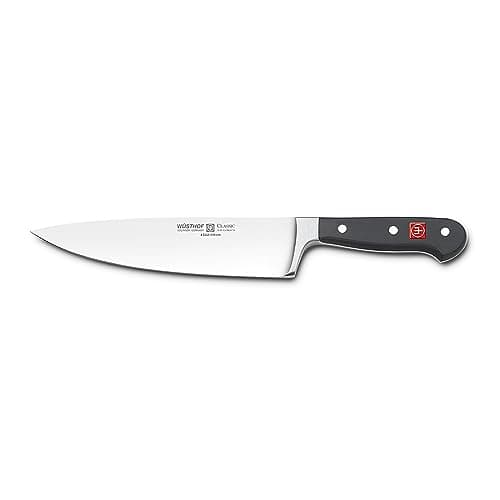
Under $200 is the upgrade tier — the money you spend once a cheap knife has taught you what you actually want from one. It buys harder steel that holds an edge for weeks, thinner geometry that falls through an onion instead of splitting it, and a level of fit and finish you look forward to using. These seven are ranked by our overall score, with live prices — and every one is a knife most cooks would happily use for the rest of their life.
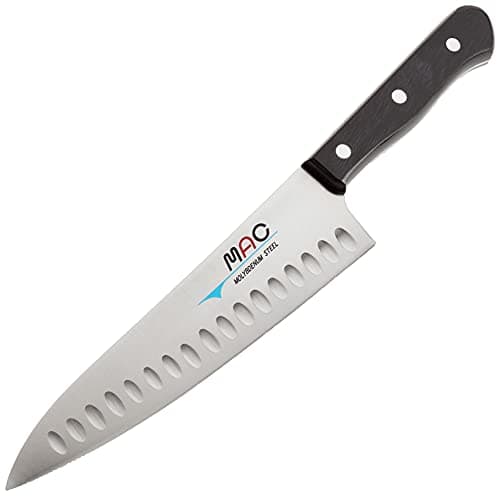
The headline is the one this whole site keeps arriving at: you do not have to spend the full $200. Our top pick, the MAC MTH-80, lands around $115 and out-scores knives that cost nearly twice as much — because we rank by cutting performance per dollar, not by the number on the box. Past roughly $150 you are mostly buying finish, not a better cut. Spend the difference on a stone instead: a sharp $115 knife beats a dull $190 one every day of the week.
What another hundred dollars actually buys
Step up from the under-$100 tier and the money goes to three things: harder steel (so the edge lasts longer between sharpenings), a more acute edge angle ground into thinner stock (so it cuts with less force), and finish — Damascus cladding, a hand-honed bevel, a seamless one-piece body. The first two are real performance. The third is the object, not the cut. Knowing which you are paying for is the whole trick to spending well in this range; our steel and hardness guide and blade-geometry guide are the two worth reading before you buy.
German or Japanese at this price
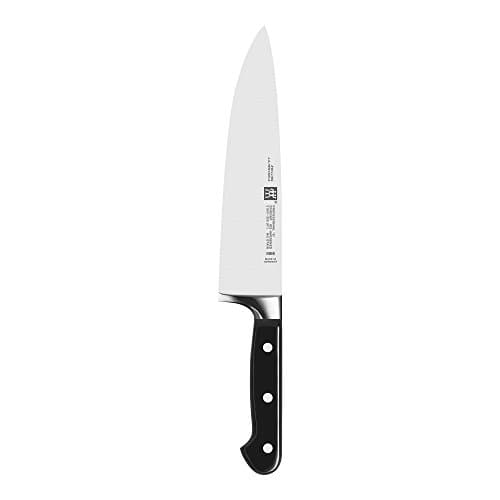
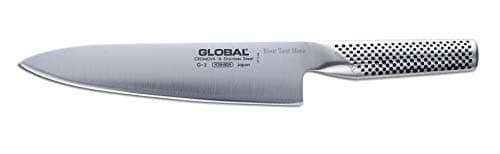
Under $200 is the first budget where you can take your pick of either camp at its best. On the German side, the forged Wüsthof Classic and Zwilling Professional S are heavy, tough, forgiving workhorses that shrug off the abuse a home cook actually inflicts. On the Japanese side, the MAC, Tojiro, Shun, Miyabi and Global run harder steel and thinner edges — sharper and longer-lasting, but less tolerant of bone, twisting and dishwashers. Neither is better in the abstract; they suit different cooks. If you are not sure which one you are, read Japanese vs German knives — it maps each style to a way of working.
A note on the $200 line
Two of these — the Shun Classic and the Miyabi Kaizen II — sit right at the ceiling, hovering around $190. A live price can nudge over $200 on any given day, so the buy button always shows Amazon's current number, or "Check price" when we can't verify a live one, rather than a stale figure we typed in months ago. If a knife has crept a few dollars over the line when you look, that is the market moving, not us rounding.
Where the money stops mattering
The honest ceiling on cutting performance arrives well before $200. Above about $150, extra spend buys refinement — a keener factory edge, prettier cladding, a nicer handle — not a knife that cuts meaningfully better. That is why our value-driven scoring keeps pulling the mid-priced MAC and the $75 Tojiro above knives that cost more, and it is the argument we lay out in full in are expensive chef knives worth it. Buy the knife that cuts, then keep it sharp — that second part matters more than the last fifty dollars ever will.