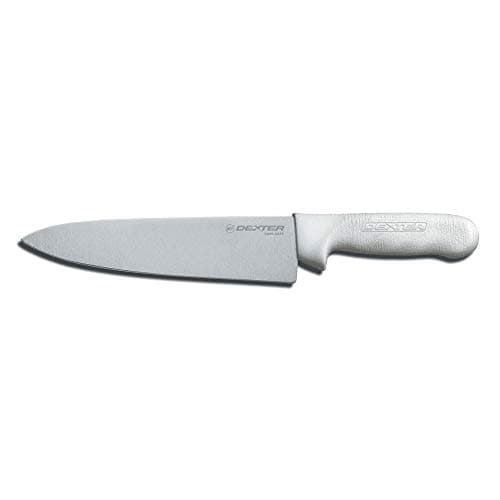
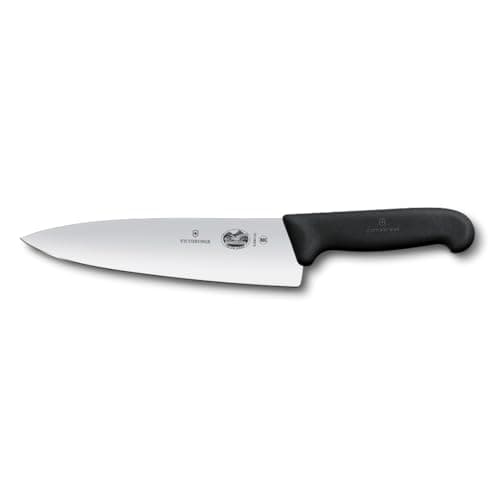
Victorinox is the brand to buy if you are buying one knife, and MAC is the brand to buy if you are buying one good knife. Those two answer the question most people are really asking when they search for a knife brand: who can I trust without becoming an expert first. Victorinox publishes its specs, makes the same blade in the same Swiss factory for decades, sells it for less than a restaurant dinner and will resharpen it by mail. MAC publishes hardness and edge angle, grinds thinner than almost anyone at its price, and does nothing else. Both are boring, and boring is the point.
How this list is ranked: by what the brand name is worth — how much the maker publishes, how consistent the output is, how wide and honest the price ladder is, and what support exists after the sale — not by the overall score of the one knife we use to represent each brand. The scores in the table are that single model's score, and they are not the ranking. Miyabi's flagship outscores Mercer's; Mercer still ranks higher as a brand, because what Mercer sells is reliably good at a price anyone can pay, and what Miyabi sells is a narrow premium line that punishes a careless owner.
Each brand is represented by its flagship 8-inch chef's knife, so the comparison table below is genuinely like-for-like. If you want the best individual knives rather than the best makers, that is a different page: best chef knives ranks models across all of these brands at once.
What a knife brand is actually selling you
Steel is not proprietary. X50CrMoV15 — the steel in a Wüsthof Classic — is the same formula in a Mercer Genesis and in a Dalstrong Gladiator. VG-10 is the same alloy in a Tojiro DP as in knives costing four times more. So what are you paying the brand for? Five things, in the order they matter:
- What they publish. A maker who states the steel designation, a Rockwell figure and an edge angle per side is a maker willing to be measured against those numbers. A listing that says "high-carbon stainless steel, ultra sharp, professional grade" and nothing else is telling you something by omission — nearly every kitchen knife on earth is high-carbon stainless. How to tell if a knife is good quality runs the full seven checks.
- Heat treat, and whether it is the same every time. This is the part no spec sheet shows and the part that separates a good maker from a good-looking one. The same alloy hardened to HRC 58 and to HRC 54 behaves completely differently, and consistency across a production run is the thing a century-old factory is genuinely better at than a brand that outsources. It is also the reason we weight longevity of the line heavily here: a knife made the same way for forty years has forty years of evidence behind it. Knife hardness explained covers the scale.
- The grind — how thin the blade is behind the edge. Two knives at the same hardness and the same bevel angle still cut differently if one is thicker behind the edge, because the thick one has to wedge food apart as the cut deepens. This is where Japanese makers like MAC and Tojiro genuinely beat German ones at the same price, and it is the hardest thing for a new brand to fake. Blade geometry is the mechanism.
- The price ladder. A good brand lets you buy in at a level you can afford and step up without switching makers — and tells you honestly when the step up is cosmetic. Wüsthof, Zwilling and Victorinox all do this. The brands that only sell at one price point are not worse, they are just a narrower commitment.
- What happens when it goes dull. Victorinox runs a mail-in resharpening service. Kai offers free sharpening on Shun knives. Wüsthof and Zwilling both back their forged lines with a lifetime warranty against defects. None of this makes the knife cut better on day one; all of it matters on year five, which is the horizon you should actually be buying on.
What is not on that list: country of origin as a proxy for quality, Damascus layer counts, and the word "professional". A German knife is not better than a Japanese one or vice versa — they are different trades, worked through in Japanese vs German knives.
The short answer
Quick picks
- $47.00·Amazon
- $114.95·Amazon
03 Wüsthof Classic 8" Chef's KnifeThe archetypal German chef knife. Heavy, tough, forgiving, and it will outlive you if you hone it.
Best for: A do-everything German workhorse
- $74.82·Amazon
- $40.02·Amazon
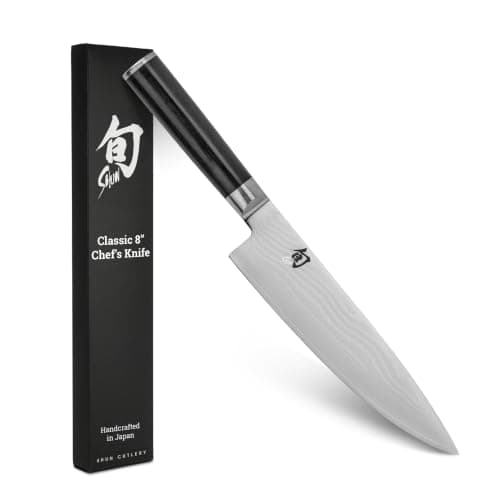
06 Shun Classic 8" Chef's KnifeThe Japanese knife people buy with their eyes. The Damascus is real, and so is the very acute edge.
Best for: A beautiful knife that also performs
- $115.00·Amazon
- $169.95·Amazon
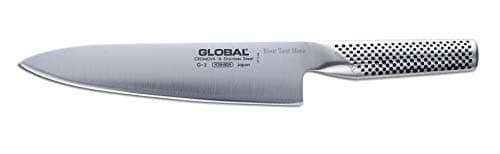
09 Global G-2 8" Chef's KnifeThe one-piece stainless knife you either love or hate on feel alone. Light, distinctive, divisive.
Best for: Cooks who want a light, seamless blade
10 Dexter-Russell Sani-Safe 8" Chef's KnifeFoodservice equipment, not cutlery. NSF-certified, sealed at the handle, made in Massachusetts, and priced to be replaced without a second thought.
Best for: Commercial kitchens and sanitation-first cooks
#ad · Live prices from the Amazon Product API, as of October 13, 2026. Where we have no verified live price we show none — we'd rather leave a gap than print a number that has rotted.
By the numbers
The specs, side by side
Every figure below is the manufacturer's published specification. Where a maker doesn't publish a value, the cell reads "—" rather than a number we made up.
| Knife / Tool | Blade | Steel | Hardness | Edge | Construction | Weight |
|---|
| Victorinox Fibrox Pro 8" Chef's Knife | 8 in (20 cm) | X50CrMoV15 stainless | ~HRC 55–56 | ~20° per side | Stamped, full-length tang | ~6.6 oz (187 g) |
|---|
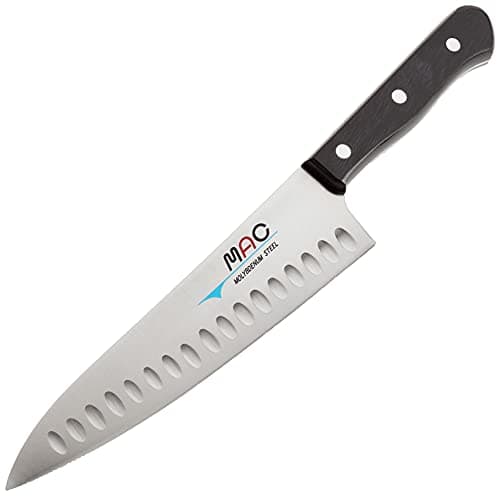
| Mac Mth-80 Professional Hollow Edge 8" Chef's Knife | 8 in (20 cm) | Molybdenum-vanadium high-carbon | ~HRC 59–61 | ~15° per side | Thin stamped blade, Pakkawood handle | ~6.5 oz (184 g) |
|---|
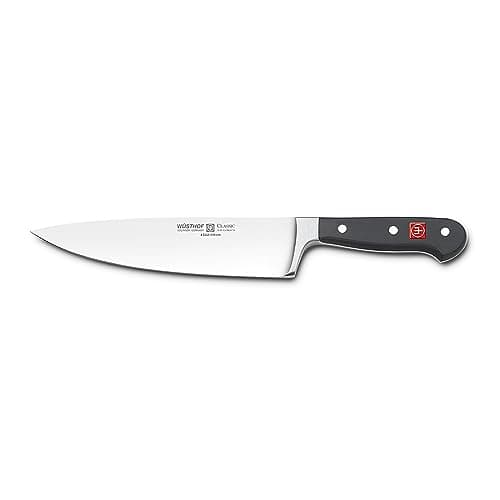
| Wüsthof Classic 8" Chef's Knife | 8 in (20 cm) | X50CrMoV15 stainless | ~HRC 58 | 14° per side (Precision Edge Technology) | Forged, full tang, full bolster | ~9.0 oz (255 g) |
|---|
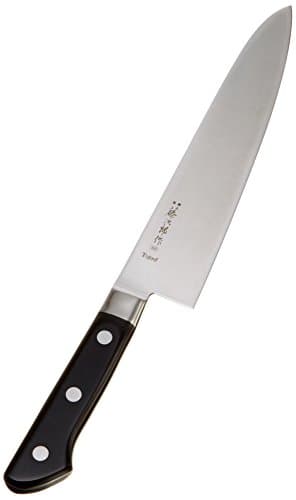
| Tojiro DP Gyuto 210 mm Chef's Knife | 8.3 in (210 mm) | VG-10 core, stainless clad (3-layer) | ~HRC 60 | ~15° per side | Stamped, bolsterless, riveted handle | ~7.4 oz (210 g) |
|---|
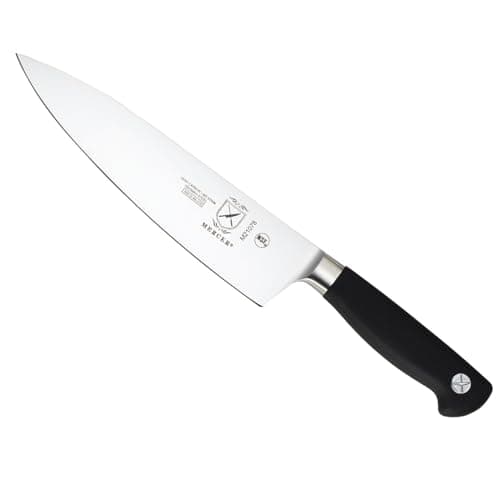
| Mercer Culinary Genesis 8" Chef's Knife | 8 in (20 cm) | X50CrMoV15 German stainless | ~HRC 56 | ~20° per side | Forged, full tang, short bolster | ~8.5 oz (241 g) |
|---|
| Shun Classic 8" Chef's Knife | 8 in (20 cm) | VG-MAX core, 68-layer Damascus clad | ~HRC 60–61 | 16° per side | Bolsterless, D-shaped Pakkawood handle | ~7.5 oz (213 g) |
|---|
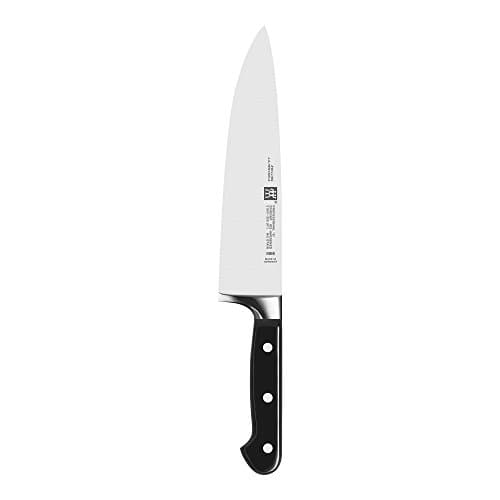
| Zwilling Professional S 8" Chef's Knife | 8 in (20 cm) | Zwilling special-formula stainless | ~HRC 57 | ~15° per side | Sigmaforge (single billet), curved bolster | ~8.8 oz (249 g) |
|---|
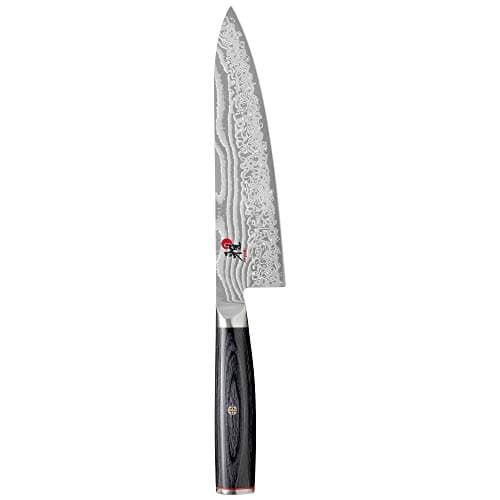
| Miyabi Kaizen II 8" Chef's Knife | 8 in (20 cm) | FC61 fine-carbide stainless | ~HRC 60 | ~9.5–12° per side (Honbazuke) | Forged, Micarta handle | ~7.9 oz (224 g) |
|---|
| Global G-2 8" Chef's Knife | 8 in (20 cm) | CROMOVA 18 stainless | ~HRC 56–58 | ~15° per side | One-piece steel, sand-filled hollow handle | ~5.8 oz (164 g) |
|---|
| Dexter-Russell Sani-Safe 8" Chef's Knife | 8 in (20 cm) | DEXSTEEL high-carbon stainless | — | — (individually ground and honed) | Stamped; sealed blade-to-handle joint, textured polypropylene | — |
|---|
In detail
The picks, in full
Your first good chef knife
Victorinox Fibrox Pro 8" Chef's Knife
8 in / 20 cmX50CrMoV15~HRC 55–56StampedFibrox handle
The default answer to "what's a good first chef knife." Cheap, light, holds a usable edge, and a joy to sharpen.
- Edge retention
- 6
- Out-of-box edge
- 8
- Handling
- 8
- Build
- 7
- Value
- 10
Pros
- +Costs a fraction of a forged German knife and out-cuts most of them out of the box
- +Soft-ish steel takes a screaming edge on a stone in minutes — the easiest knife here to learn to sharpen on
- +Light and nimble; the textured Fibrox handle grips even with wet hands
- +NSF-certified and dishwasher-tolerant (though you still shouldn't)
Cons
- −Softer steel means you hone often and sharpen more frequently than a hard Japanese blade
- −Stamped blade lacks the heft and bolster some cooks want for control
- −It is a tool, not an heirloom — nothing about it is beautiful
Don't buy this if…
…you want a knife that keeps its edge for months between sharpenings. This trades edge retention for being cheap and easy to re-sharpen — a great trade for a beginner, a poor one if you refuse to touch a stone.
The best overall, if budget allows
Mac Mth-80 Professional Hollow Edge 8" Chef's Knife
8 in / 20 cmMolybdenum-vanadium~HRC 59–61~15° edgeDimpled
The knife a lot of cooks quietly consider the best all-rounder made. Thin, sharp, and it stays that way.
- Edge retention
- 9
- Out-of-box edge
- 9
- Handling
- 9
- Build
- 8
- Value
- 7
Pros
- +The blade is unusually thin, so it falls through produce with almost no wedging
- +Harder Japanese-style steel than the German knives — holds its edge markedly longer
- +The dimples (granton edge) genuinely reduce sticking on starchy vegetables
- +Takes and holds a very acute edge
Cons
- −No full bolster; the pinch grip sits right at the blade — some find it exposed
- −Harder steel is a little less forgiving of lateral abuse than soft German steel
- −Costs several times a Victorinox and looks almost as plain
Don't buy this if…
…you're rough with your knives — you pry, twist, or hit bone. Harder, thinner steel chips where soft German steel just rolls. Buy the Wüsthof or the Victorinox and treat it like a hatchet if you must.
A do-everything German workhorse
Wüsthof Classic 8" Chef's Knife
8 in / 20 cmX50CrMoV15~HRC 5814° per sideForged
The archetypal German chef knife. Heavy, tough, forgiving, and it will outlive you if you hone it.
- Edge retention
- 7
- Out-of-box edge
- 7
- Handling
- 7
- Build
- 9
- Value
- 7
Pros
- +Forged from a single billet with a full bolster and full tang — the reference for a durable German blade
- +Wüsthof's newer 14°-per-side edge is noticeably keener than the old 20° grind
- +Tough enough to shrug off the abuse a home cook actually inflicts
- +Triple-riveted POM handle is essentially indestructible
Cons
- −Heavy — a real workout over a long prep session
- −The full bolster eventually blocks the heel and complicates sharpening the whole edge
- −Full retail price is high; it's frequently the knife people overpay for
Don't buy this if…
…you want a light, nimble knife or you have smaller hands. This is a heavy German blade by design — the MAC or Tojiro will feel far more agile.
The best value in a Japanese knife
Tojiro DP Gyuto 210 mm Chef's Knife
8.3 in / 210 mmVG-10 core~HRC 60~15° edge3-layer clad
The cheapest honest way into a real VG-10 Japanese knife. It punches absurdly far above its price.
- Edge retention
- 8
- Out-of-box edge
- 8
- Handling
- 8
- Build
- 7
- Value
- 10
Pros
- +A genuine VG-10 cutting core at a price the German knives can't touch — this is the value story of the category
- +Harder than any German blade here, so it holds a keen edge far longer
- +Thin, flat-ish profile suits push-cutting and precise work
Cons
- −The Western handle is basic and a little blocky — you're paying for the steel, not the fit and finish
- −Harder steel chips if you twist it through bone or freeze; treat it with respect
- −Reactive-ish edge on the very hard core wants drying after acidic food
Don't buy this if…
…this is the only knife in a household that abuses knives. VG-10 rewards good habits and punishes bad ones — a Victorinox is the more forgiving choice for a shared kitchen.
A forged knife on a budget
Mercer Culinary Genesis 8" Chef's Knife
8 in / 20 cmX50CrMoV15~HRC 56ForgedSantoprene handle
A forged, full-bolster German knife at a stamped-knife price. The value pick if you want heft.
- Edge retention
- 6
- Out-of-box edge
- 7
- Handling
- 8
- Build
- 8
- Value
- 9
Pros
- +Genuinely forged with a full tang — heft and balance closer to a Wüsthof than to its price tag
- +Short bolster leaves the whole edge usable and makes it easier to sharpen heel-to-tip
- +Grippy, ergonomic Santoprene handle that survives a commercial kitchen
Cons
- −Same soft German steel as the Victorinox, so edge retention is only average
- −Heavier than a stamped blade — a plus for some hands, a minus for others
Don't buy this if…
…you want the lightest possible knife. This is a deliberately hefty German-style blade; if you like a nimble Japanese feel, the Tojiro is the better call at a similar price.
A beautiful knife that also performs
Shun Classic 8" Chef's Knife
8 in / 20 cmVG-MAX core~HRC 60–6116° per sideDamascus clad
The Japanese knife people buy with their eyes. The Damascus is real, and so is the very acute edge.
- Edge retention
- 8
- Out-of-box edge
- 9
- Handling
- 8
- Build
- 9
- Value
- 6
Pros
- +Genuinely hard VG-MAX core holds a keen 16° edge well
- +The D-shaped handle locks into a right-handed pinch grip beautifully
- +The Damascus cladding is functional (it's the softer jacket around a hard core), not just decoration
Cons
- −The D-shaped handle is built for right-handers; lefties should look elsewhere
- −Hard, thin edge chips if you treat it like a German knife
- −You pay a real premium for the finish
Don't buy this if…
…you're left-handed or you want a knife you never have to baby. The right-handed handle and the chip-prone edge both punish the wrong owner.
A German knife you can sharpen heel-to-tip
Zwilling Professional S 8" Chef's Knife
8 in / 20 cmSpecial formula steel~HRC 57~15° edgeForged
A forged German alternative to the Wüsthof, with a curved bolster that keeps the whole edge usable.
- Edge retention
- 7
- Out-of-box edge
- 7
- Handling
- 7
- Build
- 9
- Value
- 7
Pros
- +The sloped bolster stops short of the heel, so unlike a full-bolster Wüsthof you can sharpen the entire edge
- +Ice-hardened (Friodur) blade holds an edge slightly better than a standard German knife
- +Excellent fit and finish; a genuine lifetime tool
Cons
- −Every bit as heavy as the Wüsthof, with the same soft-ish steel ceiling on edge retention
- −Premium price when it isn't on sale
Don't buy this if…
…you already prefer the Wüsthof's grip. These two are more alike than different; buy whichever handle your hand likes, and don't pay full price for either.
The keenest factory edge here
Miyabi Kaizen II 8" Chef's Knife
8 in / 20 cmFC61 steel~HRC 60~9.5–12° edgeHonbazuke
Zwilling's Japanese line: a very hard, very acute edge with a hand-finished Honbazuke bevel.
- Edge retention
- 9
- Out-of-box edge
- 10
- Handling
- 8
- Build
- 9
- Value
- 6
Pros
- +The hand-honed three-step Honbazuke edge is one of the most acute factory edges you can buy
- +Hard FC61 steel keeps that edge far longer than any German knife
- +Beautifully finished — this is a knife you look forward to using
Cons
- −A very acute, hard edge is the most chip-prone geometry in this roundup
- −Expensive, and the returns are diminishing versus a Tojiro if you don't sharpen well
Don't buy this if…
…you can't yet sharpen a Japanese edge on a stone. A 10° edge this hard needs correct maintenance; without it you'll chip it and won't be able to fix it. Start on the Tojiro or Victorinox.
Cooks who want a light, seamless blade
Global G-2 8" Chef's Knife
8 in / 20 cmCROMOVA 18~HRC 56–58~15° edgeOne-piece
The one-piece stainless knife you either love or hate on feel alone. Light, distinctive, divisive.
- Edge retention
- 7
- Out-of-box edge
- 7
- Handling
- 7
- Build
- 8
- Value
- 6
Pros
- +Seamless one-piece body has no rivets or bolster crevices to trap food — genuinely hygienic
- +Very light and nimble; the dimpled handle is grippier than it looks
- +Made in Japan with a harder-than-German edge
Cons
- −The dimpled all-metal handle is polarizing — some hands find it slippery when greasy
- −Light, blade-forward balance feels wrong to cooks raised on heavy German knives
Don't buy this if…
…you've never held one. The handle is the most love-it-or-hate-it thing in this list — try before you buy, or buy somewhere with easy returns.
Commercial kitchens and sanitation-first cooks
Dexter-Russell Sani-Safe 8" Chef's Knife
8 in / 20 cmDEXSTEEL stainlessStampedSealed polypropylene handleNSF certified
Foodservice equipment, not cutlery. NSF-certified, sealed at the handle, made in Massachusetts, and priced to be replaced without a second thought.
- Edge retention
- 5
- Out-of-box edge
- 7
- Handling
- 8
- Build
- 7
- Value
- 9
Pros
- +NSF-certified with a sealed blade-to-handle joint — no rivet gaps or bolster crevice for food to hide in
- +The textured polypropylene handle keeps its grip wet or greasy, which is the entire point in a working kitchen
- +Soft-ish stainless comes straight back on a honing rod, so a cook can fix the edge mid-shift instead of finding a stone
- +Made in Southbridge, Massachusetts and priced like a consumable
Cons
- −Dexter publishes no HRC, no bevel angle and no weight for this knife, so three of our spec columns sit empty
- −Edge retention is ordinary — this is a hone-every-shift knife, not a hold-it-for-months one
- −Utilitarian to a fault: a white plastic handle and a stamped blade will never be the knife you show anyone
Don't buy this if…
…you want one knife you'll still admire in twenty years. This is designed to be sanitized, resharpened and eventually thrown away. The Wüsthof or the MAC is the knife you keep.
The ten brands, and who each one is for
- 1. Victorinox — the brand to buy if you are buying one knife. Swiss, NSF-certified, X50CrMoV15 at ~HRC 55–56 behind a ~20° edge, and the Fibrox handle grips wet. The flagship Fibrox Pro 8" costs a fraction of a forged German knife and out-cuts most of them out of the box. The range runs from paring knives to 12-inch slicers at one consistent, honest price level, and the company will resharpen your knife by mail. The catch: softer steel means you hone often, and nothing Victorinox makes is beautiful. It is a tool brand, and it does not pretend otherwise.
- 2. MAC — the brand to buy if you are buying one good knife. Japanese, publishes a Rockwell figure (~HRC 59–61) and a ~15° edge, and grinds thinner than anyone else near its price. The MTH-80 is the knife a lot of serious cooks quietly consider the best all-rounder made. The line is small and unglamorous — Chef Series, Professional, Japanese Series — and MAC spends nothing on marketing. The catch: harder, thinner steel chips where soft German steel rolls, so it is the wrong brand for a kitchen where knives meet bone, and MAC publishes very little for some lines.
- 3. Wüsthof — the German benchmark, and the deepest range here. Precision-forged X50CrMoV15 at ~HRC 58 behind a stated 14° per side, full tang, full bolster, Solingen-made, lifetime warranty. Classic, Gourmet, Crafter, Classic Ikon: you can buy in at a stamped Gourmet and step up without changing makers. The Classic 8" will outlive you if you hone it. The catch: it is heavy by design (~9.0 oz), the full bolster gets in the way of sharpening heel-to-tip, and you are paying a real premium over a Mercer in the same steel. Best German chef knives ranks that tradition on its own.
- 4. Tojiro — the best value in Japanese steel, full stop. A real VG-10 core at ~HRC 60, stainless-clad in three layers, ~15° per side, for less than many German knives. Tojiro's DP line is what you buy when you want the Japanese performance story without the Japanese price story. The catch: the fit and finish are bare-bones — plain riveted handle, no bolster, nothing to look at — and VG-10 rewards good habits and punishes bad ones, which makes it a poor choice for a shared kitchen that abuses knives.
- 5. Mercer Culinary — the best budget brand with a commercial backbone. NSF-certified, used across culinary schools, and the Genesis line is genuinely forged with a full tang and a short bolster at a price most stamped knives sit at. Millennia below it is the cheapest knife on this site worth owning. The catch: the steel is ordinary (~HRC 56) and the finish is utilitarian. You are buying construction and price, not refinement. Best chef knives for culinary school is where this brand dominates.
- 6. Shun (Kai) — the brand people buy with their eyes, and the steel is real. A VG-MAX core at ~HRC 60–61 behind a 16° edge, clad in 68 Damascus layers, made in Seki. Kai offers free sharpening on Shun knives, which quietly answers the main objection to owning hard steel. The catch: the Classic handle is a right-handed D-shape, the thin hard edge is the most chip-prone on this page, and a meaningful part of the price is how it looks. That is a legitimate reason to buy as long as you know you are doing it.
- 7. Zwilling — Wüsthof's nearest rival and the better engineering story on paper. Sigmaforge single-billet forging, Friodur ice-hardening, ~HRC 57, a ~15° edge, and the Pro line's curved bolster leaves the whole edge reachable on a stone — a genuine advantage over a full bolster. Zwilling also owns Miyabi, so the ladder runs from budget German to premium Japanese inside one company. The catch: the Pro and the Wüsthof Classic are more alike than different, so buy whichever handle your hand prefers, and be careful which Henckels you are looking at (see below).
- 8. Miyabi — the premium Japanese line, made in Seki and owned by Zwilling. The Kaizen II runs a VG-10 core at ~HRC 61 with a Damascus clad and a D-shaped handle; it is the hardest steel on this page and holds an edge accordingly. The catch: it is a narrow, expensive line with no honest entry rung, and HRC 61 is the least forgiving steel here. Buy it as a second knife for a careful cook, not as a household's only blade.
- 9. Global — the most distinctive brand in the kitchen, and the most divisive. One seamless piece of CROMOVA 18 stainless at ~HRC 56–58, no rivets, no bolster, a sand-filled hollow handle and a dimpled grip, ~15° per side, ~5.8 oz. Nothing else feels like it. The catch: that handle is the single most love-it-or-hate-it thing in this category — hard, cold and slippery with wet or oily hands — and the brand is essentially one design. Hold one before you commit, or buy somewhere with easy returns.
- 10. Dexter-Russell — the American foodservice brand, and the one nobody outside a commercial kitchen has heard of. Made in Massachusetts since the 1800s, NSF-certified, with a sealed blade-to-handle joint that is a hygiene feature rather than a styling one, and priced to be replaced without a second thought. The catch: Dexter publishes no Rockwell figure, no bevel angle and no weight for the Sani-Safe cook's knife — three cells in the table below read "—" rather than carry an invented number — and nothing about it is designed to be admired.
Two brands that need a caveat before you buy
Henckels is two brands wearing one surname, and the difference is money. "Zwilling J.A. Henckels" (the twins logo) is the premium German line discussed above. "J.A. Henckels International" (the single figure) is the value line, largely made outside Solingen, and it is a different proposition entirely — often good, never the same thing. Neither is a scam; the confusion is the problem, because people pay premium attention to a budget knife. The Forged Accent 8" is the honest middle: forged, full tang, German stainless at ~HRC 57, cheaper than a Wüsthof Classic, with a full bolster that gets in the way on a stone. Our Henckels Forged Accent review and Zwilling vs Henckels both untangle it.
Dalstrong sells marketing first and a decent knife second. Under the series names and the branding, the Gladiator 8" is a competent forged German-stainless blade at ~HRC 56 with a ~16–18° edge — genuinely fine, and matched on pure cut-per-dollar by the plain Mercer Genesis. The brand is not dishonest about its steel; it is simply selling you a look, and the look costs money. Buy it because you want it to be the knife on your counter, not because the marketing persuaded you it out-cuts a Wüsthof. The Dalstrong Gladiator review and Mercer vs Dalstrong put numbers on it.
Which brand for which buyer
- Your first good knife: Victorinox. If you want to spend a little more for a noticeably better cut, Tojiro. Best chef knives for beginners.
- A knife to keep for thirty years: Wüsthof or Zwilling. Forged, full tang, lifetime warranty, and a range you can grow into.
- The best cut per dollar, and you will learn a stone: MAC, then Tojiro. Both ask you to maintain them; are Japanese knives worth it is the honest case on both sides.
- A gift that looks like a gift: Shun or Miyabi — with the warning that a D-shaped handle is right-handed, so check which hand the recipient uses. Best chef knife gifts.
- A busy, careless or shared kitchen: Victorinox, Mercer or Dexter. Soft steel rolls instead of chipping, all three are NSF, and replacing one is not an event.
- Outfitting a whole drawer at once: look at sets rather than brands — best chef knife sets and knife set vs open stock, which argues that buying two good knives separately usually beats a fifteen-piece block.
Brand loyalty is the wrong habit
The useful conclusion from ranking makers is that you should not stay with one. Nearly every kitchen we would point at mixes: a hard Japanese knife for slicing and precision prep, and a cheap, tough German or Swiss blade for bone, squash and anything a guest might pick up. Buying both costs less than one premium knife and removes the only real risk in owning hard steel — why restaurant cooks use cheap knives explains why professionals settled on exactly that split.
It also matters far less than maintenance. A Victorinox honed before every session cuts better than a Miyabi that has not seen a stone in a year, and that is not a close call. Before you spend more on a brand, read sharpening vs honing and pick a stone from best knife sharpening kits. That is the upgrade with the highest return in this entire category.
How we picked
We do not run a test kitchen
We compiled each product's published specifications — steel, hardness, edge geometry, weight — normalized them into the matrix above, and scored each one against a published rubric. The scores are judgments from those specs and the value math — they are not measurements we took, because we do not have a test kitchen and we're not going to pretend we do. Units we claim to have tested: 0.
Questions
Frequently asked
What is the best chef knife brand?+
Victorinox for most people — Swiss-made, published specs, decades of consistency, a mail-in sharpening service and a very low price. If you want the best cut per dollar and will maintain a harder edge, MAC. If you want a knife to keep for thirty years, Wüsthof or Zwilling.
Are expensive knife brands worth the money?+
Up to a point. Moving from a budget stamped knife to a thin, hard Japanese blade is a genuine, obvious improvement. Past the mid-priced forged tier the money mostly buys finish, cladding pattern, handle material and brand — not cutting performance.
What is the difference between Zwilling and Henckels?+
"Zwilling J.A. Henckels" (twins logo) is the premium German line; "J.A. Henckels International" (single figure) is the value line, largely made outside Solingen. Same surname, different products and prices — check the logo before you pay premium money.
Is a German or a Japanese knife brand better?+
Neither — they are different trades. German brands run softer steel (~HRC 55–58) that rolls instead of chipping and is forgiving. Japanese brands run harder steel (~HRC 60–61) behind thinner grinds that cut better and chip more readily. Most good kitchens own one of each.
Does the steel brand name matter?+
Less than people think. X50CrMoV15 is the same alloy in a Wüsthof and in a budget forged knife; VG-10 is the same in a Tojiro and in knives costing four times more. What varies is the heat treat, the grind and the consistency — which is what a brand is really selling.
Receipts
Sources
We do not run a test kitchen, and we do not pretend to. Specs are the manufacturer's published figures, attributed as such; where we could not verify something, we say so on the page rather than quietly leaving it out. Read our full method.