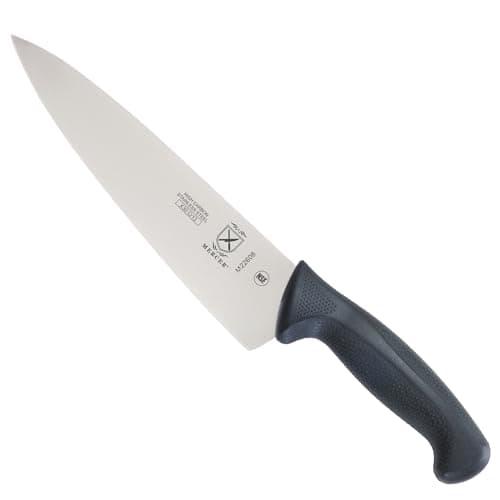
The Mercer Millennia is what a culinary student is handed on day one, and it earns that spot for one reason: it's about the cheapest chef's knife a professional will actually endorse. It won't win any beauty contests and it won't hold an edge for months, but it cuts, it's NSF-certified, and it costs so little that it's a genuinely sensible "first real knife" or knock-around backup.
What the spec sheet tells you
It's a stamped blade in soft X50CrMoV15-class stainless at about HRC 56, ~20° per side, with a textured Santoprene handle and a finger guard. The steel is the usual soft-and-forgiving story — it takes an edge easily and is one of the easiest to sharpen, but it dulls faster than harder steel. The headline feature is the NSF certification, which is why it's a fixture on culinary-school supply lists and in commercial kitchens.
How it feels to use
Light and grippy. At about 5.6 ounces it's one of the lightest knives we cover, the textured handle holds well with wet hands, and the finger guard reassures beginners. The honest limits are exactly what the price implies: the factory edge is a touch rougher than a Victorinox's, edge retention is only ordinary, and the fit and finish are basic. This is a tool, not an heirloom — and it never pretends otherwise.
Who it's for
Culinary students (obviously), anyone who wants a competent chef's knife for the least money possible, and cooks who want a cheap backup or a beater for rough jobs. It's a natural entry in best chef knives under $100 and for beginners. It's not the pick if you can stretch a little — the small step up to a Victorinox buys a noticeably better edge and finish.
Value
On pure cut-per-dollar it's hard to beat, because it costs so little and still cuts properly — which is exactly why it scores a perfect 10 on our value metric. If every dollar counts, this is the knife. If you can spend a bit more, the Victorinox Fibrox is the smarter buy for a real step up in edge and finish; compare them in Victorinox vs Mercer. Either way, pair it with a stone.