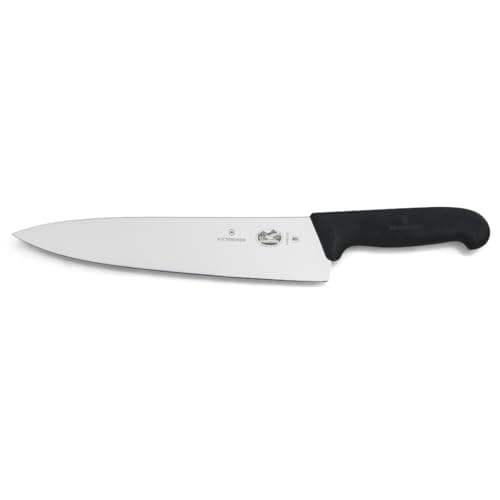
The 8-inch Victorinox Fibroxis the most-recommended chef's knife there is. This is the same knife with two more inches of blade — and for the right cook, that's a meaningful upgrade, not just more metal. If you routinely break down melons, squash, large roasts or cabbages, the 10-inch does it in fewer strokes. If you don't, it's more blade than you need. This review is really about matching the length to your kitchen.
What the spec sheet tells you
Mechanically it's identical to the 8-inch: a stamped blade in soft German X50CrMoV15 at about HRC 55–56, ~20° per side, with the same textured Fibrox handle — just a 10-inch (25 cm) edge instead of eight. That means the same virtues (screaming-sharp on a stone in minutes, the easiest steel to learn to sharpen on, NSF-certified, grippy when wet) and the same limitation (soft steel dulls faster, so you hone often). It's still light for its length.
How it feels to use
More reach and more authority. A longer blade slices a big tomato or a melon in one pass and rock-chops through a pile of vegetables in fewer strokes once your technique catches up. The trade is control: ten inches is a lot of blade, it wants a big cutting board, and it intimidates beginners. On a small board in a cramped kitchen it's more knife than the space can use — exactly the opposite of the case for our small-hands picks.
Who it's for
Cooks with bigger hands, bigger boards, and a habit of processing large produce or proteins — and anyone who has used an 8-inch for years and wants more reach. Line cooks and people who batch-prep love the length. It's a natural companion to the sizing advice in chef knife sizes explained. It is not a first knife: if you're new to knife skills or short on counter space, buy the 8-inch— it's the safer, more universal choice, and it anchors our under-$100 list.
Value
The same close-to-unbeatable cut-per-dollar as the 8-inch, in a bigger blade. There's no premium for the length worth worrying about, so if you know you want ten inches, this is the value answer — buy it, spend the savings on a stone, and out-cut people with knives four times the price. Just be honest about whether your kitchen and hands actually want the extra reach first.