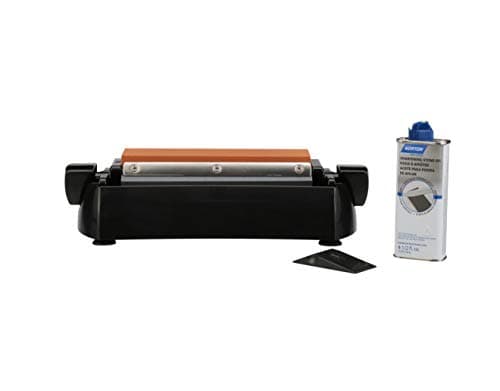
Before water stones took over kitchen sharpening, this is what a sharpening setup looked like: a bench of oilstones in a reservoir base. The Norton IM200 is the classic three-stone oilstone kit — coarse, medium and fineIndia and Crystolon stones with a holder that catches the oil — and it is the traditionalist's route in our best sharpening stones ranking. It sharpens anything; it just does it the old, messy, durable way.
What the spec sheet tells you
Three 8 x 2-inch oilstones (aluminum-oxide India and silicon-carbide Crystolon) in coarse, medium and fine grits, mounted in a reservoir bench holder, used with honing oil. Two things follow. First, three grits in one box is a complete kit — you can take a damaged edge from repair through to a working finish without buying anything else. Second, oilstones are extremely durable: they cut slowly, wear slowly, and shrug off heavy use, so the kit lasts effectively forever and is very cheap per year.
What it's like to use
You wet the stone with a little honing oil (not water), then sharpen at a consistent angle just as you would on any bench stone — raise a burr on the coarse or medium stone, refine on the fine one, and deburr. The reservoir base catches the oil and holds the stones firmly, which is genuinely convenient and beginner-friendly. The feel is slower and less refined than a modern water or ceramic stone — oilstones do not reach the very high polishing grits — but for a sturdy, no-nonsense edge on kitchen and workshop tools alike, it works.
The honest trade-offs
The big one: oil is a one-way commitment. Once a stone has been used with oil it cannot later be used with water, and the oil is messy — not ideal on a kitchen counter next to food. Oilstones are also slower and coarser-finishing than water or ceramic stones, so a keen kitchen edge takes more work and tops out less refined. They are heavier and more of a workshop tool than a kitchen one. For pure kitchen-knife sharpening, a water stone or a diamond plate is tidier and faster.
Who it's for, and value
Buy the Norton IM200 if you want the traditional oilstone route — you like the old way, you sharpen workshop tools as well as kitchen knives, or you want one extremely durable kit that will outlast everything. Skip it if you want a clean, quick, kitchen-only setup, or a truly polished edge: oil is a commitment, and for kitchen knives specifically a water stone or diamond plate is the better tool. On value, the kit is excellent per year — it is essentially permanent — you are just paying in mess and finish rather than money. See how it compares in water stone vs oil stone.