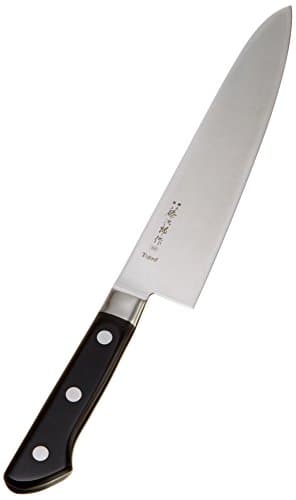
The verdict: the Tojiro DP 210 mm is the Dalstrong alternative to buy. It is for the cook who likes what the Gladiator is reaching for — a keen edge at a sub-$100 price — and would rather have it in harder steel: a VG10 core at a published ~HRC 60, clad in soft stainless, ground near 15°, at roughly the same money. The budget pick is the Mercer Culinary Genesis 8", the cheapest genuinely forged, full-tang, bolstered knife here, and the closest match to the Gladiator's construction for noticeably less. Prices render live from the price layer with the "as of" date printed under the table.
What a Dalstrong Gladiator actually is
Worth stating accurately before comparing anything to it, because this is a brand people have strong opinions about and the spec sheet is more interesting than either side of the argument.
The Gladiator Series 8" chef's knife is published as high-carbon German stainless at roughly HRC 56, with an edge ground to ~16–18° per side, forged with a full tang and a tapered bolster, at about 7.8 oz (221 g), supplied with a sheath.
Three of those numbers are genuinely good for the price. A forged full-tang blade at this money is uncommon. A taperedbolster — rather than a full one — leaves the heel of the edge reachable on a stone, which is a real advantage over a Wüsthof Classic and something buyers rarely notice they are getting. And ~16–18° is keener than the ~20° grind most German-steel knives ship with, which is why a Gladiator arrives sharper than its price suggests. Our Dalstrong Gladiator review scores it 7.2 and it ranks on best chef knives under $100 and best forged chef knives. It is a competent knife and this page is not an argument that it is not.
The two reasons people shop around come off that same spec, and both are things we say in our own review of it:
- HRC 56 is the same soft-steel ceiling every German-stainless knife has. A keener grind on soft steel gives you a sharper knife out of the box, not a knife that stays sharp longer. Edge retention is set by hardness, and ~HRC 56 is at the softer end even for German steel — knife hardness explained is the trade-off in full.
- You are buying presentation as well as blade. The sheath, the packaging and the branding all cost something, and that cost is in the price. Whether that is worth it is a legitimate personal call — but if it is not what you want, the same construction is available for less.
The five alternatives, and what each one matches
1. Tojiro DP 210 mm — matches the price, beats it on steel. The top pick. A VG10 cutting core at a published ~HRC 60, clad in softer stainless, 210 mm (8.25 in), ground near 15° per side. This is the straight answer to "what else can this money buy": roughly four Rockwell points harder than the Gladiator and ground more acutely, so it both arrives keener and stays keen far longer. The clad construction is what makes that affordable — hard core for the edge, soft jacket for toughness.
Honest cons:the handle is a plain riveted composite and the finish is utilitarian; there is no sheath, no presentation box and nothing decorative anywhere. Hard thin steel chips if you treat it like a German knife — bone, frozen food, a glass board. And it wants a fine ceramic rod rather than a grooved steel one. Full Tojiro DP review, and best gyuto knives if the Japanese route appeals.
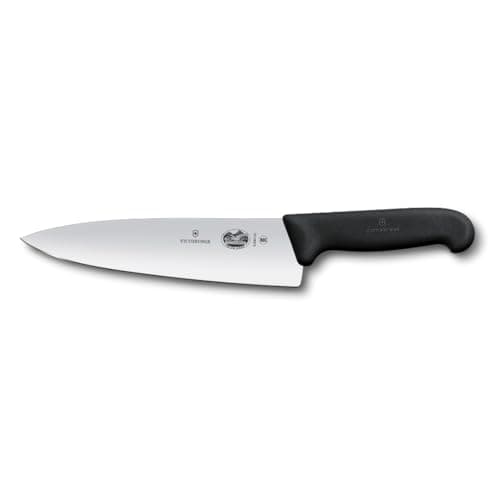
2. Victorinox Fibrox Pro 8" — matches the toughness, undercuts the price badly. X50CrMoV15 at ~HRC 55–56 and a ~20° edge, stamped with a full-length tang, ~6.6 oz, Swiss made and NSF-certified. On pure cutting it is the Gladiator's equal-or-near in the same steel class, it weighs over an ounce less, it has no bolster to block the heel at all, and it costs substantially less. The textured Fibrox handle is also the best wet grip in this price band, which is worth more in practice than a nicer-looking one.
Honest cons:stamped rather than forged, so there is no heft behind the handle and no bolster to brace a pinch grip against — if the forged feel is specifically what you wanted from a Dalstrong, this is not it. Ground at ~20° rather than ~16–18°, so it arrives less keen. And it is plainly a tool: nothing about it is beautiful. dalstrong vs victorinox is the head-to-head.
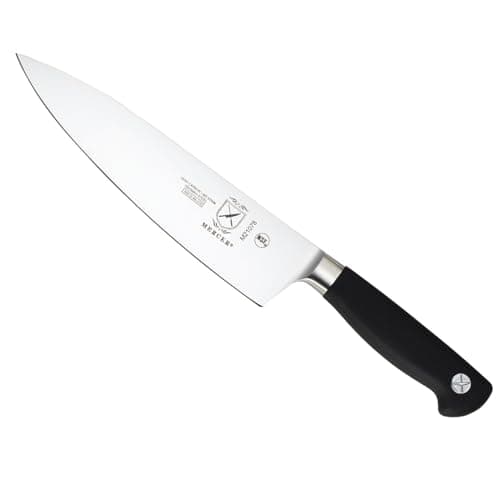
3. Mercer Culinary Genesis 8" — matches the construction almost exactly, for less. The budget pick. Forged from a single billet with a full tang and a short bolster, in German steel, with a textured Santoprene handle. This is the closest like-for-like on the page: forged, bolstered, German-steel, the same hardness class, the same intended job — and it is the cheapest knife here. We say the same thing in our Gladiator review: on pure cut-per-dollar the plain Mercer Genesis matches it, so buy the Dalstrong for the looks and the Mercer for the value.
Honest cons:the moulded Santoprene handle is a commercial-kitchen handle, not a showpiece, and there is no sheath. The same soft-steel edge-retention ceiling applies. And the bolster, though short, is still a bolster — marginally more in the way on a stone than the Victorinox's absence of one. mercer vs dalstrong runs it in detail, and best Mercer knives covers the rest of the range.
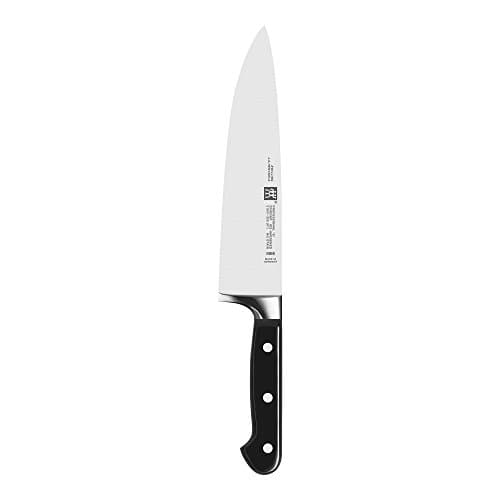
4. Zwilling Professional S 8" — matches the forged idiom with a real Solingen pedigree. Forged German steel with a full tang and, importantly, a curved bolster that leaves the whole edge sharpenable heel to tip. If part of what you wanted from a Dalstrong was a serious forged German knife, this is the version of that from a house that has been making them in Solingen for generations, and it is the knife to buy if brand substance matters to you.
Honest cons:it is by far the most expensive knife on this page, so it is a step up rather than an alternative at the same money. It is heavier than the Gladiator. And it buys you build quality and provenance, not a harder steel — edge retention is in the same German-stainless band. wusthof vs zwilling and zwilling vs henckels sort out the family tree, which confuses almost everybody.
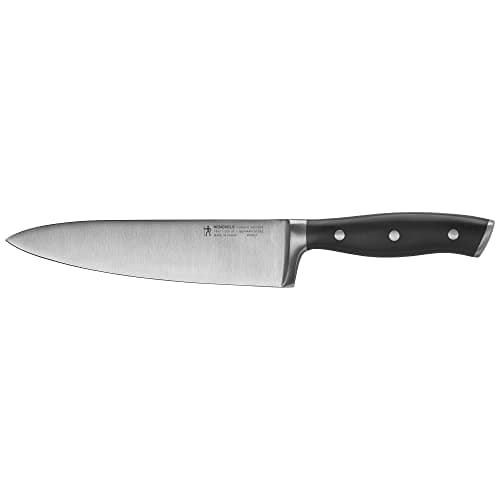
5. Henckels Forged Accent 8" — matches the forged German build at the lowest price from an established name. Forged, full tang, German steel, from Zwilling's value line. If you want a genuinely forged knife from a long-established cutler and the Professional S is out of budget, this is the route, and it lands close to the Victorinox on price.
Honest cons: fit and finish sit a clear step below the Professional S, which is exactly what the price gap represents. It is ground less keenly than the Gladiator out of the box, and the handle is smoother and less secure wet than either the Fibrox or the Santoprene options above. henckels vs wusthof places it in the German field.
Which alternative fits which reason
- "I liked how sharp it arrived, I just want it to stay that way." The Tojiro DP. Harder steel at a more acute angle, at about the same price. This is the single most common reason to leave the Gladiator and the clearest upgrade available for the money.
- "I want the same knife without paying for the packaging." The Mercer Genesis. Forged, full-tang, bolstered, German steel, cheaper.
- "I want the cheapest thing that cuts this well." The Victorinox Fibrox Pro, and put the difference into a stone.
- "I want a forged German knife from a real cutler." The Zwilling Professional S if the budget stretches, the Henckels Forged Accent if it does not.
- "It felt too heavy / too light." The Gladiator sits at ~7.8 oz, between the ~6.6 oz Victorinox and a ~9 oz forged Wüsthof. Go down to the Victorinox or up to the Zwilling accordingly — best lightweight chef knives covers the light end.
- "I want the sheath and the presentation." Then keep the Dalstrong. Nothing on this page ships with one, and that is a real feature if you store knives in a drawer or travel with them — best knife storage is the alternative solution.
The one spec that decides this whole page
It is worth isolating, because it is the thing the marketing on every side of this category obscures: a keen grind and hard steel are different purchases.
Grinding a blade to ~16° instead of ~20° makes it cut with less force today. It does nothing for how long that edge lasts. Hardness does that, and hardness is a property of the steel and the heat treatment, not the angle. A soft blade ground keenly — which is what a Gladiator is — gives you an excellent first month and then the same honing schedule as any other German-stainless knife.
That is why the top pick on this page is a Japanese clad blade rather than another German one. At this price point, the only way to get an edge that is both keen and durable is to change the steel. The cost is care: a hard thin edge chips where a soft one rolls, so bone, frozen food, glass boards and dishwashers all become genuinely off-limits. Japanese vs German knives is the full comparison, and VG10 vs X50CrMoV15 is the two specific steels in play here.
Sharpening, and the bolster detail worth knowing
Four of the five knives here are softer European stainless in the HRC 55–58 range: they tolerate a grooved steel honing rod, come back on any stone in minutes, and roll rather than chip. Hone weekly, sharpen two or three times a year — sharpening vs honing and the stones for German knives.
The Tojiro is the exception and needs a different routine: a fine ceramic rod for maintenance, a 1000/6000 stone for sharpening, and never a pull-through ground for 20°, which would re-profile the 15° edge you paid for. Ceramic vs steel honing rod explains why.
On bolsters: this is the quiet spec that separates these knives over a decade of sharpening. The Dalstrong's tapered bolster and the Zwilling's curved bolster both leave the heel reachable. The Victorinox has no bolster at all. The Mercer's is short. A fullbolster — which none of these has, but a Wüsthof Classic does — eventually blocks the last inch of edge, and that is the sort of detail knife bolster explained exists for.
The verdict
Buy the Tojiro DP 210 mm if what attracted you to a Dalstrong was how keenly it cuts, and you are willing to keep it off bone and out of the dishwasher. At roughly the same price it is harder, more acute and holds its edge far longer, and it is the clearest upgrade on this page.
Buy the Mercer Genesis 8"if you wanted the forged, bolstered German construction and not the presentation — it is the closest match here and the cheapest knife on the page. Buy the Victorinox Fibrox Pro 8" if you want the lowest price that still cuts properly, the Zwilling Professional S if brand substance and build quality are what you are really buying, and the Henckels Forged Accentif you want a forged Solingen knife at the bottom of that market. And if the sheath and the presentation are genuinely part of what you want, keep the Dalstrong — nothing here ships with one.
Two related pages. The Victorinox pick above is the cheapest knife here and the brand has six more kitchen blades worth knowing about — best Victorinox knives ranks them. And if a vegetable specialist rather than another general-purpose chef's knife is what the money should go on, best nakiri knives under $100 is the same budget spent differently.