The verdict: the Victorinox Swiss Classic 4" is the paring knife to buy under $50. It is for everyone — genuinely, this is the knife most home cooks and a lot of professionals reach for, and it costs less than a takeaway. A straight spear-point blade in high-carbon stainless at ~HRC 55–56, light enough to work in your hand all evening. The budget pick is the Mercer Bird's Beak, the cheapest knife on this page — but buy it second, because it is a peeling specialist rather than a first paring knife. The cheapest knife here that can be your only paring knife is the Swiss Classic serrated, which sat within a dollar or two of the top pick at the last price check. Prices render live from the price layer with the "as of" date printed under the table.
A $50 ceiling is generous for this category, not restrictive. All four picks below carried a live price well under half of it at the last price-layer run, and you could own the whole page for less than one forged alternative. The two knives that do sit above the ceiling — the Wüsthof Classic 3.5" and the Shun Classic 3.5" — are ranked on best paring knives, and the honest case for either is that it matches a set, not that it pares better.
Why premium steel does the least work here
Everything that makes an expensive knife expensive pays off on long cuts under load: hard steel holding a thin edge through a kilo of onions, a tall blade clearing the board, a balance point that stops your wrist from working. A paring knife does none of that. It does short, light, in-hand work — hulling strawberries, coring tomatoes, peeling a shallot, cutting the eyes out of a potato.
At that scale, a cheap sharp knife and an expensive sharp knife do the same job. Hardness buys edge retention, and a paring knife barely loads its edge, so even soft stainless at ~HRC 55–56 stays usable for months. Weight buys authority, and here light is better. Which leaves blade shapeas the only variable that genuinely changes what the knife can do — and shape costs nothing.
That is why this page ranks four shapes rather than four price tiers. What is a paring knife used for is the longer version, and do you need a paring knife is the question to settle first if you are not sure you do.
The four shapes, and which you need
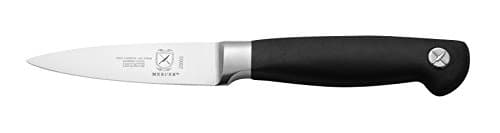
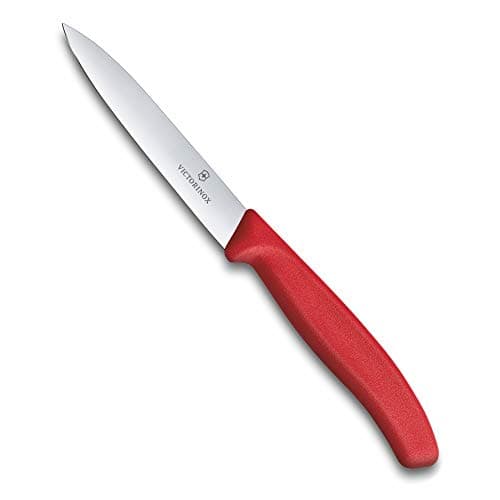
- Straight spear point. The default, and the one to own if you own one. A pointed tip for coring and scoring, a straight edge that can also work on a board. Both the top pick and the forged Mercer are this shape.
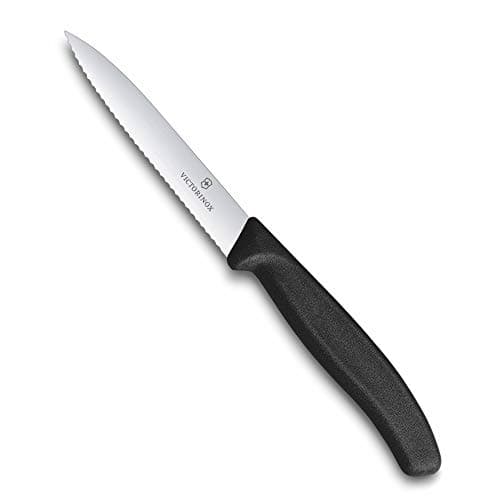
- Serrated spear point. Micro-serrations bite through skins that a straight edge slides off — tomatoes, citrus, peppers, soft fruit. They also stay effective for years without sharpening, because the points do the work. The trade is that they tear rather than slice and cannot be sharpened at home.
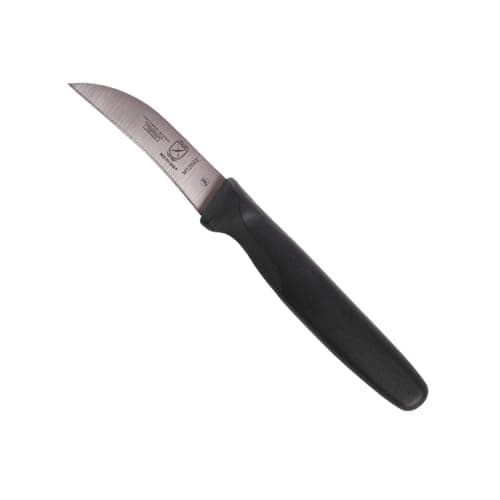
- Bird's beak (tourne). A short, inward-curved blade that hugs round produce. It peels apples, shapes vegetables and turns mushrooms far better than a straight blade, and it is clumsy at everything else.
- Forged versus stamped. Not a shape, but the other real choice. A forged paring knife has a bolster and a full tang, feels substantial, and matches a forged set. A stamped one is lighter and nimbler for fine in-hand work. Neither cuts better — forged vs stamped knives explains why.
The criteria, in the order they mattered
- Control in the hand, not on the board. A paring knife is used in the air as often as on a surface, so grip, weight and blade length matter more than steel grade. The top two picks score highest here for exactly that reason.
- Published hardness, where there is one. Victorinox states ~HRC 55–56 for the Swiss Classic blades and Mercer states ~HRC 56 for the forged Genesis. Mercer publishes no Rockwell figure for the Bird's Beak, so that cell reads "—" rather than carrying a borrowed number.
- Does it do something the others cannot? Four knives on one page only earns its place if each one wins a job. A serrated edge beats a straight one on a tomato; a bird's beak beats both on a round peel; a forged blade wins on feel.
- A verified live offer under the ceiling. Every pick carried a live price below $50 at the last price-layer run, which is also how availability was checked.
Buy two, not one
This is the one category where the sensible advice is to buy more than one knife, because the total is still trivial. A straight 4" Swiss Classic plus a serrated 4" Swiss Classic costs about thirty dollars together and covers everything a paring knife is asked to do: the straight one for precision and coring, the serrated one for anything with skin on it.
Add the Bird's Beakas a third only if you actually peel and shape round produce — it is a specialist tool and it is the cheapest knife on this page, so there is no reason not to own one if the job comes up. Add the forged Mercer Genesis instead of all of the above if what you want is a small knife that feels like a real knife, with a bolster and some weight behind the tip.
Care and sharpening: the easy part
The two straight-edged picks sharpen in about ninety seconds on a 1000-grit stone, and soft Swiss and German stainless is the friendliest steel there is to learn on — how to sharpen a paring knife is the method, and best whetstones under $50 is the stone. A small blade needs less of everything: fewer passes, less pressure, less patience.
The serrated pick needs nothing and accepts nothing — use it until it stops biting, then replace it. All four should be hand washed and dried, and all four last longer stored where the edges touch nothing: how to store knives in a drawer is the cheap answer for small blades.
The verdict
Buy the Victorinox Swiss Classic 4". It is light, genuinely sharp out of the box, costs almost nothing and is the knife most cooks reach for without thinking about it.
Buy the Swiss Classic 4" serrated alongside it if you cut tomatoes and citrus often, the Mercer Bird's Beak if you peel round produce, and the Mercer Genesis 3.5" instead of all of them if a forged bolster and some heft is what you are actually after.
If the next knife on your list is bigger, best chef knives under $100 is where the same careful shopping does much more for your cooking, and how many kitchen knives do you need is the sanity check on buying a fourth.