Skip to content
Bevel & Bone

HUB 01 · Chef Knives

Global Knives Alternatives

Global is known for three things: light weight, a seamless one-piece body, and a dimpled handle you either love or hate. Five knives that match it on the first two and spare you the third.

By Stephen V.Updated How we choose
#ad

We earn a commission when you buy through our Amazon links, at no extra cost to you. It never changes a ranking, and we say so when the cheaper knife is the better buy. How this works.

The verdict: the Tojiro DP 210 mm is the Global alternative to buy. It is for the cook who liked what a Global was reaching for — a light Japanese blade with a keen 15° edge — and would rather have it in harder steel with a handle shaped like a handle: a VG-10 core at a published ~HRC 60, clad in soft stainless, at around 7.4 oz. The budget pick is the Dexter-Russell Sani-Safe 8", the cheapest knife here and the only other one built around a sealed, sanitizable blade-to-handle joint, which is the practical half of Global's one-piece design. The closest match on weight is the MAC HB-85at under five ounces — lighter than the Global it replaces. Prices render live from the price layer with the "as of" date printed under the table.

One thing worth saying plainly, because it is probably why some readers are here: the Global G-2 showed no buyable offer at all when our price layer last ran. That is a snapshot of one retailer and not a judgement on the knife — Global is a long-established maker and the G-2 is its most famous blade — but if you came looking for one and could not buy it, that is the situation, and the five knives below are what we would reach for instead.

What a Global G-2 actually is

The G-2 is an 8" chef's knife made in Japan from CROMOVA 18 stainless, hardened to around HRC 56–58 and ground to about 15° per side. The whole knife is one piece of steel: blade, bolster and handle, with the hollow handle sand-filled to set the balance and dimpled for grip. It weighs about 5.8 oz, which is a couple of ounces under a German forged knife of the same length.

Two of those things are genuine engineering. A one-piece body has no seam for food and water to collect in, which is why Globals turn up in professional kitchens where sanitation is audited. And the low weight is real: a light knife is less tiring over a long prep session and quicker to change direction with.

The third thing is the problem. The dimpled, round, all-steel handle is the most polarising grip in mainstream cutlery — cooks who like it like it very much, and cooks who do not find it slippery when wet and cold in the hand. It is also the reason the G-2 is a bad knife to buy unseen, and the reason most searches for a Global alternative start with the handle rather than the blade.

Why people look for an alternative

  • The handle. Far and away the main reason. If you have held one and did not get on with it, no other Global will fix that — the grip is the house style across the whole range.
  • Edge retention for the money. At ~HRC 56–58 a Global sits between German and Japanese hardness while being priced like a Japanese knife. A Tojiro DP at ~HRC 60 holds an edge longer for less.
  • Availability. See above — worth checking before you fall in love with a specific model.
  • Sharpening. A one-piece steel knife is no harder to sharpen than any other, but the shallow, continuous curve where the blade meets the handle gives you less to register against on a stone than a bolstered knife does.

How we matched the alternatives

Each pick matches the Global on at least one stated strength — low weight, a sanitizable handle, a keen Japanese edge — or undercuts it decisively on price. They are ranked by our overall score.

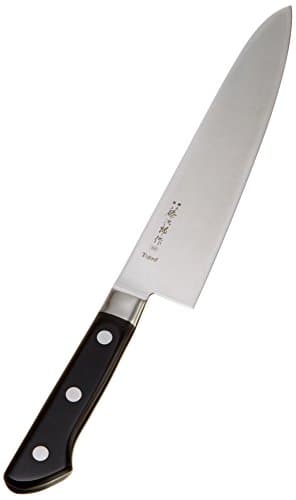
  • Tojiro DP Gyuto 210 mm — beats it on steel. A VG-10 core at ~HRC 60 clad in stainless, ground near 15°, bolsterless with a riveted handle. Harder than CROMOVA 18 and usually cheaper.
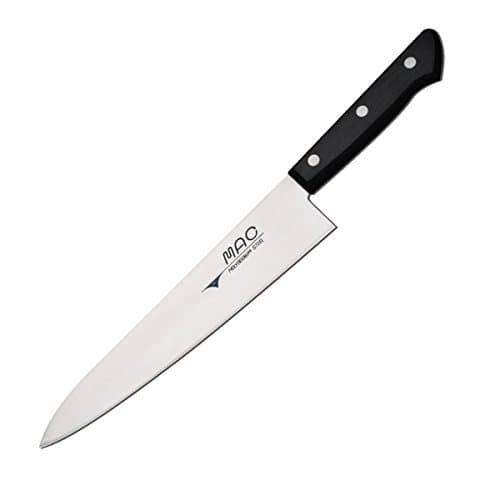
  • MAC HB-85 — beats it on weight. About 4.9 oz with a 2.0 mm blade in molybdenum-vanadium stainless at ~HRC 60, ground near 15°, on a riveted Pakkawood handle. If "light and thin" is what you wanted from a Global, this is more of it.
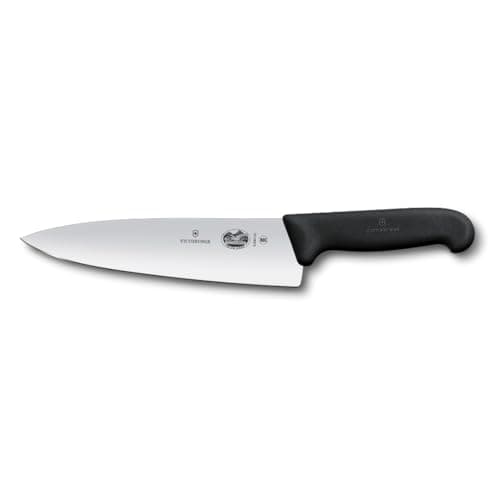
  • Victorinox Fibrox Pro 8" — matches the hygiene case and the light weight for a fraction of the money. X50CrMoV15 at ~HRC 55–56, about 6.6 oz, NSF-certified, with a textured handle that grips wet — the exact complaint people have about a Global's steel grip.
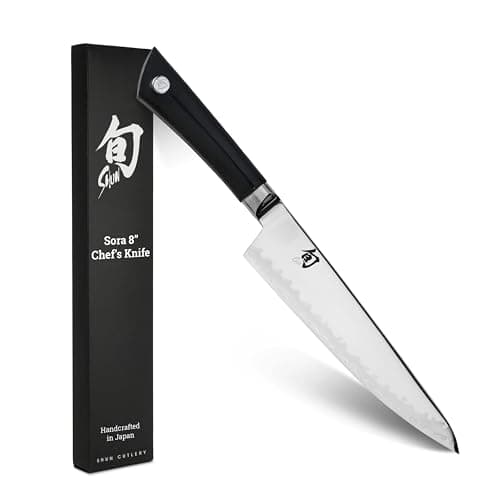
  • Shun Sora 8" — matches the Japanese edge with a Western handle. A VG10 san-mai cutting edge at ~HRC 60–61 ground to 16°, brazed to a cheaper stainless upper, on a polymer handle. About 6.6 oz.
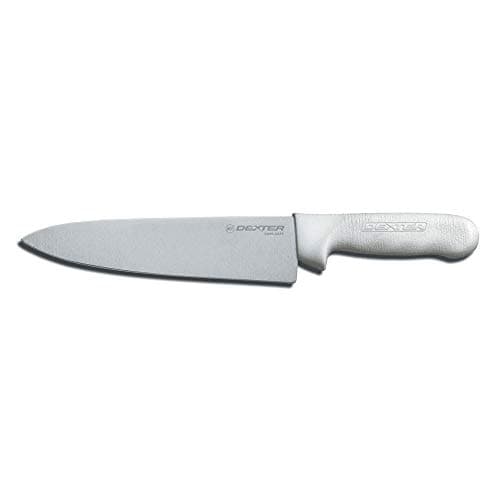
  • Dexter-Russell Sani-Safe 8" — the hygiene answer at the lowest price. Not one-piece, but the blade-to-handle joint is sealed, which is the same problem Global solved a different way. NSF certified, made in Massachusetts, and priced to be replaced without a second thought. Note that Dexter publishes no hardness, no bevel angle and no weight for it, so those cells read "—" in the matrix.

If what you wanted was the seamless handle specifically

Then your options narrow fast, because almost nobody else builds a kitchen knife from a single piece of steel at this price. The honest alternatives are a sealed jointrather than no joint at all — which is what the Dexter and, in practice, the Victorinox Fibrox give you: a moulded handle with no gap at the bolster, NSF certified for commercial use, and dishwasher-tolerant even though we would still not recommend it.

For most home kitchens that is a distinction without a difference. The sanitation case for one-piece steel is written for a commercial line being inspected, not for a domestic cook who hand washes a knife and dries it. Knife handle materials explained covers what actually fails in a handle over years of use, and best dishwasher-safe kitchen knives is the page if hands-off cleaning is the real requirement.

If what you wanted was lightness

Weight is the easiest Global trait to beat, and the MAC HB-85 beats it outright at under five ounces. The full shortlist is on best lightweight chef knives, which ranks the category on published weights rather than on impressions, and best chef knives for small hands is the related page if grip size is part of the problem.

It is worth being clear about the trade. Thin, light, hard blades cut beautifully and chip where a thick soft blade would roll. If the knife lives in a shared kitchen where anyone might use it on a bone or put it in a dishwasher, the Victorinox is the sane choice and the MAC is not — Japanese vs German knives is the full version of that argument.

Sharpening, whichever way you go

Four of the five picks are ground near 15–16° per side, which means a whetstone rather than a Western pull-through: a 20° sharpener widens a Japanese bevel every time you use it. Knife sharpening angle explains why that matters more than which stone you buy, best sharpening stones for Japanese knives is the shortlist, and how to use a whetstone is the method. The Victorinox and the Dexter are the two exceptions — soft stainless, 20°-class edges, and the friendliest steels here to learn on.

The verdict

Buy the Tojiro DP if you wanted a Global for the Japanese edge and will keep it on a stone. Buy the MAC HB-85 if you wanted one for the weight, and accept that thin and hard means careful. Buy the Victorinox Fibrox Proif the real appeal was a seamless, grippy, NSF-certified knife you never have to think about — it is a fraction of the price and the handle does not divide anyone.

Buy the Shun Sora if you want a harder Japanese edge with a Western handle shape, and the Dexter Sani-Safe if sanitation is the brief and the budget is tight. Global vs Mac and Global vs Victorinox settle the two closest pairings head-to-head.
The short answer

Quick picks

#ad · Live prices from the Amazon Product API, as of November 24, 2026. Where we have no verified live price we show none — we'd rather leave a gap than print a number that has rotted.

By the numbers

The specs, side by side

Every figure below is the manufacturer's published specification. Where a maker doesn't publish a value, the cell reads "—" rather than a number we made up.

Knife / ToolBladeSteelHardnessEdgeConstructionWeight
Tojiro DP Gyuto 210 mm Chef's Knife8.3 in (210 mm)VG-10 core, stainless clad (3-layer)~HRC 60~15° per sideStamped, bolsterless, riveted handle~7.4 oz (210 g)
MAC Chef Series 8.5" Chef's Knife (HB-85)8.5 in (21.5 cm)High-carbon chrome-molybdenum-vanadium~HRC 60~15° per sideThin (2.0 mm) stamped blade, riveted Pakkawood handle, steel bolster~4.9 oz (139 g)
Victorinox Fibrox Pro 8" Chef's Knife8 in (20 cm)X50CrMoV15 stainless~HRC 55–56~20° per sideStamped, full-length tang~6.6 oz (187 g)
Shun Sora 8" Chef's Knife8 in (20 cm)VG10 san mai cutting edge, 420J stainless upper (composite)~HRC 60–6116° per sideComposite blade (brazed edge/upper), PP/TPE polymer handle~6.6 oz (188 g)
Dexter-Russell Sani-Safe 8" Chef's Knife8 in (20 cm)DEXSTEEL high-carbon stainless—— (individually ground and honed)Stamped; sealed blade-to-handle joint, textured polypropylene—

In detail

The picks, in full

01
Tojiro Tojiro DP Gyuto 210 mm Chef's Knife

The best value in a Japanese knife

Tojiro DP Gyuto 210 mm Chef's Knife

8.3 in / 210 mmVG-10 core~HRC 60~15° edge3-layer clad
8.2/10

The cheapest honest way into a real VG-10 Japanese knife. It punches absurdly far above its price.

Edge retention
8
Out-of-box edge
8
Handling
8
Build
7
Value
10

Pros

  • A genuine VG-10 cutting core at a price the German knives can't touch — this is the value story of the category
  • Harder than any German blade here, so it holds a keen edge far longer
  • Thin, flat-ish profile suits push-cutting and precise work

Cons

  • The Western handle is basic and a little blocky — you're paying for the steel, not the fit and finish
  • Harder steel chips if you twist it through bone or freeze; treat it with respect
  • Reactive-ish edge on the very hard core wants drying after acidic food

Don't buy this if…

…this is the only knife in a household that abuses knives. VG-10 rewards good habits and punishes bad ones — a Victorinox is the more forgiving choice for a shared kitchen.

$74.82View on Amazon

Price as of November 24, 2026. Prices change — Amazon's is the one that counts.

#ad · we may earn a commission from this link to Tojiro DP Gyuto 210 mm Chef's Knife

02
Mac MAC Chef Series 8.5" Chef's Knife (HB-85)

The lightest, cheapest way into a MAC

MAC Chef Series 8.5" Chef's Knife (HB-85)

8.5 in / 21.5 cmMolybdenum-vanadium~HRC 60~15° edge4.9 oz
8.0/10

MAC's entry-level gyuto: the same hard, thin Japanese steel as the famous MTH-80 in a lighter, plainer, cheaper package.

Edge retention
8
Out-of-box edge
8
Handling
9
Build
7
Value
8

Pros

  • MAC calls it the lightest chef's knife it makes — at under 5 oz it is nimble in a way no German knife is
  • A 2.0 mm spine with the gyuto's gradual taper: it slides through produce rather than wedging
  • The same molybdenum-vanadium steel family and ~HRC 60 as MAC's pricier lines, at the lowest MAC price on Amazon
  • Western riveted handle with a small steel bolster — nothing about the grip needs learning

Cons

  • No dimples (granton edge), so starchy slices stick to the blade more than on the MTH-80
  • The half-bolster and thinner handle feel spare next to a forged German knife of the same price
  • Hard, thin steel is less forgiving of twisting and bone contact than a soft stamped blade

Don't buy this if…

…you want heft. This is a feather; if a heavy, forward-balanced knife is what feels 'right' in your hand, the Tojiro DP or a German blade will suit you better.

$89.94View on Amazon

Price as of November 24, 2026. Prices change — Amazon's is the one that counts.

#ad · we may earn a commission from this link to MAC Chef Series 8.5" Chef's Knife (HB-85)

03
Victorinox Victorinox Fibrox Pro 8" Chef's Knife

Your first good chef knife

Victorinox Fibrox Pro 8" Chef's Knife

8 in / 20 cmX50CrMoV15~HRC 55–56StampedFibrox handle
7.8/10

The default answer to "what's a good first chef knife." Cheap, light, holds a usable edge, and a joy to sharpen.

Edge retention
6
Out-of-box edge
8
Handling
8
Build
7
Value
10

Pros

  • Costs a fraction of a forged German knife and out-cuts most of them out of the box
  • Soft-ish steel takes a screaming edge on a stone in minutes — the easiest knife here to learn to sharpen on
  • Light and nimble; the textured Fibrox handle grips even with wet hands
  • NSF-certified and dishwasher-tolerant (though you still shouldn't)

Cons

  • Softer steel means you hone often and sharpen more frequently than a hard Japanese blade
  • Stamped blade lacks the heft and bolster some cooks want for control
  • It is a tool, not an heirloom — nothing about it is beautiful

Don't buy this if…

…you want a knife that keeps its edge for months between sharpenings. This trades edge retention for being cheap and easy to re-sharpen — a great trade for a beginner, a poor one if you refuse to touch a stone.

$47.00View on Amazon

Price as of November 24, 2026. Prices change — Amazon's is the one that counts.

#ad · we may earn a commission from this link to Victorinox Fibrox Pro 8" Chef's Knife

04
Shun Shun Sora 8" Chef's Knife

A VG10 edge with a forgiving handle

Shun Sora 8" Chef's Knife

8 in / 20 cmVG10 edge, 420J upper~HRC 60–6116° per sideComposite
7.6/10

Shun's entry line puts a real VG10 cutting edge under a cheaper stainless upper — the Shun sharpness without the Shun price.

Edge retention
8
Out-of-box edge
8
Handling
7
Build
7
Value
8

Pros

  • The part that cuts is VG10 — the same steel class as knives costing twice as much
  • Shun's 16° edge is a touch more obtuse than the 12–15° of harder Japanese blades, which makes it more chip-tolerant for a learner
  • Textured polymer handle grips wet and is the most conventional-feeling grip of any Shun
  • Made in Seki, Japan; 10-year warranty; a visible braze line tells you exactly where the hard steel is

Cons

  • The 420J upper is soft, low-cost stainless — the knife is only 'premium' at the edge
  • The two-tone composite look is not to everyone's taste, and the polymer handle reads as plain
  • Heavier and blunter-feeling in the hand than the Tojiro or either MAC

Don't buy this if…

…you want the knife to look and feel like a $150 Shun. It cuts like one; it does not feel like one. If fit and finish matter to you, save for the Classic.

$87.95View on Amazon

$109.9520% off

Price as of November 24, 2026. Prices change — Amazon's is the one that counts.

#ad · we may earn a commission from this link to Shun Sora 8" Chef's Knife

05
Dexter-Russell Dexter-Russell Sani-Safe 8" Chef's Knife

Commercial kitchens and sanitation-first cooks

Dexter-Russell Sani-Safe 8" Chef's Knife

8 in / 20 cmDEXSTEEL stainlessStampedSealed polypropylene handleNSF certified
7.2/10

Foodservice equipment, not cutlery. NSF-certified, sealed at the handle, made in Massachusetts, and priced to be replaced without a second thought.

Edge retention
5
Out-of-box edge
7
Handling
8
Build
7
Value
9

Pros

  • NSF-certified with a sealed blade-to-handle joint — no rivet gaps or bolster crevice for food to hide in
  • The textured polypropylene handle keeps its grip wet or greasy, which is the entire point in a working kitchen
  • Soft-ish stainless comes straight back on a honing rod, so a cook can fix the edge mid-shift instead of finding a stone
  • Made in Southbridge, Massachusetts and priced like a consumable

Cons

  • Dexter publishes no HRC, no bevel angle and no weight for this knife, so three of our spec columns sit empty
  • Edge retention is ordinary — this is a hone-every-shift knife, not a hold-it-for-months one
  • Utilitarian to a fault: a white plastic handle and a stamped blade will never be the knife you show anyone

Don't buy this if…

…you want one knife you'll still admire in twenty years. This is designed to be sanitized, resharpened and eventually thrown away. The Wüsthof or the MAC is the knife you keep.

$43.96View on Amazon

Price as of November 24, 2026. Prices change — Amazon's is the one that counts.

#ad · we may earn a commission from this link to Dexter-Russell Sani-Safe 8" Chef's Knife

How we picked

We do not run a test kitchen

We compiled each product's published specifications — steel, hardness, edge geometry, weight — normalized them into the matrix above, and scored each one against a published rubric. The scores are judgments from those specs and the value math — they are not measurements we took, because we do not have a test kitchen and we're not going to pretend we do. Units we claim to have tested: 0.

Questions

Frequently asked

What is the best alternative to Global knives?

The Tojiro DP Gyuto 210 mm for most people: a VG-10 core at a published ~HRC 60, ground near 15°, usually cheaper than a Global G-2 and harder than its CROMOVA 18. If you liked the Global specifically for its low weight, the MAC HB-85 is lighter still at about 4.9 oz.

Why do people dislike Global handles?

Because they are round, all-steel and dimpled rather than contoured. Cooks who get on with them find them balanced and easy to clean; cooks who do not find them slippery when wet and cold in the hand. It is the most polarising grip in mainstream cutlery, which is why a Global is a poor knife to buy without holding one first.

Is CROMOVA 18 good steel?

It is decent, mid-hardness stainless — around HRC 56–58, which sits between German and Japanese norms. It takes a keen 15° edge and resists corrosion well. The criticism is positional rather than technical: at Global prices you can buy VG-10 at ~HRC 60, which holds an edge noticeably longer.

Do I need a one-piece knife for hygiene?

Not in a home kitchen. The sanitation case for a seamless body is written for commercial lines subject to inspection. A sealed blade-to-handle joint on an NSF-certified knife — the Victorinox Fibrox Pro or the Dexter Sani-Safe — closes the same gap for a fraction of the money.

Why is the Global G-2 not one of the picks on this page?

Because it showed no buyable offer when our price layer last ran, and we do not rank a pick that readers cannot buy. It is ranked on our main Japanese and chef's-knife lists, where its specification is described in full. If a live offer returns it belongs back in the conversation — it is a well-made knife with one very divisive feature.

Keep reading

Receipts

Sources

We do not run a test kitchen, and we do not pretend to. Specs are the manufacturer's published figures, attributed as such; where we could not verify something, we say so on the page rather than quietly leaving it out. Read our full method.