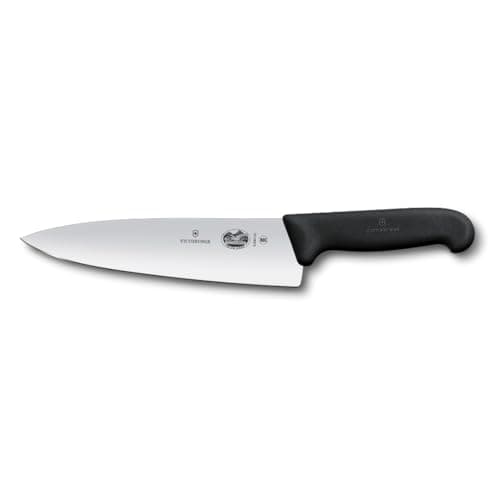
The verdict: the Victorinox Fibrox Pro 8" is the Zwilling alternative to buy. It is for the cook who looked at a Zwilling Pro, worked out that what they actually wanted was a sharp, tough, easily maintained German-steel chef's knife, and would rather not pay for the forging — it cuts as well out of the box, it is far lighter, and it is the easiest knife on this page to re-sharpen. The budget pick is the Henckels Forged Accent 8": the cheapest genuinely forged, full-tang German knife here, and the most direct answer on the page, because Henckels is the value line of the same group that makes Zwilling. The closest like-for-like match is the Mercer Genesis 8", which copies the forged-with-a-short-bolster formula almost exactly for much less. Prices render live from the price layer with the "as of" date printed under the table.
What a Zwilling Pro actually is
Worth stating accurately before comparing anything to it. The Professional S / Pro 8" chef's knife is forged in Solingen from a single billet — Zwilling's Sigmaforge process — in the company's own special-formula stainless, hardened to around HRC 57 and ground to about 15° per side. It weighs roughly 8.8 oz, has a full tang, and — the detail that actually matters — a curved bolster rather than a full one.
That bolster is the real argument for the knife. On most forged German knives the bolster runs straight down to the heel, which looks substantial and blocks a stone from reaching the last inch of edge. A curved bolster sweeps back so the whole edge is accessible, which means the knife can be properly sharpened for its entire life rather than developing a dull, unreachable heel. If you own a whetstone, it is a genuinely good design.
Everything else about a Zwilling Pro is ordinary German cutlery done well: soft-ish steel that rolls rather than chips, holds a usable edge for a week of honing, and re-sharpens easily. Nothing about the spec sheet is exotic. That is precisely why there are credible alternatives at every price below it.
Why people look for an alternative
- Price, usually. A Zwilling Pro at list is in the same bracket as a Wüsthof Classic, and both are several times what an equally sharp stamped knife costs. The steel is not several times better.
- Weight. Nearly nine ounces is a lot of knife. Cooks with smaller hands or long prep sessions often find a German forged blade tiring, and the fix is not a different German forged blade.
- Edge retention. At ~HRC 57 you hone weekly. If what you actually wanted was a knife that stays sharp for months, no German knife is the answer — a Japanese blade at ~HRC 60 is.
- The Henckels confusion. A lot of people comparing Zwilling to "Henckels" do not realise they are comparing two lines from one company. The twin-figure logo is Zwilling; the single figure is the group's value brand. That is a saving, not a counterfeit — Zwilling vs Henckels lays it out, and best Henckels knives ranks the cheaper half.
How we matched the alternatives
Each pick below matches the Zwilling on at least one stated strength, or undercuts it decisively on price. They are ranked by our overall score, which is why the cheapest knife leads — on published specification plus value math, a Fibrox Pro is hard to beat at any price.
- Victorinox Fibrox Pro 8" — matches the cutting, not the construction. X50CrMoV15 at ~HRC 55–56, stamped, about 6.6 oz. The lightest and cheapest route to the same job, and the friendliest steel on the page to learn to sharpen on.
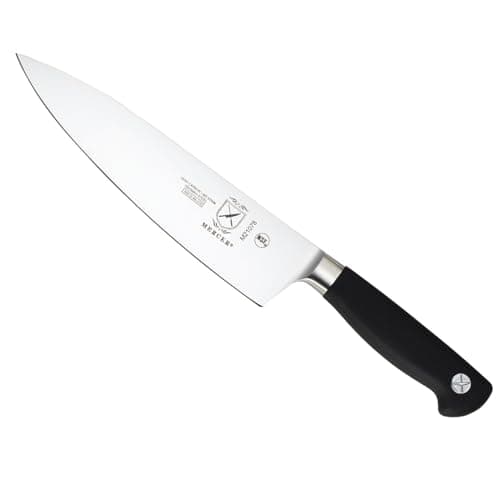
- Mercer Genesis 8" — the like-for-like. Forged, full tang, X50CrMoV15 at ~HRC 56, and a shortbolster that leaves the heel sharpenable, which is the same design logic as Zwilling's curved one. About 8.5 oz, so it feels like a Zwilling in the hand too.
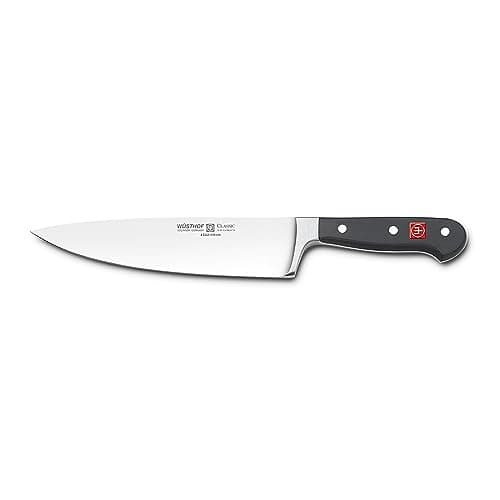
- Wüsthof Classic 8" — the direct rival, and the better-documented knife: X50CrMoV15 at ~HRC 58 with a published 14° per side grind. It has a full bolster, so it is the one knife here that is harder to sharpen heel-to-tip than the Zwilling.
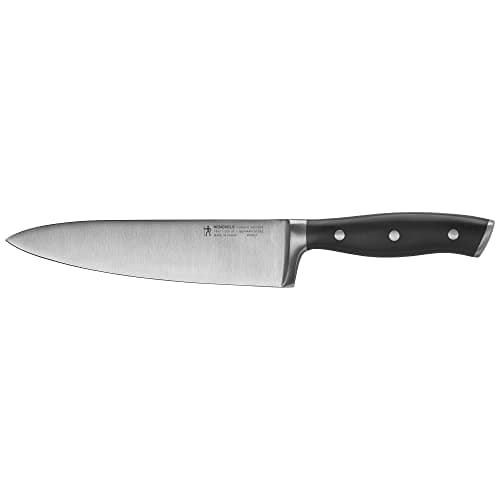
- Henckels Forged Accent 8" — the same group's cheaper forged knife: German stainless at ~HRC 57, about 15°, full tang, full bolster. The closest thing to buying a Zwilling at a discount, with the bolster trade-off that implies.
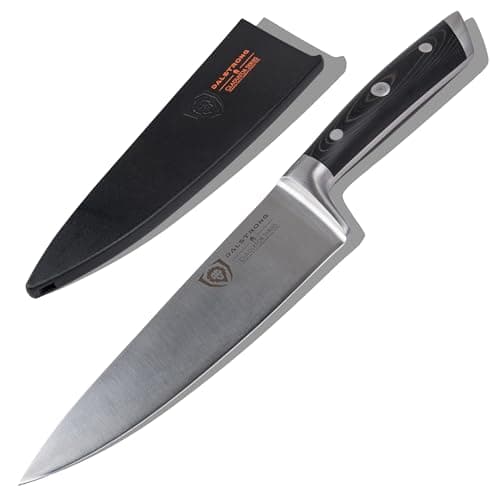
- Dalstrong Gladiator 8" — forged with a tapered bolster at ~HRC 56 and a 16–18° edge, heavily marketed and genuinely competent. Buy it for the looks; the Mercer matches it on cut-per-dollar.
If what you wanted was better edge retention
None of the five above solves that, because all five are German-style stainless in the HRC 55–58 band. If the real complaint about your current knife is that it goes dull too quickly, the answer is harder steel, not a different German brand — a Tojiro DP at ~HRC 60 costs about what a Zwilling Pro does on offer and holds an edge several times longer. Best Japanese chef knives is the shortlist and Japanese vs German knives is the trade-off in full. The honest warning: hard steel chips where soft steel rolls, so it is a different set of habits, not a free upgrade.
The one upgrade that beats changing knives
If your Zwilling — or your Victorinox, or your Wüsthof — is not cutting well, the odds are overwhelming that it is blunt rather than wrong. German stainless at HRC 57 is the single easiest steel to bring back: a 1000/6000 combination stone and twenty minutes of practice will put a better edge on it than it arrived with.
Best sharpening stones for German knives is the shortlist for exactly this steel, how to use a whetstone is the method, and best honing steels covers the weekly two-minute job that keeps it there. Spending $40 on a stone instead of $150 on another German knife is the better trade almost every time.
The verdict
Buy the Victorinox Fibrox Pro 8"if you want Zwilling's result without Zwilling's price or weight. Buy the Mercer Genesis 8"if the forged feel is non-negotiable and you still want the heel of the blade reachable on a stone — it is the closest match on this page.
Buy the Henckels Forged Accent if you specifically want the cheapest forged German knife from the same group, the Wüsthof Classic if you would rather have the best-documented German knife made and will accept a full bolster, and the Dalstrong Gladiator if you like how it looks. That last one is a legitimate reason; it is just not a spec.
Two related pages worth a look: Zwilling vs Victorinox settles the top pairing on this page head-to-head, and best German chef knives is the whole category ranked, Zwilling included.